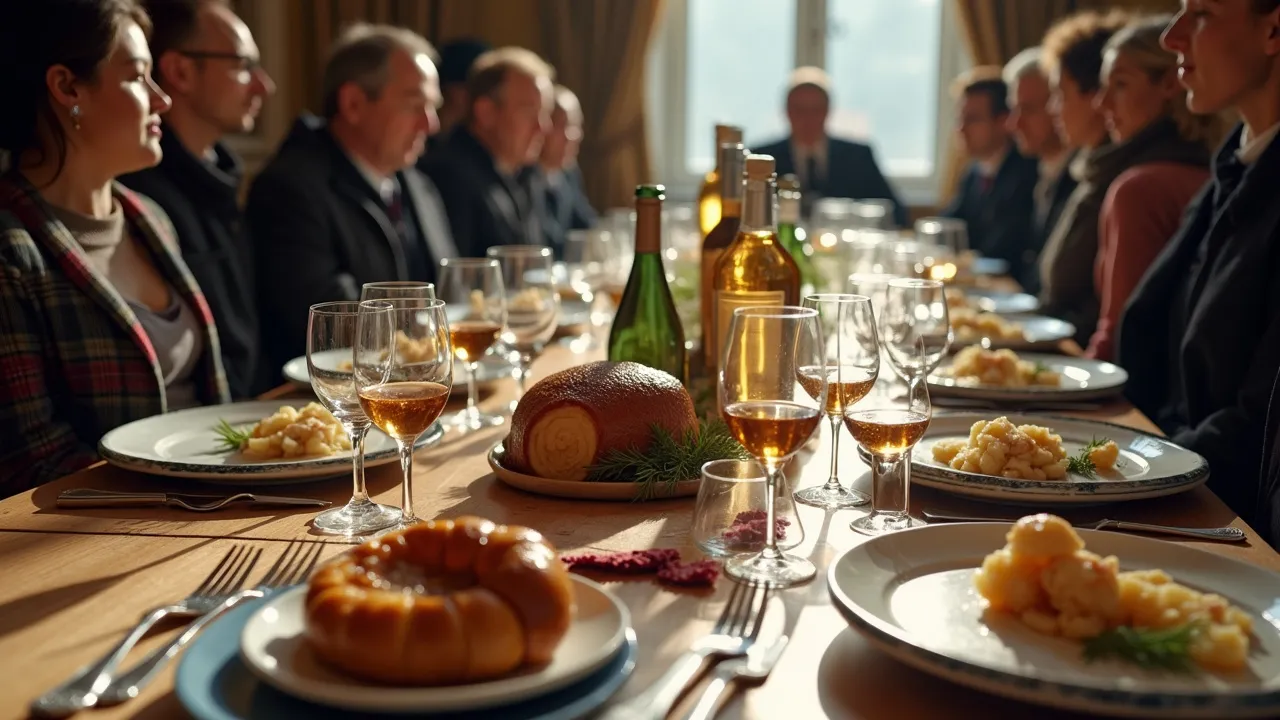
Burns Supper is an annual celebration of Scottish poet Robert Burns on January 25th. It features haggis, whisky, poetry, and toasts, blending tradition with global festivities.
The Historical Origins & Evolutionary Journey
Burns Supper commemorates the life and works of Scotland's national poet, Robert Burns. Observed on January 25th, his birthday, the tradition began in 1801 when his friends gathered at Burns Cottage in Alloway to honor his legacy. Over two centuries, it has evolved from a small local commemoration into a global phenomenon.
The Foundational Catalyst
Robert Burns died at the age of 37 on July 21, 1796, leaving behind a rich poetic and lyrical legacy. On the fifth anniversary of his death in 1801, a group of his closest friends—including John Richmond and William Manson—organized a dinner at his birthplace. They recited his poems, sang songs, and proposed toasts. The success of this gathering led to annual repetitions, and the format quickly spread across Scotland.
The supper traditionally includes a reading of the "Address to a Haggis," the Selkirk Grace, and a toast to the lassies. The haggis—a savory pudding made from sheep's offal—is paraded in with bagpipe music, then recited upon before being carved.
The Legislative/Official Adoption
While Burns Supper never had official legislative adoption, it became embedded in Scottish culture through the efforts of organizations like the Burns Club and the Robert Burns World Federation. By the mid-19th century, expatriate Scots took the tradition to Canada, the United States, Australia, and New Zealand. In 2001, the Scottish Parliament formally recognized Burns Night as a key part of Scotland's cultural calendar.
Modern Global Legacy
Today, Burns Suppers are held worldwide, not just by Scots but by anyone who appreciates poetry, Scottish heritage, or a good feast. They range from formal dinners with full ceremonial dress to casual gatherings. The event often includes fundraising for charitable causes and educational programs about Burns' work. The Scottish government promotes international Burns celebrations as a tool for cultural diplomacy.
How to Celebrate Burns Supper
Hosting a Burns Supper involves a mix of ritual, food, and festivity. Below is a definitive guide for individuals, schools, and organizations.
Preparing the Feast
- Plan a menu featuring haggis with neeps (turnips) and tatties (potatoes), followed by dessert such as cranachan or shortbread.
- Include vegetarian haggis options for non-meat eaters.
- Select a variety of Scottish whiskies for tasting.
The Ceremony
- Piping in the guests: Guests are welcomed with bagpipe music.
- Selkirk Grace: Host recites the grace: "Some hae meat and canna eat..."
- Address to the Haggis: A designated speaker recites the poem while brandishing a knife, then cuts open the haggis.
- Toast to the Haggis: Raise a glass of whisky.
- Toast to the Lassies: A humorous speech about women, answered by a reply from the lassies.
- Entertainment: Guests perform Burns poems or songs.
Global Variations
In Canada, the supper often includes maple-glazed haggis. In the United States, some events incorporate a silent auction or charity drive. In Australia, outdoor barbecues with haggis are common. Digital celebrations have emerged, with virtual toast sessions and livestreamed poetry readings.
Schools can simplify the event with a "Burns Day" featuring poetry recitations and a tasting of oatcakes. Organizations may host a Burns-themed networking dinner with corporate sponsors.
The Poetry and Legacy of Robert Burns
Robert Burns (1759–1796) is celebrated for his poems and songs that capture the human experience, often written in Scots language. His work draws from folk traditions and explores themes of love, nature, social justice, and Scottish identity. Iconic pieces include "Auld Lang Syne," "Tam o' Shanter," and "To a Mouse."
Influence on Culture
Burns' poetry influenced Romantic poets like Wordsworth and Coleridge. His song "Auld Lang Syne" is sung globally at New Year's celebrations. Burns Suppers keep his work alive, with recitals often including lesser-known pieces. The event also inspires new artistic interpretations, such as spoken word performances and musical adaptations.
Preserving the Language
The use of Scots in Burns' poetry has helped preserve the language. Many supper events provide translations or glossaries to make the poems accessible. The annual "Burns Night" encourages linguistic scholarship and the teaching of Scots in schools.
Burns Supper Traditions and Rituals
The structure of a Burns Supper follows a time-honored order, though variations exist. Key components include:
- The Selkirk Grace: A short prayer traditionally attributed to Burns, though likely older.
- Address to a Haggis: A dramatic recitation of Burns' poem, often with theatrical gestures.
- Toast to the Lassies: A lighthearted speech praising women, countered by the "Reply to the Toast to the Lassies."
- Immortal Memory: A speech about Burns' life and works, given by a guest of honor.
Traditions also include wearing tartan, playing bagpipes, and singing "Auld Lang Syne" to close the event. Some suppers incorporate a Burns quiz or raffle. The ritual elements reinforce a sense of heritage and community.
Global Impact and Diaspora Celebrations
Burns Suppers are a cornerstone of Scottish diaspora culture. In countries like Canada, the United States, Australia, and New Zealand, the event serves as a touchstone for national identity among Scots and their descendants.
North America
The first Burns Supper in North America was held in 1801 in Nova Scotia. Today, major cities host large-scale events, with the Chicago Scots Club and the Caledonian Club in San Francisco being notable hosts. The American celebration often includes a scholarship fundraiser for Scottish studies.
Asia and the Middle East
In Japan, Burns Suppers are organized by the Japan-Scotland Society. In the United Arab Emirates, expat groups host lavish dinners. The event promotes Scottish tourism and whisky exports.
Digital Adaptations
During the COVID-19 pandemic, virtual Burns Suppers emerged. Platforms like Zoom hosted shared meals, with participants delivering toasts from home. This digital shift has expanded the reach to new audiences.
Burns Supper Menu and Recipes
The classic Burns Supper menu is hearty and symbolic. Below are key dishes and their preparation.
Haggis
Traditional haggis is made from sheep liver, heart, and lungs, mixed with onions, oatmeal, suet, and spices, then boiled in a sheep's stomach lining. Vegetarian versions substitute lentils and nuts. The haggis is served with mashed swede (neeps) and potatoes (tatties), often accompanied by a whisky cream sauce.
Starter and Dessert
A common starter is Scotch broth or cock-a-leekie soup. Dessert includes cranachan (whipped cream with raspberries, oats, and honey) or clootie dumpling. Shortbread and tablet (a fudge-like confection) are also popular.
Whisky
Scotch whisky is essential. Single malts from regions like Speyside or Islay are preferred. A typical supper includes a welcome dram, a toast whisky, and a final quaich of whisky for the farewell.
Modern Adaptations and Digital Celebrations
Burns Supper continues to evolve. Younger generations are infusing the tradition with contemporary elements, such as live streaming, social media campaigns, and fusion cuisine.
Inclusivity and Sustainability
Modern suppers often emphasize inclusivity, with plant-based menus, gender-neutral toasts, and accessible venues. Charitable partnerships are common, such as supporting food banks or literacy programs.
Technology and Innovation
Apps and websites provide step-by-step guides for hosting. Virtual reality experiences allow users to tour Burns Cottage. The #BurnsNight hashtag trends annually on Twitter, with thousands sharing photos and poems. Digital memory walls collect tributes to Burns.
Historical Timeline
Robert Burns is born on January 25 in Alloway, Scotland.
Burns publishes his first volume of poetry, 'Poems, Chiefly in the Scottish Dialect,' gaining widespread fame.
Robert Burns dies on July 21 at age 37.
The first Burns Supper is held at Burns Cottage in Alloway by his friends on the anniversary of his death.
The second supper moves to January 25, Burns' birthday, establishing the date.
The first Burns Supper outside Scotland takes place in Canada, in the town of Quebec.
The Burns Club of London is founded, formalizing observance in England.
The Robert Burns World Federation is established to coordinate global celebrations.
The Scottish Parliament holds its first official Burns Supper, recognizing the tradition's cultural significance.
Virtual Burns Suppers surge due to the COVID-19 pandemic, with online events reaching record audiences.