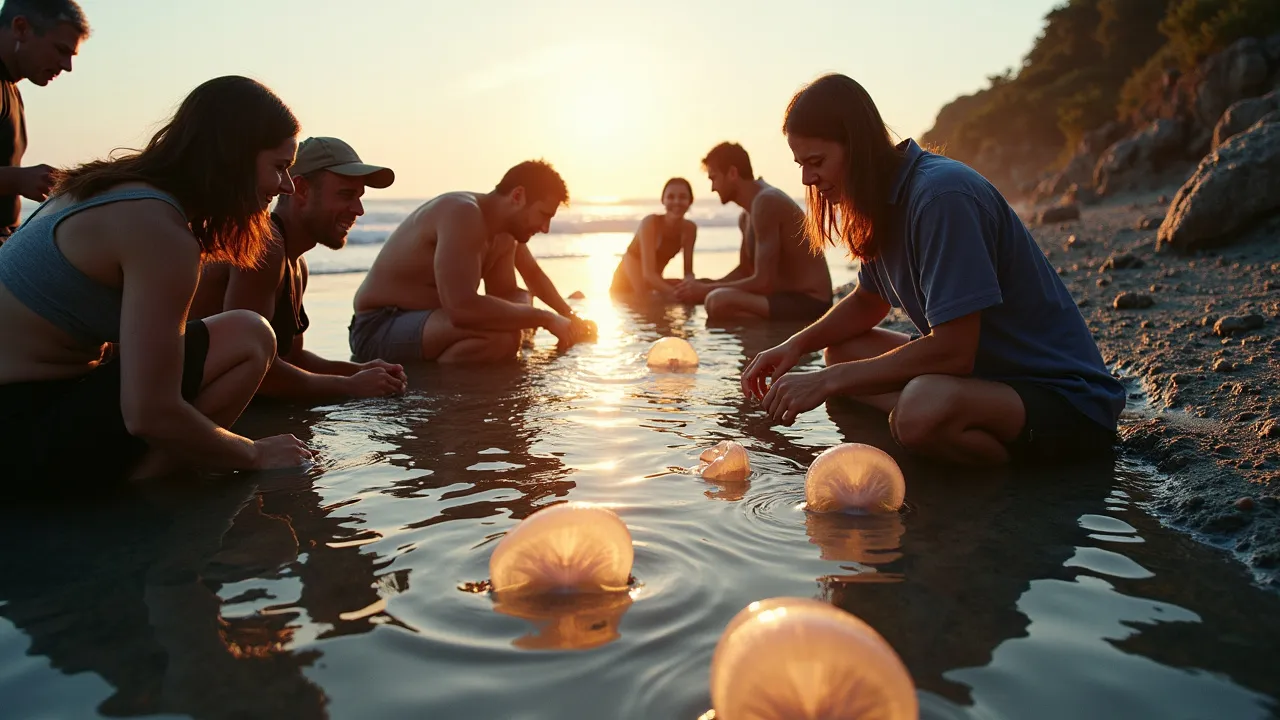
World Jellyfish Day on November 3rd honors these ancient, ethereal drifters of the sea. Explore their biology, conservation challenges, and meaningful ways to celebrate these captivating creatures.
The Historical Origins & Evolutionary Journey of World Jellyfish Day
World Jellyfish Day is a relatively new yet rapidly growing observance that was established to raise global awareness about the ecological significance, scientific intrigue, and conservation needs of jellyfish. The day was first conceived by The Jellyfish Society, an international non-profit dedicated to the study and protection of cnidarians. Since its inaugural celebration in 2021, the day has evolved into a platform for education, citizen science, and public engagement.
The Foundational Catalyst
The idea for a dedicated jellyfish day emerged from a confluence of factors: the rising public fascination with jellyfish blooms, the increasing need for marine conservation, and the recognition that jellyfish are often misunderstood or overlooked. The Jellyfish Society, founded by marine biologists and educators, sought to create a focal point for disseminating accurate information and dispelling myths. The date November 3rd was chosen to coincide with the peak jellyfish season in many temperate regions, when these creatures are most visible and accessible for observation.
The Legislative/Official Adoption
While World Jellyfish Day is not an official United Nations holiday, it quickly gained traction through grassroots campaigns. In 2021, more than 200 aquariums, research institutions, and environmental organizations across 30 countries participated in the first celebration. Key supporters included the Monterey Bay Aquarium, Australian Jellyfish Research Institute, and the Jellyfish Lake Conservation Project. The day was officially recognized by the World Association of Zoos and Aquariums (WAZA) in 2022, which helped standardize educational materials and events.
Modern Global Legacy
Today, World Jellyfish Day serves as a catalyst for both scientific research and public engagement. Annual events include global jellyfish counts, aquarium exhibits, school programs, and beach clean-ups. The day has also inspired a surge in citizen science projects, where volunteers document jellyfish sightings to help researchers track blooms and climate change impacts. Social media campaigns under hashtags like #WorldJellyfishDay and #JellyfishAwareness have reached millions, making jellyfish a symbol of marine health and biodiversity.
How to Celebrate World Jellyfish Day
World Jellyfish Day offers a wealth of opportunities for individuals, communities, and organizations to connect with these remarkable animals. Below is a comprehensive guide to celebration strategies, tailored for various audiences and regions.
For Individuals and Families
- Visit a local aquarium: Many aquariums offer special jellyfish exhibits, feeding demonstrations, and educational talks on November 3rd.
- Observe jellyfish in the wild: If you live near the coast, go tide-pooling during low tide or take a guided kayak tour to spot moon jellies or sea nettles.
- Read a book about jellyfish: Titles like Spineless: The Science of Jellyfish and the Art of Growing a Backbone by Juli Berwald provide deep insights.
- Watch a documentary: Films such as Jellyfish: The Secret Life of the Ocean’s Drifters are excellent for family viewing.
- Participate in citizen science: Use apps like iNaturalist or Jellywatch to report jellyfish sightings in your area.
For Schools and Educational Groups
- Organize a jellyfish dissection lab: For older students, hands-on dissection of preserved moon jellies teaches anatomy and biological adaptations.
- Host a jellyfish art contest: Encourage students to create jellyfish-inspired artwork using recycled materials, highlighting conservation themes.
- Invite a marine biologist to speak: Many experts offer virtual presentations for classrooms to share current jellyfish research.
- Create a jellyfish life cycle model: Use clay or digital tools to illustrate the polyp, ephyra, and medusa stages.
For Organizations and Aquariums
- Launch a jellyfish exhibit: Showcase local species with informative signage about their role in the ecosystem.
- Run a jellyfish counting day: Engage visitors in counting jellies in a touch tank or via live feeds from remote cameras.
- Host a beach clean-up: Plastic pollution is a major threat to jellyfish and marine life; a clean-up event ties directly to the day's conservation message.
- Promote sustainable seafood: Educate the public about how overfishing affects jellyfish populations and predator-prey dynamics.
Regional Traditions
In Japan, World Jellyfish Day is often marked by lantern festivals featuring jellyfish-shaped lanterns, symbolizing the creatures' bioluminescence. In Australia, coastal communities hold 'Jellyfish Safaris' where participants snorkel alongside harmless jellyfish species. The Mediterranean region, affected by frequent blooms, uses the day to discuss how to mitigate negative interactions with tourists. In the United States, aquariums in California and Florida host overnight 'Jellyfish Sleepovers' with educational activities.
Jellyfish Biology and Ecology: Wonders of the Drift
Jellyfish are among the oldest multi-organ animals on Earth, with a fossil record dating back over 500 million years. They belong to the phylum Cnidaria, which also includes corals, sea anemones, and hydroids. Despite their simple body plan, jellyfish have highly effective adaptations that allow them to thrive in every ocean, from the surface to the deep sea.
Anatomy and Physiology
Jellyfish possess a bell-shaped body (the medusa) made of a gelatinous substance called mesoglea, which is over 95% water. They lack a brain, heart, and centralized nervous system, but they have a nerve net that coordinates movement and responses to stimuli. Their tentacles contain specialized cells called cnidocytes, which house stinging organelles (nematocysts) used for capturing prey and defense. Some species, like the box jellyfish, are highly venomous and can cause severe reactions in humans.
Life Cycle
Jellyfish have a complex life cycle with both sexual and asexual phases. Fertilized eggs develop into free-swimming planulae larvae, which settle on the seafloor and transform into polyps. These polyps can bud off tiny medusae (ephyrae) that grow into adults. Some species also exhibit a fascinating phenomenon called transdifferentiation, where damaged cells can revert to a pluripotent state, allowing the jellyfish to regenerate body parts or even revert to a polyp stage—a feature best known in the 'immortal jellyfish' Turritopsis dohrnii.
Ecological Roles
- Predator and Prey: Jellyfish feed on zooplankton, small fish, and fish eggs, while themselves being prey for sea turtles (especially leatherbacks), sunfish, and some seabirds.
- Nutrient Cycling: When jellyfish die, their bodies form 'jelly-falls' that deliver organic carbon and nutrients to the deep seafloor, supporting benthic communities.
- Indicator Species: Jellyfish blooms are often linked to environmental changes such as warming oceans, overfishing, and nutrient pollution, making them important indicators of marine ecosystem health.
Jellyfish in Human Culture, Science, and Technology
From ancient art to cutting-edge robotics, jellyfish have captivated human imagination and inspired innovation across disciplines.
Cultural Significance
In Chinese and Japanese art, jellyfish often symbolize grace, mystery, and the ephemeral nature of life. Traditional Japanese ukiyo-e prints sometimes depict jellyfish alongside mythical sea creatures. In recent years, jellyfish have become popular motifs in fashion, interior design, and even tattoos, reflecting a modern appreciation for their otherworldly beauty.
Scientific Research
Jellyfish are model organisms in developmental biology, neuroscience, and regenerative medicine. The study of cnidocytes has advanced our understanding of cell signaling and toxin delivery. The immortal jellyfish's ability to reverse aging has sparked research into cellular reprogramming and longevity. Additionally, jellyfish bioluminescence—produced by the protein aequorin—has been instrumental in developing molecular imaging techniques like calcium imaging in cells.
Technological Innovations
Biomimetic Robotics
Engineers have designed soft robots inspired by jellyfish propulsion, which uses a bell-shaped cavity to generate jets of water. These 'jellyfish robots' are used for underwater surveillance, environmental monitoring, and even medical devices that can swim through the bloodstream. Their energy-efficient design makes them ideal for long-duration missions.
Medical Applications
Jellyfish collagen is being explored for wound healing and tissue engineering due to its biocompatibility. Also, the mucus of some jellyfish contains antimicrobial compounds that could lead to new antibiotics.
Conservation Challenges and Global Awareness
Despite their resilience, jellyfish face several threats from human activities, and World Jellyfish Day serves as a crucial reminder to protect them and the habitats they inhabit.
Major Threats
- Climate Change: Rising sea temperatures can alter jellyfish distribution and promote more frequent and intense blooms, which may disrupt ecosystems and human activities.
- Pollution: Plastic debris, especially microplastics, can be ingested by jellyfish, causing physical harm and transferring toxins up the food chain. Oil spills and chemical runoff also degrade water quality.
- Overfishing: Removal of jellyfish predators (like sea turtles) and competitors (like forage fish) through overfishing can lead to jellyfish-dominated ecosystems.
- Coastal Development: Dredging, construction, and destruction of mangroves and seagrass beds can remove critical nursery habitats for jellyfish polyps.
Conservation Efforts
Conservation actions include establishing marine protected areas that include jellyfish habitats, promoting sustainable fishing practices, and reducing plastic waste. Citizen scientists contribute valuable data through platforms like Jellywatch to help scientists monitor bloom patterns. Aquariums play a key role in captive breeding and maintaining genetic diversity for vulnerable species like the spotted jellyfish.
How World Jellyfish Day Helps
By focusing public attention on these issues, World Jellyfish Day encourages individuals to adopt more ocean-friendly behaviors, such as avoiding single-use plastics, choosing sustainable seafood, and supporting marine conservation organizations. The day also fosters a sense of wonder and respect for jellyfish, countering the fear and disgust that sometimes leads to their persecution.
The Future of Jellyfish Studies and Global Observations
As we look ahead, World Jellyfish Day is poised to become an even more integral part of marine science and public engagement. Advances in technology and growing awareness are shaping a future where jellyfish are better understood and appreciated.
Emerging Research Frontiers
- Genomics: Sequencing the genomes of various jellyfish species is revealing clues about aging, regeneration, and venom evolution.
- Bloom Prediction: Using satellite imagery and machine learning, scientists can now forecast jellyfish aggregations weeks in advance, aiding fisheries and coastal tourism.
- Bioprospecting: Researchers are screening jellyfish toxins for potential pharmaceuticals, including painkillers and anti-cancer compounds.
Global Observance Expansion
Efforts are underway to make World Jellyfish Day an internationally recognized day on the United Nations calendar. More countries are incorporating jellyfish topics into school curricula, and a growing number of tourism operators offer ‘jellyfish safaris’ as eco-friendly attractions. The Jellyfish Society plans to launch a global citizen science app that will allow anyone to contribute real-time observations, creating a massive dataset for scientists.
Call to Action
On November 3rd, join the global community in celebrating World Jellyfish Day. Whether you visit an aquarium, share facts on social media, or simply take a moment to appreciate the shimmering drifters of the sea, your participation helps secure a brighter future for our oceans. Every action, no matter how small, contributes to the preservation of these ancient, ethereal creatures.
Historical Timeline
First official World Jellyfish Day celebrated on November 3rd, founded by The Jellyfish Society. Over 200 institutions participate worldwide.
The World Association of Zoos and Aquariums (WAZA) officially endorses World Jellyfish Day, encouraging member aquariums to coordinate global events.
Launch of the global citizen science campaign 'Jellyfish Count 2023', which collects over 50,000 observations in a single day, aiding bloom tracking research.
Several major aquariums host the first 'Jellyfish Sleepover' events, combining education with overnight camps; social media hashtag #WorldJellyfishDay trends in 15 countries.
The United Nations Educational, Scientific and Cultural Organization (UNESCO) includes World Jellyfish Day in its list of recommended awareness days, boosting global participation.