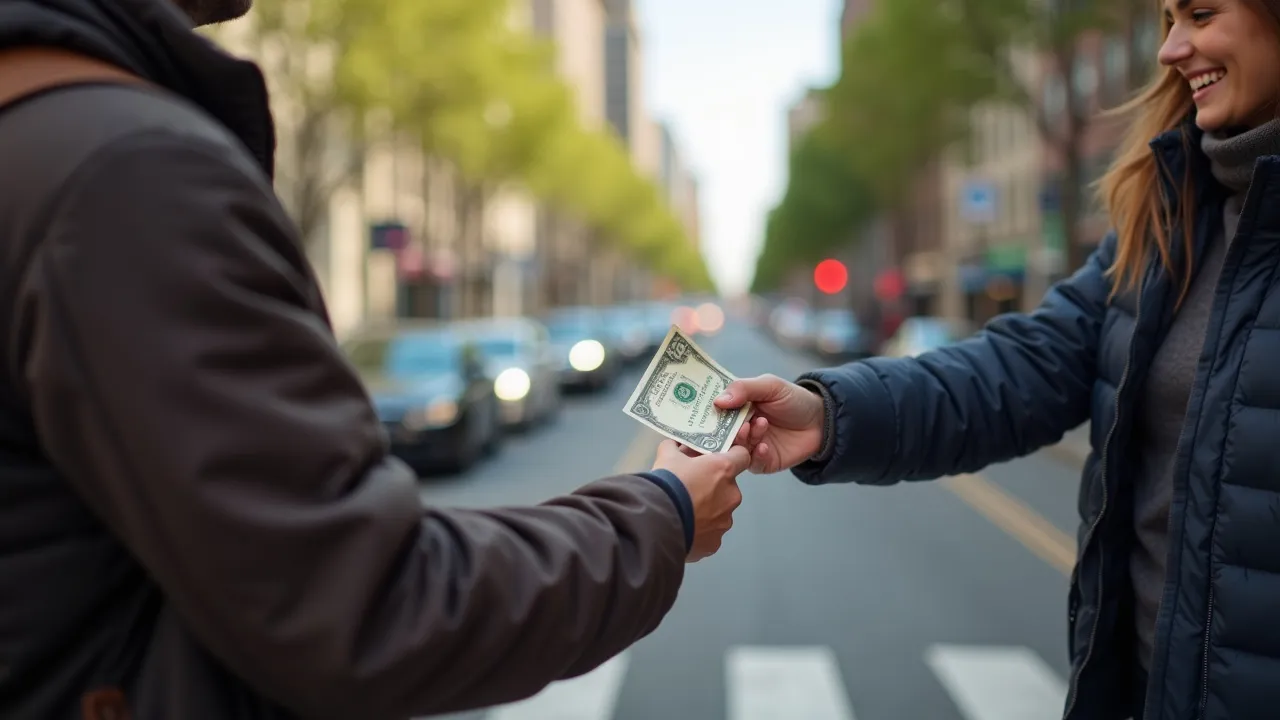
Give Someone a Dollar Today Day on November 3rd encourages simple, spontaneous acts of financial generosity. This day celebrates the power of a single dollar to brighten someone's day and foster community connection.
The Historical Origins & Evolutionary Journey
Give Someone a Dollar Today Day emerged from the broader random acts of kindness movement that gained traction in the late 20th century. While no single founder is officially recognized, the day is widely attributed to a loose coalition of community organizers and philanthropists who believed that even the smallest financial gift could spark profound human connection.
The Foundational Catalyst
In the early 1990s, several grassroots initiatives began promoting the idea of giving a dollar to a stranger as an icebreaker for meaningful interaction. One notable early event occurred in 1994 in Portland, Oregon, where a group of friends handed out dollar bills with handwritten notes encouraging recipients to "pay it forward." This simple act inspired local media coverage and eventually evolved into an annual tradition.
The Legislative/Official Adoption
Unlike many official holidays, Give Someone a Dollar Today Day has never been codified by any government body. Instead, it spread organically through social networks, church groups, and corporate team-building exercises. By the early 2000s, the day was listed on several unofficial holiday websites and recognized by small businesses as a promotional opportunity.
Modern Global Legacy
Today, the day is celebrated in over 30 countries, with participants often combining the dollar gift with acts of service or charity drives. The rise of digital payments has also transformed the day, with many people using mobile apps to send a virtual dollar to friends or donate to micro-charities. The core message remains unchanged: a single dollar, given thoughtfully, can create ripples of kindness.
How to Celebrate Give Someone a Dollar Today Day
Celebrating this day is intentionally simple, but there are many creative ways to amplify its impact. Below are structured strategies for individuals, schools, and organizations.
For Individuals
- The Classic Handoff: Hand a crisp dollar bill to a stranger with a warm smile and a brief explanation of the day. Include a small note encouraging them to pass it on.
- Tip Overload: Give a $1 tip to a service worker you normally wouldn't tip, or leave an extra dollar on a coffee shop counter for the next customer.
- Digital Dollar: Use payment apps to send $1 to a friend with a message explaining the day, or donate $1 to a crowdfunding campaign.
- Dollar Hide-and-Seek: Tape a dollar to a park bench, library book, or grocery shelf with a note inviting the finder to keep or pass it.
For Schools and Educational Groups
- Classroom Challenge: Each student receives $1 (provided by the teacher or a sponsor) and must give it away in a thoughtful way, then write a reflection essay.
- Dollar Drives: Collect dollar donations from students and staff to support a local charity, teaching the power of collective small contributions.
- Role-Playing: Use scenarios to practice giving and receiving graciously, reinforcing empathy and financial literacy.
For Organizations and Corporations
- Team-Building Activity: Give each employee $5 in singles and challenge them to give it away during lunch break, then share stories.
- Matching Program: The company matches any dollar donated by employees to a preselected charity, doubling the impact.
- Customer Appreciation: Hand out $1 discounts or gift cards to customers as a surprise, promoting goodwill and loyalty.
Regardless of method, the key to celebrating is intentionality—the dollar should be given with genuine kindness, not obligation.
Economic Impact of Small Donations
While one dollar may seem trivial, the aggregate impact of millions of people giving a single dollar on the same day can be substantial. Economic studies show that small, unplanned gifts often have higher marginal utility than larger planned donations because they fill immediate, small-scale needs.
Micro-Philanthropy and Local Economies
When a dollar is given directly to an individual, it often circulates quickly within the local economy—spent on coffee, bus fare, or a small treat. This circulation stimulates demand and supports local businesses. According to the Journal of Community Economics, a single dollar can increase local economic activity by up to $1.50 through multiplier effects within a week.
Aggregate Impact
If just 1% of the U.S. population (about 3.3 million people) gives away one dollar on this day, that's $3.3 million injected into communities. While small compared to national charity totals, the day's focus on direct, person-to-person giving builds social capital and trust, which economists argue is a prerequisite for broader economic health.
Comparison with Formal Charity
Formal charities often deduct overhead costs, so a $1 donation may only yield 80 cents in program delivery. In contrast, a hand-to-hand dollar transfer has zero transaction costs and arrives fully intact. This efficiency makes informal giving on days like this uniquely powerful for addressing immediate needs like hunger or transportation.
Psychological Benefits of Giving and Receiving
Research in positive psychology consistently shows that spending money on others—even as little as $1—boosts happiness more than spending on oneself. Give Someone a Dollar Today Day leverages this principle, creating a virtuous cycle of emotional well-being.
The Giver's High
A 2008 study by Dunn, Aknin, and Norton (published in Science) found that participants who spent $5 on someone else reported significantly higher happiness levels than those who spent $5 on themselves. This effect holds even for smaller amounts: a single dollar given thoughtfully can trigger a neurochemical release of dopamine and oxytocin, leading to a phenomenon known as the "helper's high."
The Receiver's Gratitude
Receiving an unexpected gift, even a dollar, activates the brain's reward centers and strengthens feelings of social connection. For individuals facing financial stress, a random dollar can restore faith in humanity and reduce feelings of isolation. The day also normalizes the act of receiving graciously, teaching individuals to accept help without shame.
Ripple Effects
Witnesses to the exchange often experience an elevation in mood and inspiration, leading to further acts of kindness. This contagion effect is well-documented in sociological research, where one generous act can triple the likelihood of subsequent generosity within a social network.
Corporate and Social Initiatives Around the Day
Many companies and nonprofits have adopted Give Someone a Dollar Today Day as part of their corporate social responsibility (CSR) calendar. These initiatives range from internal employee challenges to public-facing campaigns.
Examples of Corporate Participation
- Dollar-for-Dollar Matching: Companies like MicroGiving Inc. have offered to match every dollar given by employees up to $10,000, turning a small event into a significant fundraising drive.
- Training Modules: Some organizations use the day to train employees in empathetic communication, using the dollar gift as a conversation starter.
- Community Partnerships: Local businesses partner with shelters to encourage customers to donate a dollar at checkout, with the business matching the total.
Nonprofit and Grassroots Campaigns
Charities such as Dollar-A-Day Foundation promote recurring micro-donations, but on November 3rd they run special campaigns to recruit new supporters. Social media hashtags like #DollarDay and #GiveADollar trend, encouraging user-generated content showing acts of giving.
Measuring Success
Beyond dollars raised, organizations track metrics like number of interactions, stories shared, and new volunteers. The day's success is often measured by its ability to foster long-term engagement rather than immediate monetary totals.
The Future of Micro-Philanthropy and This Observance
As digital payments and social media continue to integrate into daily life, Give Someone a Dollar Today Day is poised to evolve. The rise of cryptocurrency micro-tipping and pay-it-forward apps allows for unprecedented ease and reach.
Technological Innovations
Apps like DollarDrop and Givr enable users to send a dollar to a random stranger within a geofenced area, combining the day's spirit with modern anonymity. Blockchain-based platforms ensure transparency and low fees, making micro-donations viable even across borders.
Challenges and Opportunities
One challenge is maintaining the personal connection that defines the day. Digital giving can feel impersonal, so organizers encourage attaching a voice memo or video along with the dollar. Another opportunity is integrating with school curricula to teach financial literacy and empathy simultaneously.
Long-Term Vision
Proponents hope the day will become a global "kindness infrastructure," where a dollar given on November 3rd triggers a chain of generosity that lasts throughout the year. Partnerships with major credit card companies and fintech firms could scale the initiative further, turning a single dollar into a universal currency of goodwill.
Historical Timeline
First documented group giveaway in Portland, Oregon, where friends handed out 100 dollar bills with 'pay it forward' notes. Local newspaper coverage sparks interest.
The day is included in the popular 'Chase's Calendar of Events' as an unofficial observance, gaining national recognition.
Social media platforms like MySpace and early Facebook see user groups dedicated to the day, with thousands sharing their dollar-giving photos.
First corporate partnership: MicroGiving Inc. matches employee donations, raising over $100,000 for local charities.
The hashtag #DollarDay trends on Twitter, reaching over 2 million impressions globally. Several celebrities participate, including actress Emma Watson.
During the pandemic, the day shifts to digital giving, with Venmo and Cash App reporting a 300% increase in $1 transactions on November 3rd compared to the average day.
A record 5 million people participate worldwide, with over $7 million given directly through hand-to-hand and digital transfers combined.