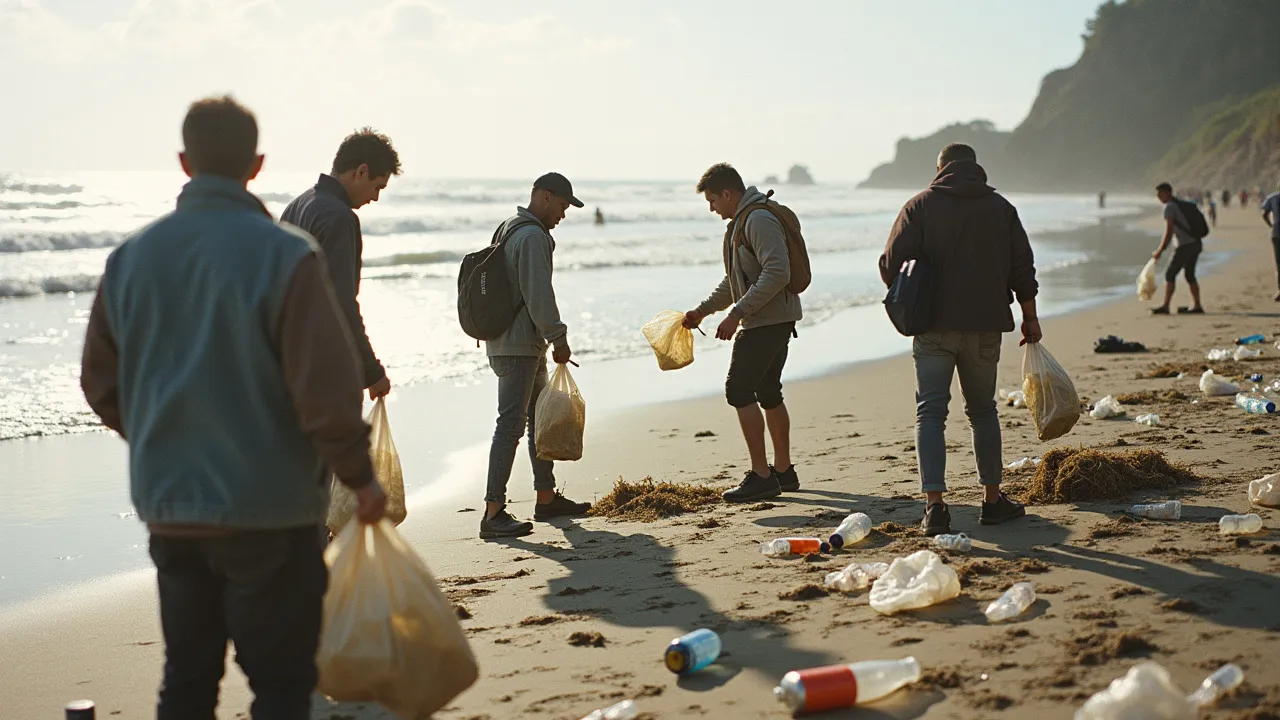
World Environment Day, observed on June 5th, is the United Nations' flagship campaign to raise global awareness and action for environmental protection. Since 1974, it has mobilized millions to address pressing ecological challenges.
The Historical Origins & Evolutionary Journey
World Environment Day (WED) was established by the United Nations General Assembly in 1972, marking the first day of the Stockholm Conference on the Human Environment. The conference, held from June 5–16, 1972, was a landmark event that put environmental issues on the global agenda. Two years later, the first WED was celebrated on June 5, 1974, under the theme "Only One Earth."
The Foundational Catalyst
The catalyst for WED was the growing recognition of environmental degradation in the 1960s and early 1970s. Silent Spring by Rachel Carson (1962) had sparked public concern, and events like the 1969 Santa Barbara oil spill highlighted the need for international cooperation. The Stockholm Conference resulted in the creation of the United Nations Environment Programme (UNEP), which now coordinates WED annually.
The Legislative/Official Adoption
UN General Assembly Resolution 2994 (XXVII) of December 15, 1972, designated June 5 as World Environment Day. The resolution urged governments and organizations to undertake activities that reaffirm their concern for the environment. The first celebration in 1974 featured events in over 100 countries, focusing on urban pollution and habitat loss.
Modern Global Legacy
Today, WED is the largest global platform for environmental outreach, with millions of participants in more than 150 countries. Each year, a different host country (since 1987) lends focus to specific issues. Recent themes include "Ecosystem Restoration" (2021), "Only One Earth" (2022), "Beat Plastic Pollution" (2023), and "Land Restoration, Desertification and Drought Resilience" (2024). The day has spurred tangible actions, from tree-planting drives to policy changes like plastic bans.
How to Celebrate World Environment Day
World Environment Day offers countless ways for individuals, communities, and organizations to take meaningful action. Here are structured guides for different groups.
For Individuals
- Reduce Plastic Use: Carry reusable bags, bottles, and straws. Participate in local clean-up drives.
- Plant Trees: Join tree-planting events or start a home garden to support biodiversity.
- Conserve Energy: Switch off lights and electronics when not in use. Opt for renewable energy sources.
- Educate Yourself: Watch documentaries, read books on ecology, and follow UNEP campaigns.
- Advocate: Write to local representatives about environmental policies like carbon pricing or renewable energy incentives.
For Schools
- Organize an eco-fair with student projects on recycling, composting, and renewable energy.
- Conduct a waste audit to measure the school's footprint and set reduction targets.
- Host a documentary screening followed by a panel discussion with local environmentalists.
- Launch a "No Single-Use Plastic" challenge for a month.
For Organizations
- Implement a green procurement policy to prioritize sustainable suppliers.
- Encourage employees to volunteer for environmental causes on June 5.
- Host a workshop on climate resilience and corporate sustainability reporting.
- Sponsor reforestation projects or support renewable energy credits.
Globally, traditions vary. In India, mass tree-planting drives are common; in Sweden, "plogging" (jogging while picking up litter) is popular. Kenya often hosts beach clean-ups, and Costa Rica emphasizes eco-tourism. The key is to adapt actions to local contexts.
Global Impact and Significance
World Environment Day drives awareness and action on a scale unmatched by other environmental events. Since 1974, it has catalyzed global movements, influenced policy, and engaged billions of people. Key impacts include:
- Policy Changes: The 2018 theme "Beat Plastic Pollution" led to many countries introducing bans on single-use plastics. India, for example, announced a phase-out of certain plastics.
- Corporate Action: Companies like Unilever and IKEA use WED to launch sustainability commitments, such as reducing plastic packaging or achieving carbon neutrality.
- Public Engagement: The 2021 call for ecosystem restoration saw 32 million actions logged on the UN Decade on Ecosystem Restoration platform.
UNEP leverages WED to launch major reports, such as the Global Environment Outlook, which influence international negotiations. The day also serves as a platform for grassroots organizations to amplify their work. For instance, in 2022, #OnlyOneEarth trended globally, sparking conversations about overconsumption and ecological debt.
Annual Themes and Their Relevance
Since 1974, each World Environment Day has adopted a specific theme to focus global attention. Below are some landmark themes and their significance:
- 1974: "Only One Earth" – Emphasized the finiteness of Earth's resources.
- 1987: "Environment and Peace" – Highlighted the connection between environmental degradation and conflict.
- 2000: "The Millennium Environment – Time to Act" – Urged action ahead of the Millennium Development Goals.
- 2010: "Many Species. One Planet. One Future" – Focused on biodiversity loss.
- 2021: "Ecosystem Restoration" – Launched the UN Decade on Ecosystem Restoration.
- 2023: "Beat Plastic Pollution" – Spurred global plastic reduction commitments.
Themes are chosen based on pressing environmental issues. For example, the rise of microplastics in oceans led to the plastic focus in recent years. Themes guide host country activities and shape global campaigns.
Corporate and Community Action
Businesses and local communities play a vital role in WED. Companies often showcase their environmental initiatives, from reducing carbon footprints to supporting conservation projects. Community-level actions include:
Corporate Best Practices
- Publish an annual sustainability report on June 5.
- Introduce employee engagement programs like carpool challenges or meat-free days.
- Invest in nature-based solutions, such as mangrove restoration or regenerative agriculture.
Community Mobilization
- Neighborhood clean-ups, often coordinated through local NGOs.
- Community gardens and urban greening projects.
- School competitions on recycling art or essay writing on environmental topics.
In 2023, over 10 million people participated in clean-up events across 190 countries. The collective effort demonstrates that individual actions, when multiplied, can drive systematic change.
Future Outlook and Challenges
As the world faces climate change, biodiversity loss, and pollution, WED's role becomes ever more critical. Future efforts must focus on:
- Net-Zero Transitions: Accelerating the shift to renewable energy and carbon neutrality.
- Circular Economy: Moving away from take-make-dispose models toward reuse and recycling.
- Equity and Justice: Ensuring that environmental action benefits marginalized communities disproportionately affected by degradation.
Host countries for upcoming years signal regional priorities: 2024 hosted by Saudi Arabia on land restoration, 2025 hosted by South Korea on sustainable consumption. The day will continue to leverage digital platforms for global reach, while emphasizing local implementation. The biggest challenge is moving beyond awareness to sustained behavioral change and accountable governance.
Historical Timeline
The UN Conference on the Human Environment in Stockholm recommends the creation of a global day for the environment. UNEP is established.
First World Environment Day celebrated on June 5 with the theme 'Only One Earth', featuring events in over 100 countries.
Theme 'Environment and Peace' highlights the links between environmental degradation and conflict, especially in Africa.
Theme 'The Millennium Environment – Time to Act' focuses on the urgency of environmental action ahead of the MDGs.
Theme 'Many Species. One Planet. One Future' draws attention to biodiversity loss and the extinction crisis.
Theme 'Beat Plastic Pollution' sparks global campaigns leading to plastic bans in several countries, including India and Kenya.
Theme 'Ecosystem Restoration' launches the UN Decade on Ecosystem Restoration, aiming to restore 1 billion hectares by 2030.
Theme 'Beat Plastic Pollution' again, with #PlasticPollution reaching 3 billion impressions on social media.
Hosted by Saudi Arabia, theme 'Land Restoration, Desertification and Drought Resilience' focuses on dryland ecosystems.
Hosted by South Korea, theme 'Sustainable Consumption' to address overconsumption and waste.