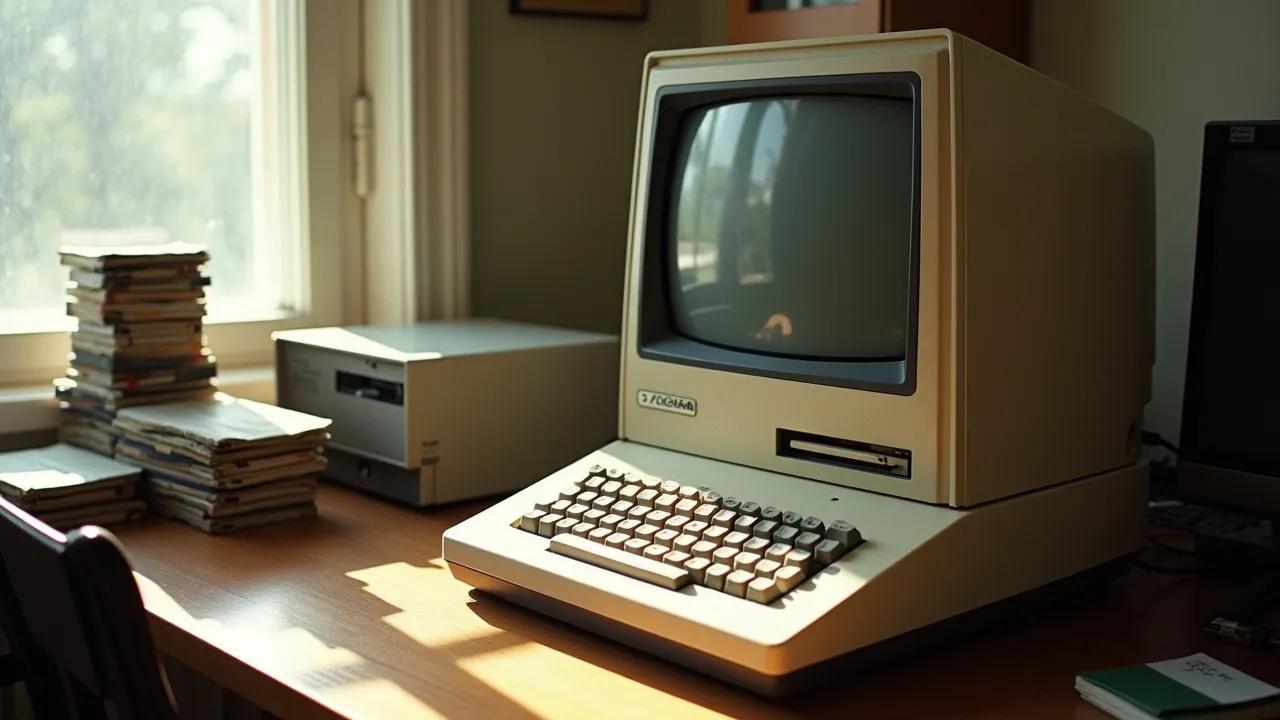
Celebrated annually on June 5th, Apple II Day honors the legendary personal computer that launched the home computing revolution. It marks the anniversary of the Apple II's debut in 1977 and celebrates its enduring legacy.
The Historical Origins & Evolutionary Journey
The Foundational Catalyst
Apple II Day traces its roots to the introduction of the Apple II personal computer on June 5, 1977, at the West Coast Computer Faire in San Francisco. Designed by Steve Wozniak and marketed by Steve Jobs, the Apple II was one of the first highly successful mass-produced microcomputers. It featured a revolutionary integrated keyboard, color graphics, and expansion slots, making it accessible to home users and businesses alike.
The Legislative/Official Adoption
While Apple II Day is not an official government holiday, it was formally established in 2005 by the Apple II Enthusiasts of Southern California (A2ESC) as a grassroots celebration. The date was chosen to coincide with the machine's launch anniversary. Over the years, it gained recognition through retrocomputing clubs, online forums, and events at museums like the Computer History Museum.
Modern Global Legacy
Today, Apple II Day is observed worldwide by vintage computing enthusiasts, educators, and historians. It serves as a reminder of how the Apple II democratized computing, paving the way for the modern tech industry. Events include hackathons, restoration workshops, and educational seminars about the machine's impact on software development and culture.
How to Celebrate Apple II Day
Individual Celebrations
Here are actionable ways for individuals to participate:
- Boot up an original Apple II and run classic software like VisiCalc or Oregon Trail.
- Write a short program in BASIC to commemorate the day.
- Share your experiences on social media using #AppleIIDay.
School & Educational Activities
Schools can organize special events:
- Host a history presentation on personal computing evolution.
- Set up a retro computer lab with emulators or actual hardware.
- Encourage students to code a simple game in a vintage environment.
Organizational & Museum Events
Museums and clubs often hold:
- Restoration workshops for old Apple II units.
- Panel discussions with original developers.
- Exhibits showcasing software and peripherals.
In different regions, celebrations vary: in Japan, enthusiasts gather for swap meets; in Europe, online retro gaming tournaments are popular.
Global Impact & Technological Significance
The Apple II revolutionized personal computing in multiple ways:
- It popularized the floppy disk drive as a standard storage medium.
- Its open architecture inspired a third-party hardware ecosystem.
- It was the platform for VisiCalc, the first spreadsheet, which drove business adoption.
- The machine's color graphics and sound capabilities launched the home gaming industry.
Apple II Day highlights how one design could shape entire industries, from education to entertainment.
Key Figures & Community Stories
The Woz & Jobs Dynamic
Steve Wozniak's genius engineering combined with Steve Jobs' vision for user-friendly design made the Apple II a landmark product. Their partnership is a cornerstone of Apple's origin story.
User Communities
Early adopters formed user groups that exchanged software and tips, laying the foundation for today's online forums. Many of these groups still hold annual meetings on Apple II Day.
Preservation & Restoration Efforts
Several organizations work to keep Apple II technology alive:
- Apple II Enthusiasts of Southern California runs a repair helpline.
- KansasFest is an annual convention dedicated to the Apple II.
- Online archives like Asimov preserve thousands of software titles.
Apple II Day is a perfect time to donate to these preservation efforts.
Cultural References & Modern Legacy
The Apple II appears in film, literature, and music as an icon of the 1980s tech boom. It inspired the design of later computers and even influenced the look of modern retro-themed devices. Apple II Day encourages recognizing this enduring cultural footprint.
Historical Timeline
Apple II introduced at West Coast Computer Faire on June 5. It becomes the first successful mass-produced personal computer.
VisiCalc, the first spreadsheet program, launches for the Apple II, turning it into a business essential.
Apple IIe released, featuring an improved design and enhanced memory. It becomes the best-selling Apple II model.
Apple IIGS introduced, offering 16-bit architecture and high-resolution graphics, extending the platform's life.
Apple II line discontinued after 16 years, marking the end of an era.
First official Apple II Day celebrated by the Apple II Enthusiasts of Southern California on June 5.
KansasFest, a conference dedicated to Apple II, becomes a permanent annual event in Kansas City.
Apple II Day gains global recognition through virtual events due to the COVID-19 pandemic.