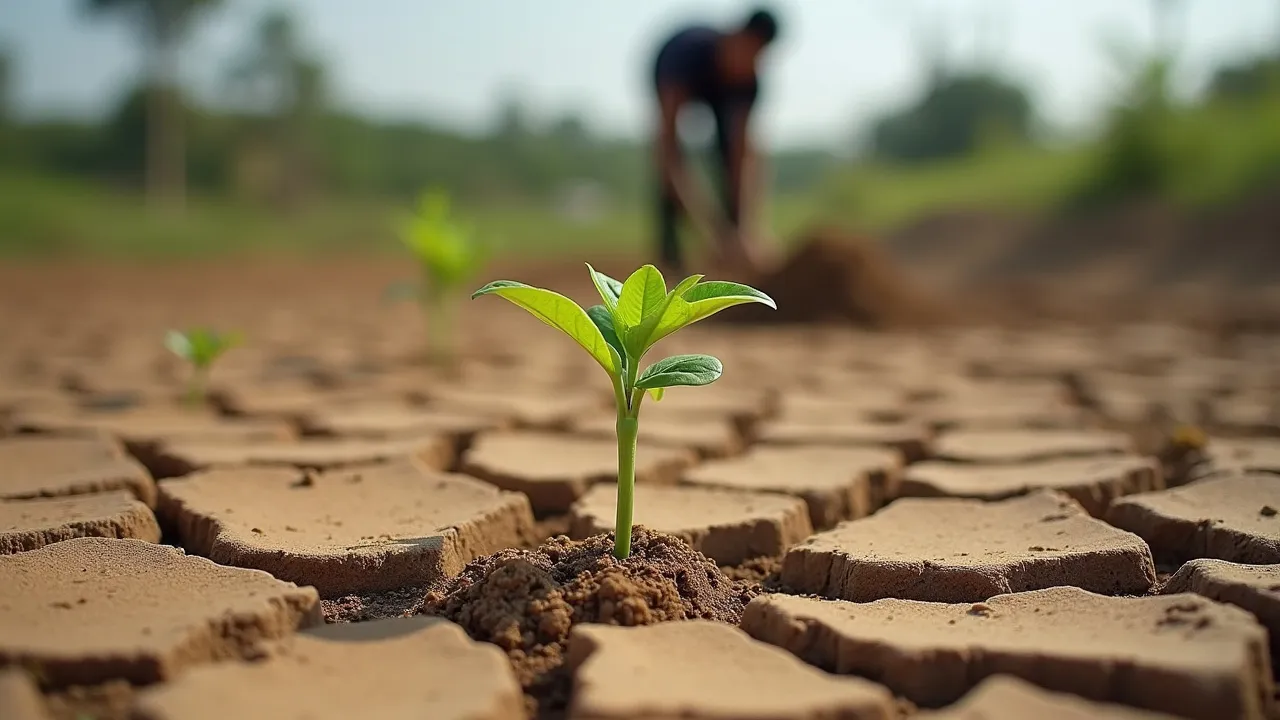
Observed June 17th, this UN day raises awareness about desertification, land degradation, and drought, promoting sustainable land management.
The Historical Origins & Evolutionary Journey
The World Day to Combat Desertification and Drought (WDCDD) was established by the United Nations General Assembly in 1994 to raise awareness about the global challenges of desertification, land degradation, and drought. The date June 17th was chosen to commemorate the adoption of the United Nations Convention to Combat Desertification (UNCCD) on that day in 1994.
The Foundational Catalyst
The roots of this observance trace back to the 1970s when severe droughts in the Sahel region of Africa caused widespread famine and ecological collapse. The international community recognized the urgent need for coordinated action to combat desertification. The 1992 Earth Summit in Rio de Janeiro highlighted desertification as a major environmental concern, leading to the creation of the UNCCD as a legally binding international agreement.
The Legislative Adoption and First Celebration
The UN General Assembly adopted resolution A/49/562 on December 19, 1994, establishing June 17th as World Day to Combat Desertification and Drought. The first official observance took place in 1995, marking a pivotal moment in global environmental advocacy. Since then, the day has grown into a platform for promoting sustainable land management and drought resilience.
Modern Global Legacy
Today, the day is coordinated by the UNCCD Secretariat and celebrated in over 100 countries. It serves as a catalyst for policy change, community action, and international cooperation. The 2018-2030 Land Degradation Neutrality (LDN) target under the UNCCD has refocused efforts on restoring degraded lands and achieving a land-degradation-neutral world. Each year features a specific theme, such as 'Restoring Land for Drought Resilience' in 2023.
How to Celebrate World Day to Combat Desertification and Drought
Celebrating this day involves both individual actions and collective efforts to combat land degradation and drought. Here are practical ways to participate:
For Individuals
- Plant Trees and Native Vegetation: Participating in local tree-planting drives helps restore degraded land and improve soil health.
- Reduce Soil Erosion: Implement sustainable gardening practices such as mulching, contour plowing, and using cover crops.
- Conserve Water: Fix leaks, use rainwater harvesting, and adopt xeriscaping techniques to minimize water waste.
- Educate Yourself and Others: Read about desertification and share information on social media using official hashtags like #WorldDayToCombatDesertification.
For Schools and Educational Institutions
- Organize workshops on sustainable land management and drought preparedness.
- Conduct tree-planting campaigns in school premises and local communities.
- Host debates and art competitions focused on environmental stewardship.
- Integrate land degradation topics into science and geography curricula.
For Organizations and Corporations
- Adopt sustainable supply chain practices that avoid deforestation and soil depletion.
- Support land restoration projects through corporate social responsibility (CSR) initiatives.
- Host internal awareness sessions and encourage employee volunteerism in local conservation efforts.
- Partner with NGOs and UNCCD to promote land degradation neutrality.
Global and Regional Traditions
In Africa, many communities organize tree-planting ceremonies and drought preparedness workshops. In China, the day is marked by large-scale afforestation projects, such as the Great Green Wall initiative. In Latin America, countries like Chile hold seminars on sustainable pastoralism and soil conservation. The European Union uses the day to promote agricultural policies that prevent overgrazing and deforestation.
Global Impact and Current Status of Desertification
Desertification and land degradation affect over 2 billion people worldwide, particularly in dryland regions. According to the UNCCD, 12 million hectares of productive land are lost each year due to drought and desertification, an area equivalent to the size of Malawi. This threatens food security, livelihoods, and biodiversity. The global economic cost of land degradation is estimated at $10 trillion annually.
The Human Cost
Communities in Sub-Saharan Africa, Central Asia, and the Middle East are disproportionately affected. Desertification leads to forced migration, increased poverty, and conflict over dwindling resources. The Great Green Wall initiative in Africa aims to restore 100 million hectares of land by 2030, creating jobs and mitigating desertification.
Impact on Climate Change
Land degradation releases carbon stored in soils, exacerbating climate change. Conversely, sustainable land management can sequester up to 1 gigaton of carbon per year. The IPCC Special Report on Climate Change and Land emphasizes the role of land restoration in achieving the Paris Agreement goals.
The UNCCD and Its Role in Combating Desertification
The United Nations Convention to Combat Desertification (UNCCD) is the sole legally binding international agreement linking environment and development to sustainable land management. Adopted in 1994 and entered into force in 1996, it has 197 parties. The UNCCD's three main objectives are:
- To combat desertification and mitigate the effects of drought.
- To improve the productivity of land in affected areas.
- To support sustainable development through land restoration.
The Convention operates through National Action Programs (NAPs) and regional initiatives. It also promotes the Land Degradation Neutrality (LDN) target, which aims to halt and reverse land degradation by 2030. The UNCCD Secretariat, based in Bonn, Germany, coordinates global efforts and organizes the World Day to Combat Desertification each year.
Sustainable Land Management Practices to Combat Desertification
Sustainable land management (SLM) is critical to reversing desertification. Practices include:
Agroforestry and Reforestation
Integrating trees with crops and livestock improves soil fertility, prevents erosion, and enhances water retention. Silvopastoral systems are especially effective in drylands.
Conservation Agriculture
No-till farming, crop rotation, and cover cropping maintain soil structure and reduce degradation. These methods increase organic matter and moisture-holding capacity.
Water Harvesting and Irrigation Efficiency
Techniques like contour bunds, check dams, and drip irrigation maximize water use in arid regions. Rainwater harvesting is essential for drought-prone areas.
Soil Conservation Measures
Terracing, windbreaks, and contour plowing prevent soil erosion. Sand dune stabilization using grasses or shrubs is used in desert margins.
The Interconnection Between Climate Change and Desertification
Desertification and climate change are deeply interconnected. Droughts are becoming more frequent and severe due to global warming, accelerating land degradation. In turn, desertified lands emit carbon dioxide and reduce the land's capacity to sequester carbon, creating a positive feedback loop. The IPCC projects that up to 20% of global land could be at risk of severe degradation by 2050 under current trends.
Mitigating desertification can help adapt to climate change by improving water storage and reducing heat island effects. Land restoration is a nature-based solution that provides multiple benefits: carbon storage, biodiversity conservation, and poverty reduction.
Historical Timeline
UN Conference on Desertification (UNCOD) in Nairobi brings global attention to desertification; Plan of Action adopted.
UN General Assembly decides to establish an Intergovernmental Negotiating Committee for a desertification convention.
Adoption of the United Nations Convention to Combat Desertification (UNCCD) on June 17.
First official observance of World Day to Combat Desertification and Drought on June 17.
UNCCD enters into force.
UN General Assembly reaffirms the observance and calls for enhanced action against desertification.
UN General Assembly adopts the Sustainable Development Goals, including target 15.3 for Land Degradation Neutrality.
UNCCD launches the Land Degradation Neutrality (LDN) Fund to support large-scale land restoration.
The UN Decade on Ecosystem Restoration (2021-2030) begins, promoting land restoration efforts.
Theme 'Restoring Land for Drought Resilience' emphasizes the link between land health and drought preparedness.