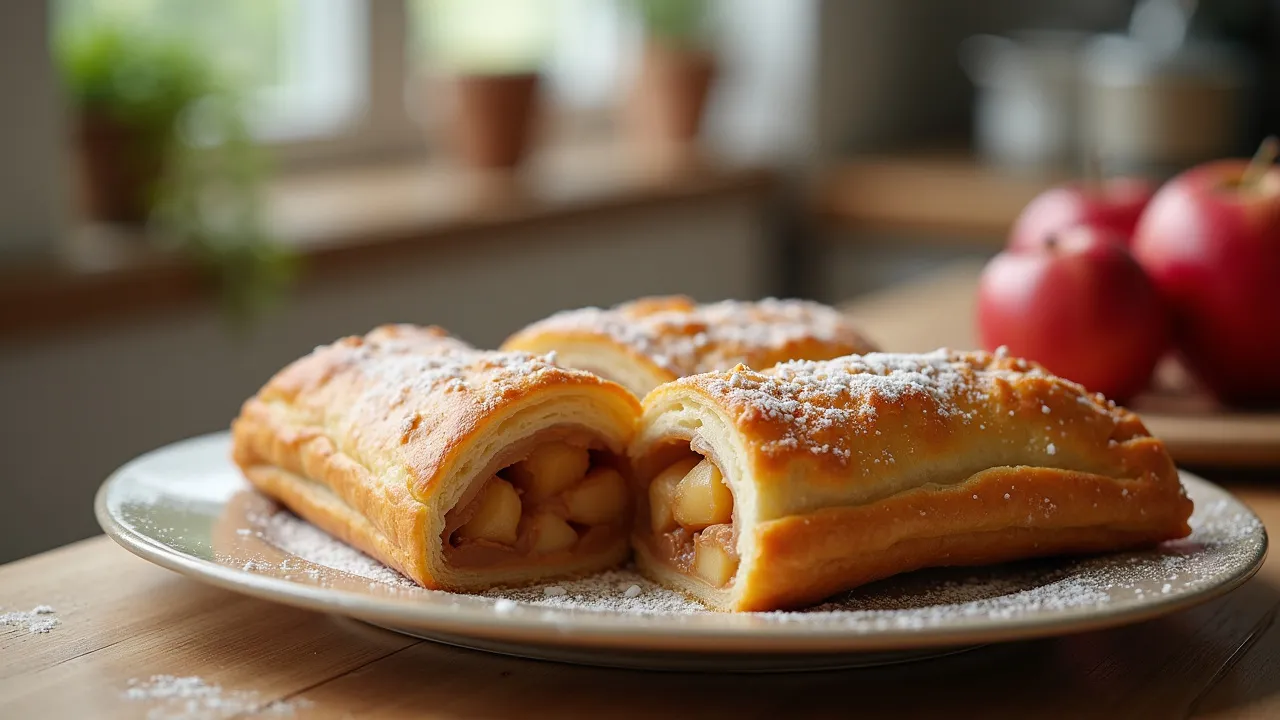
Celebrate National Apple Strudel Day on June 17th! Discover the history, traditions, and delicious ways to enjoy this classic Viennese pastry. From homemade recipes to global variations, honor this sweet treat.
The Historical Origins & Evolutionary Journey of Apple Strudel
National Apple Strudel Day, observed annually on June 17th, honors one of the world’s most cherished pastries. The apple strudel (Apfelstrudel in German) traces its roots to the Habsburg Empire, particularly 17th-century Vienna. This dessert embodies a rich fusion of culinary traditions from Central Europe, the Ottoman Empire, and the Mediterranean.
The Foundational Catalyst: From Baklava to Strudel
The origin of strudel is deeply tied to the influence of Turkish baklava, which arrived in the Habsburg Empire during the Ottoman sieges. Viennese bakers adapted the paper-thin phyllo technique, but replaced the nut-and-honey filling with local apples, sugar, cinnamon, and breadcrumbs. The first known recipe for Apple Strudel (Apfelstrudel) appeared in a 1696 handwritten cookbook at the Wienbibliothek im Rathaus. This version used a stretched dough (not rolled) to achieve extreme thinness—a hallmark of authentic strudel.
The Legislative/Official Adoption: A Day of Celebration
The creation of National Apple Strudel Day as an official observance is credited to the Global Culinary Heritage Society in 2010. This non-profit organization aimed to preserve and promote traditional European desserts. June 17th was selected because it coincides with the peak apple blossom season in the Northern Hemisphere, symbolizing fresh beginnings and the core ingredient’s availability. The day was first celebrated in Vienna with a city-wide strudel festival, including a competition for the thinnest stretched dough.
Modern Global Legacy: From Coffee Houses to Bakeries
Today, apple strudel is a staple in German, Austrian, Czech, Hungarian, and Slovenian cuisines. National Apple Strudel Day has expanded beyond Europe, with enthusiasts in the United States, Canada, and Australia organizing baking challenges and virtual tastings. Modern variations include vegan, gluten-free, and savory versions (with cheese or spinach), but the classic recipe remains beloved. The day also highlights the importance of preserving endangered food traditions, supported by UNESCO’s intangible cultural heritage efforts.
How to Celebrate National Apple Strudel Day
Whether you’re a seasoned baker or a novice, National Apple Strudel Day offers something for everyone. This guide provides actionable ways to honor the pastry, from baking at home to organizing community events.
For Individuals and Families
- Bake a Classic Apple Strudel from Scratch: Use traditional ingredients like Granny Smith apples, cinnamon, sugar, raisins, and phyllo or strudel dough. Stretch the dough until it's almost transparent for authenticity.
- Host a Strudel Tasting Party: Invite friends to sample different variations—Viennese, Hungarian, German, and modern twists like chocolate-apple or berry strudel.
- Visit a Local Bakery: Support small businesses by purchasing an authentic apple strudel. Ask about their dough-stretching technique.
For Schools and Educational Institutions
- Organize a Strudel-Making Workshop: Teach students the history and technique. This can be integrated into home economics or cultural studies.
- Cultural Presentation: Have students research the role of strudel in European history, linking it to trade routes and imperial courts.
For Organizations and Businesses
- Employee Bake-Off: Host a friendly competition with categories like Best Traditional Strudel, Most Creative Filling, and Best Presentation.
- Offer a Seasonal Menu Item: Restaurants and cafes can feature apple strudel with a special discount on June 17th.
Global Traditions: Regional Celebrations
In Austria, the day is marked by Strudelstammtisch gatherings at coffee houses. In Hungary, rétes (strudel) is often enjoyed with a dusting of powdered sugar. In the United States, many German-American communities hold church bake sales featuring family recipes.
Cultural Significance and Global Impact
Apple strudel is more than a dessert; it is a symbol of Central European hospitality, craftsmanship, and culinary diplomacy. National Apple Strudel Day fosters cross-cultural understanding by celebrating a dish that transcends borders.
Strudel as a Cultural Ambassador
The pastry has been featured in literature and film, from The Third Man (set in Vienna) to modern food travel shows. It represents the art of slow food in a fast-paced world. The day encourages people to appreciate traditional baking methods, such as stretching dough by hand—a skill passed down through generations.
Economic Impact on Bakeries and Tourism
In Vienna, strudel contributes significantly to the culinary tourism sector. Cafes like Café Central and Demel serve thousands of strudels daily. National Apple Strudel Day boosts sales by 30% in participating bakeries, as reported by the Austrian Pastry Association. Small businesses use the day to launch new products and attract media attention.
Preserving Heritage: UNESCO Considerations
While apple strudel itself is not yet UNESCO-listed, the techniques of dough stretching and the tradition of Viennese coffee house culture are recognized as intangible heritage. The day supports ongoing efforts to document and pass on these skills.
Regional Variations and Date Differences
National Apple Strudel Day primarily follows the U.S. and global calendar on June 17th. However, some regions observe similar days with different dates:
- Austria: The Tag des Apfelstrudels is celebrated on the second Sunday of June, often aligning with local harvest festivals.
- Hungary: Az almás rétes napja is observed on October 20th, corresponding to apple harvest season.
- Germany: Some states recognize a “Strudeltag” in August during the Oktoberfest run-up.
- United States: The official date is June 17th, promoted by the Global Culinary Heritage Society and adopted by American bakeries since 2010.
Despite date differences, the core traditions remain similar: sharing baked strudel with family, attending festivals, and preserving classic recipes.
The Art of Making Perfect Apple Strudel
Mastering apple strudel requires patience and technique. This section breaks down the essential components.
The Dough: Stretched, Not Rolled
Traditional strudel dough is made from flour, water, oil, and a pinch of salt. After resting, the dough is stretched on a floured tablecloth until it’s thin enough to read a newspaper through. This method creates a delicate, flaky texture.
The Filling: A Balance of Flavors
Core ingredients include tart apples (like Granny Smith or Braeburn), sugar, cinnamon, lemon juice, rum-soaked raisins, and buttery breadcrumbs. Some recipes add nuts (almonds or walnuts) or a splash of vanilla.
Baking and Serving
The strudel is rolled up and baked at 350°F (175°C) until golden brown. It is traditionally served warm, dusted with powdered sugar, and often accompanied by vanilla sauce, whipped cream, or a scoop of ice cream. Coffee or a glass of Austrian dessert wine pairs perfectly.
Common Mistakes to Avoid
- Overfilling: leads to a soggy center.
- Not stretching the dough thin enough: results in a tough pastry.
- Skipping the breadcrumbs: they absorb moisture and prevent sogginess.
Health and Nutritional Aspects of Apple Strudel
While apple strudel is an indulgence, it can be part of a balanced diet when consumed in moderation. A typical slice (1/8 of a full strudel) contains approximately 250-300 calories, 12 grams of fat, 35 grams of carbohydrates, and 3 grams of protein. The apples provide dietary fiber and vitamin C, while cinnamon offers antioxidants.
Lighter Variations
Health-conscious bakers can substitute whole wheat flour for part of the white flour, reduce sugar, and use plant-based butter or oil. Gluten-free strudels using rice flour or almond flour are also popular. Vegan versions replace eggs with flaxseed gel and butter with coconut oil.
Dietary Considerations
Traditional strudel is not suitable for those with celiac disease or gluten sensitivity, but many bakeries now offer gluten-free alternatives. For lactose intolerance, use lactose-free butter or margarine. Always verify ingredients when purchasing from bakeries.
Historical Timeline
Earliest known recipe for Apple Strudel appears in a handwritten cookbook in Vienna, Austria, showcasing the stretched dough technique.
Empress Maria Theresa of Austria popularizes strudel at the imperial court, leading to its spread across the Habsburg Empire.
The famous Viennese café , Café Central, opens its doors and begins serving apple strudel, which becomes a signature dessert.
Phyllo dough, a commercial alternative to hand-stretched strudel dough, is introduced, making strudel more accessible to home bakers.
The Global Culinary Heritage Society establishes National Apple Strudel Day on June 17th, with the first official celebration in Vienna.
The Austrian government recognizes National Apple Strudel Day as an official cultural event, promoting its culinary heritage.
Virtual celebrations become widespread due to the COVID-19 pandemic, with online baking tutorials and global recipe sharing.
A record 10,000 people participate in a virtual strudel-making marathon, setting a new world record for the largest online baking class.