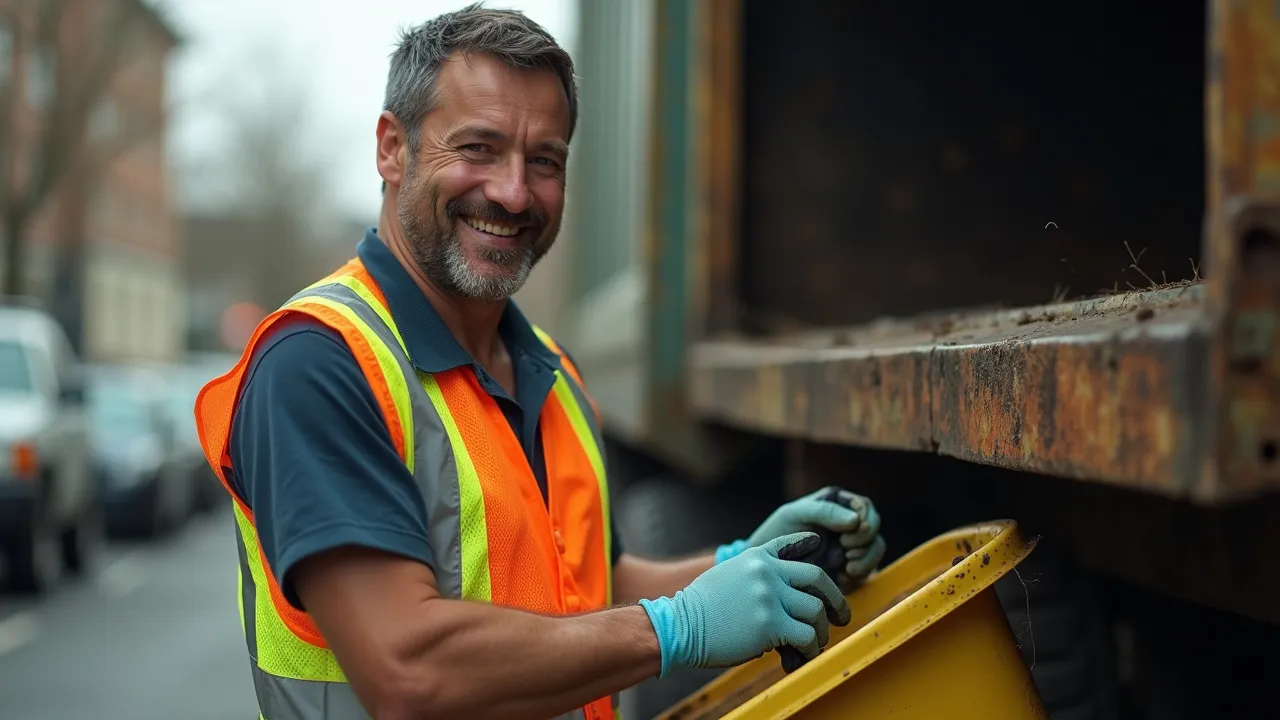
Global Garbage Man Day, observed annually on June 17th, honors the dedicated sanitation workers who keep our communities clean and safe. It celebrates their essential role in public health and environmental sustainability.
The Historical Origins & Evolutionary Journey
Global Garbage Man Day was founded in 2014 by John J. Arwood, a third-generation waste industry professional and CEO of Arwood Waste, to address the lack of public recognition for sanitation workers. The day was strategically placed on June 17th to coincide with the start of Waste & Recycling Workers Week, a broader initiative to spotlight the industry.
The Foundational Catalyst
The idea emerged after Arwood noticed a pattern: sanitation workers were often invisible despite performing critical, hazardous work. He envisioned a day that would not only thank individual workers but also educate the public about the complexities of modern waste management. In many communities, garbage collectors face stigma and low wages, yet they are frontline workers in public health. The first celebration in 2014 involved a small gathering of industry leaders and local officials in Florida, but media coverage quickly spread the concept nationwide.
The Legislative/Official Adoption
Within a few years, several U.S. states issued proclamations recognizing June 17th as Global Garbage Man Day. Municipalities began incorporating the day into their official calendars, encouraging residents to leave thank-you notes or small gifts for their collectors. Internationally, waste management associations in Canada, Australia, and the United Kingdom adopted the day, tailoring events to local cultures. By 2020, the observance had become a global phenomenon, supported by organizations like the Solid Waste Association of North America (SWANA) and the International Solid Waste Association (ISWA).
Modern Global Legacy
Today, Global Garbage Man Day is a platform for advocacy. It highlights the need for better safety equipment, fair wages, and mental health support for sanitation workers. The day also emphasizes the environmental impact of waste—proper disposal and recycling are cornerstones of sustainability. As the world produces over 2 billion tons of municipal solid waste annually, the role of garbage men and women has never been more crucial.
How to Celebrate Global Garbage Man Day
Celebrating Global Garbage Man Day is about meaningful action that shows respect and gratitude. Below are specific strategies for individuals, schools, and organizations, adapted for different cultural contexts worldwide.
Individual Actions
- Leave a thank-you note on your garbage or recycling bin. Express specific appreciation for their service.
- Offer a small gift like a cold beverage, snack, or gift card. Check with your local waste company for any restrictions.
- Wave and smile when you see them working—simple acknowledgment matters.
School and Community Programs
- Organize a poster contest where children create artwork honoring garbage collectors. Display them at the local waste facility.
- Invite a sanitation worker to speak at a school assembly about waste reduction and career opportunities.
- Host a waste audit to demonstrate proper sorting and recycling.
Corporate and Municipal Celebrations
- Host an appreciation lunch for all sanitation employees, complete with awards for long service.
- Launch a public awareness campaign on social media using hashtags like #GlobalGarbageManDay.
- Provide wellness resources such as free health screenings or stress management workshops.
Regional Traditions
- In the United States, many cities host parades featuring decorated garbage trucks.
- In Japan, where waste sorting is meticulous, residents often give handwritten cards to collectors.
- In Germany, recycling centers hold open houses to educate the public.
- In Brazil, samba schools sometimes create floats honoring catadores (waste pickers).
The Global Impact of Sanitation Workers
Sanitation workers are the backbone of urban hygiene. Without them, cities would succumb to disease and environmental decay. The COVID-19 pandemic underscored their essential status—while millions stayed home, garbage collectors continued their rounds, often without adequate protective gear. According to the World Health Organization, unsafe waste management contributes to over 1 million deaths annually from vector-borne diseases. Proper collection and disposal reduce these risks dramatically.
Economic Contributions
The global waste management industry is valued at over $400 billion and employs millions. In developing countries, informal waste pickers play a significant role, collecting up to 60% of recyclable materials. Formalizing their work through cooperatives and fair compensation is a key goal of Global Garbage Man Day advocacy.
Environmental Guardians
Sanitation workers are the first line of defense against plastic pollution and landfill overflow. By ensuring recyclables are separated and hazardous waste is handled safely, they directly support circular economies. The day promotes policies that invest in modern infrastructure, such as waste-to-energy plants and composting facilities.
Health, Safety, and Dignity in the Waste Industry
Sanitation work is one of the most dangerous professions globally, with injury rates higher than construction or law enforcement. Common hazards include needle sticks, crush injuries, and respiratory issues from inhaling dust and fumes. Mental health is also a concern; workers often face stigmatization and post-traumatic stress from witnessing traumatic scenes.
Safety Innovations
Modern trucks feature automated arms to reduce physical strain, but many municipalities still rely on manual collection. Global Garbage Man Day advocates for mandatory safety training, ergonomic equipment, and access to clean hand-washing stations.
Fighting Stigma
In many cultures, garbage collectors are considered low-status. The day challenges this perception by highlighting their expertise and resilience. Educational campaigns emphasize that waste management is a skilled trade requiring knowledge of chemistry, logistics, and public health.
Environmental Stewardship and Recycling Innovations
Waste reduction begins at the curb. Global Garbage Man Day promotes three key strategies: reduce, reuse, recycle. Advanced recycling technologies, such as chemical recycling and AI-powered sorting, are transforming the industry. Sanitation workers are often the first to notice contamination—items that should not be in recycling bins—and can educate residents on proper practices.
Community-Based Programs
- Composting initiatives reduce organic waste in landfills, cutting methane emissions.
- E-waste drives prevent toxic materials like lead and mercury from leaching into soil.
- Zero-waste challenges encourage households to audit their trash and find alternatives.
The day also highlights the importance of extended producer responsibility (EPR) laws, which make manufacturers accountable for packaging disposal.
Recognizing Unsung Heroes: Community Initiatives
Across the globe, communities have found creative ways to honor their garbage collectors. In India, some residential societies host annual felicitation ceremonies. In South Africa, waste reclaimers are increasingly recognized through partnerships with local governments. Global Garbage Man Day provides a template for these efforts, encouraging sustained appreciation beyond a single date.
Volunteer Opportunities
Many organizations organize clean-up drives on or around June 17th. Volunteers accompany sanitation workers on routes to observe their challenges and assist with light tasks (with safety precautions). These experiences foster empathy and often lead to long-term support for policy changes.
Corporate Partnerships
Companies like Waste Management and Veolia often sponsor events on this day. They may donate a portion of proceeds to worker wellness funds or offer scholarships for employees' children. Such partnerships amplify the day's message and demonstrate corporate social responsibility.
Historical Timeline
The Solid Waste Disposal Act is passed in the U.S., establishing federal guidelines for waste management and recognizing the importance of sanitation workers.
John J. Arwood establishes Global Garbage Man Day, first celebrated in Florida on June 17th as part of Waste & Recycling Workers Week.
Several U.S. states issue official proclamations recognizing June 17th as Global Garbage Man Day, encouraging public participation.
The observance goes global; waste management associations in Canada, Australia, and the UK adopt the day, organizing events and media campaigns.
During the COVID-19 pandemic, Global Garbage Man Day gains heightened significance as sanitation workers are recognized as essential frontline workers.
The United Nations Environment Programme (UNEP) references Global Garbage Man Day in its campaign for sustainable waste management and worker safety.