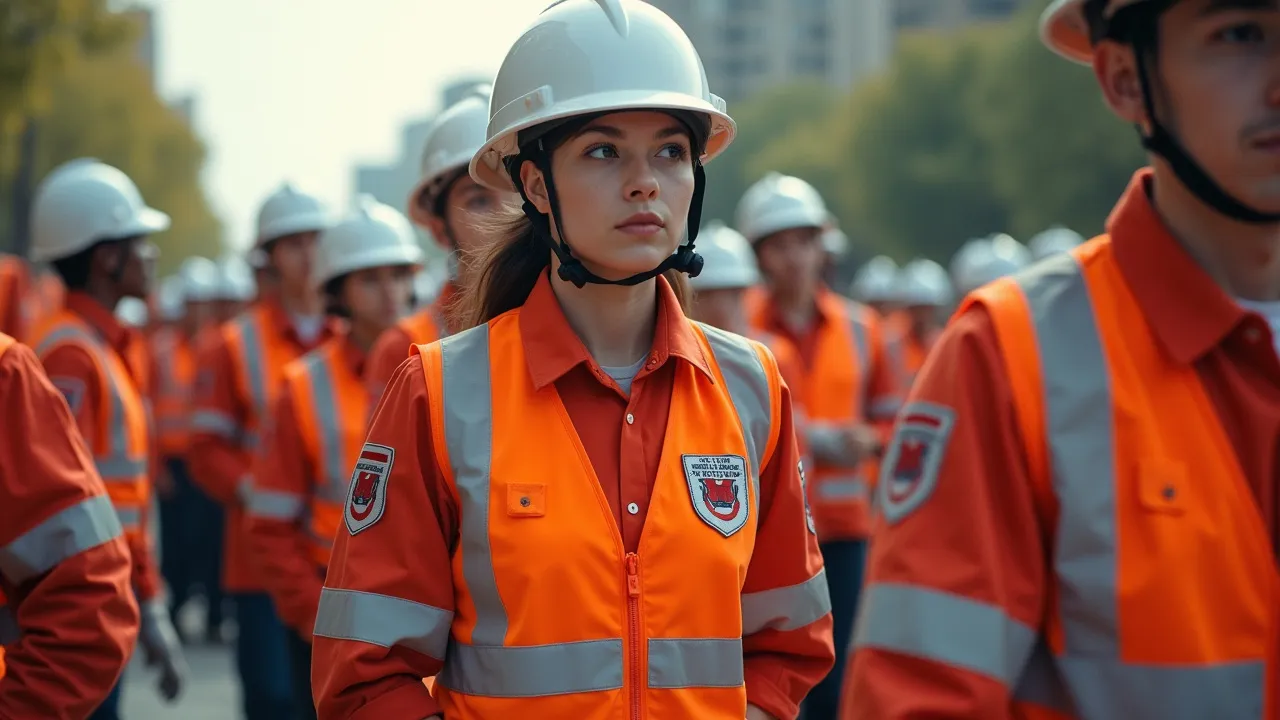
World Civil Defence Day, observed annually on March 1st, promotes global awareness of civil protection measures and honours the dedication of civil defence volunteers worldwide.
The Historical Origins & Evolutionary Journey
World Civil Defence Day traces its roots to the formation of the International Civil Defence Organisation (ICDO) in 1931. Initially established as a non-governmental association under the name 'Association of Civil Defence Officers', it evolved into an intergovernmental organisation after World War II. The day itself was first proclaimed by the ICDO in 1990 and observed on March 1st to coincide with the anniversary of the ICDO's constitution coming into force. Over the decades, the observance has expanded from a niche professional event into a global awareness campaign involving over 50 member states.
The Foundational Catalyst
The devastation of World War I and the interwar period underscored the need for organised civilian protection. In 1931, French General Georges Saint-Paul proposed a permanent body to coordinate civil defence efforts. The Association of Civil Defence Officers was founded in Paris, laying the groundwork for what would become the ICDO. This early network focused on exchanging knowledge about air raid precautions and emergency preparedness.
Legislative & Official Adoption
In 1966, the ICDO was granted intergovernmental status by a diplomatic conference, with its headquarters in Geneva, Switzerland. The organisation's constitution entered into force on March 1, 1972, a date later chosen for World Civil Defence Day. The official proclamation in 1990 aimed to 'draw the attention of the world public to the importance of civil protection and to pay tribute to the efforts and sacrifices of civil defence personnel'. Since then, the day has been endorsed by the United Nations Office for Disaster Risk Reduction (UNDRR) and integrated into the Sendai Framework for Disaster Risk Reduction.
Modern Global Legacy
Today, World Civil Defence Day serves as a platform to promote disaster resilience, community preparedness, and the professionalisation of civil defence services. Annual themes reflect current challenges, such as climate-induced disasters, cybersecurity threats, and pandemic response. The day also honours the selfless service of volunteers who risk their lives to protect others, reinforcing the message that civil defence is a shared responsibility.
How to Celebrate World Civil Defence Day
World Civil Defence Day is marked by a variety of activities that raise awareness and build capacity for disaster response. From school drills to high-level policy forums, the day encourages active participation across all sectors of society. Below are key ways individuals, communities, and organisations can observe the day effectively.
For Individuals & Families
- Prepare an emergency kit: Assemble a go-bag with water, food, first aid, flashlights, and important documents.
- Attend a local workshop: Many fire departments and civil defence agencies offer free CPR, first aid, and fire safety training on March 1st.
- Sign up as a volunteer: Join your country's civil defence or emergency management volunteer corps.
For Schools & Universities
- Organise a disaster drill: Conduct a lockdown or evacuation exercise with clear protocols and debriefing.
- Invite a speaker: Host a civil defence professional to discuss careers in emergency management.
- Launch a poster contest: Encourage students to create artwork on civil protection themes.
For Businesses & Organisations
- Review continuity plans: Use the day to update business continuity and crisis communication plans.
- Offer employee training: Provide sessions on situational awareness and emergency response.
- Partner with local agencies: Sponsor a community preparedness fair or donate equipment to volunteer units.
Global Traditions by Region
In Europe, many countries hold open house events at civil defence headquarters. In Asia, public awareness campaigns often focus on earthquake and tsunami preparedness. In Africa, community-based early warning systems are highlighted. Latin American nations frequently organise nationwide siren tests. The common thread is a commitment to 'knowing the risks and preparing to act'.
Global Impact & Societal Transformation
World Civil Defence Day has catalysed significant progress in disaster risk reduction worldwide. It has helped shift public perception of civil defence from a wartime concept to a peacetime necessity. The day’s annual themes—such as 'Civil Defence and First Aid' or 'Civil Defence and Emerging Technologies'—drive policy changes and funding allocations.
Strengthening Legal Frameworks
Many countries have enacted or updated national civil defence laws following awareness generated by the observance. For instance, the 2015 Sendai Framework explicitly references civil defence organisations as key stakeholders. The day also promotes the integration of civil protection into national sustainable development plans.
Enhancing Volunteer Engagement
Volunteerism is a cornerstone of civil defence. World Civil Defence Day provides a rallying point for recruitment drives and recognition ceremonies. In countries like Switzerland and Sweden, civil defence volunteers are highly trained and form a vital reserve during emergencies. The day highlights their value and encourages new recruits to join their ranks.
Cross-Border Collaboration
The observance fosters international cooperation through joint exercises and knowledge exchange. The ICDO’s network of training centres, such as the Civil Defence Academy in Dubai, offer specialised courses that align with the day’s objectives. Bilateral agreements between nations for mutual aid during disasters are often announced on March 1st.
Core Themes & Societal Relevance
Each year, World Civil Defence Day adopts a specific theme to focus global attention on a pressing issue. These themes reflect the evolving nature of hazards and the need for adaptive strategies. Recent themes have addressed:
- Climate change adaptation: How civil defence can mitigate risks from extreme weather events.
- Technological risks: Preparedness for cyberattacks, industrial accidents, and space weather.
- Public health emergencies: Integrating pandemic response with traditional civil defence.
The societal relevance extends beyond emergencies; it promotes a culture of safety that permeates daily life. For example, building codes, land-use planning, and early warning systems are all influenced by civil defence principles highlighted on this day.
Industry Transformations & Professional Development
The civil defence sector has undergone profound changes, driven by technology and the interconnected nature of modern risks. World Civil Defence Day serves as a platform to showcase innovations and professional standards.
Technology Integration
Drones, AI-based early warning systems, and mobile apps have revolutionised situational awareness and response coordination. The day often features demonstrations of these tools, encouraging wider adoption by local agencies.
Training & Certification
Professional certifications, such as the Certified Emergency Manager (CEM) designation, are promoted during the observance. Many training organisations offer discounts or special courses in honour of March 1st.
Public-Private Partnerships
Businesses increasingly partner with civil defence agencies to enhance community resilience. World Civil Defence Day provides a formal occasion to announce corporate social responsibility initiatives, such as funding for emergency supplies or sponsoring community drills.
Educational Outreach & Youth Engagement
Education is a key pillar of World Civil Defence Day. Schools, universities, and community centres incorporate the day into their curricula to build a generation that understands risk and knows how to respond.
School Programs
Many countries have developed age-appropriate resources: colouring books for young children on 'What to do in an earthquake', interactive simulations for teenagers, and career guidance for older students.
University Collaborations
Academic institutions host seminars and research symposia on March 1st. Topics range from social vulnerability assessment to engineering resilience. Some universities offer short certificate courses in disaster management that begin on this day.
Youth Competitions
The ICDO and its members organise international essay, poster, and video contests for young people. Winners are announced on World Civil Defence Day, incentivising creative engagement with civil defence topics.
Historical Timeline
French General Georges Saint-Paul proposes a permanent body for civil defence. The Association of Civil Defence Officers is founded in Paris, the precursor to the ICDO.
The ICDO is granted intergovernmental status by a diplomatic conference, moving its headquarters to Geneva, Switzerland.
The ICDO constitution enters into force on March 1st, establishing the legal framework for the organisation.
The ICDO proclaims March 1st as World Civil Defence Day, with the first official observance held globally.
The United Nations General Assembly recognises World Civil Defence Day in a resolution, encouraging member states to participate.
The Sendai Framework for Disaster Risk Reduction includes civil defence as a key stakeholder, amplifying the day’s importance.
World Civil Defence Day focuses on 'Civil Defence and Pandemics' in light of the COVID-19 crisis, highlighting the role of civil protection in public health emergencies.
The ICDO launches a global campaign for climate-adaptive civil defence, using the day to promote early warning systems and community resilience.