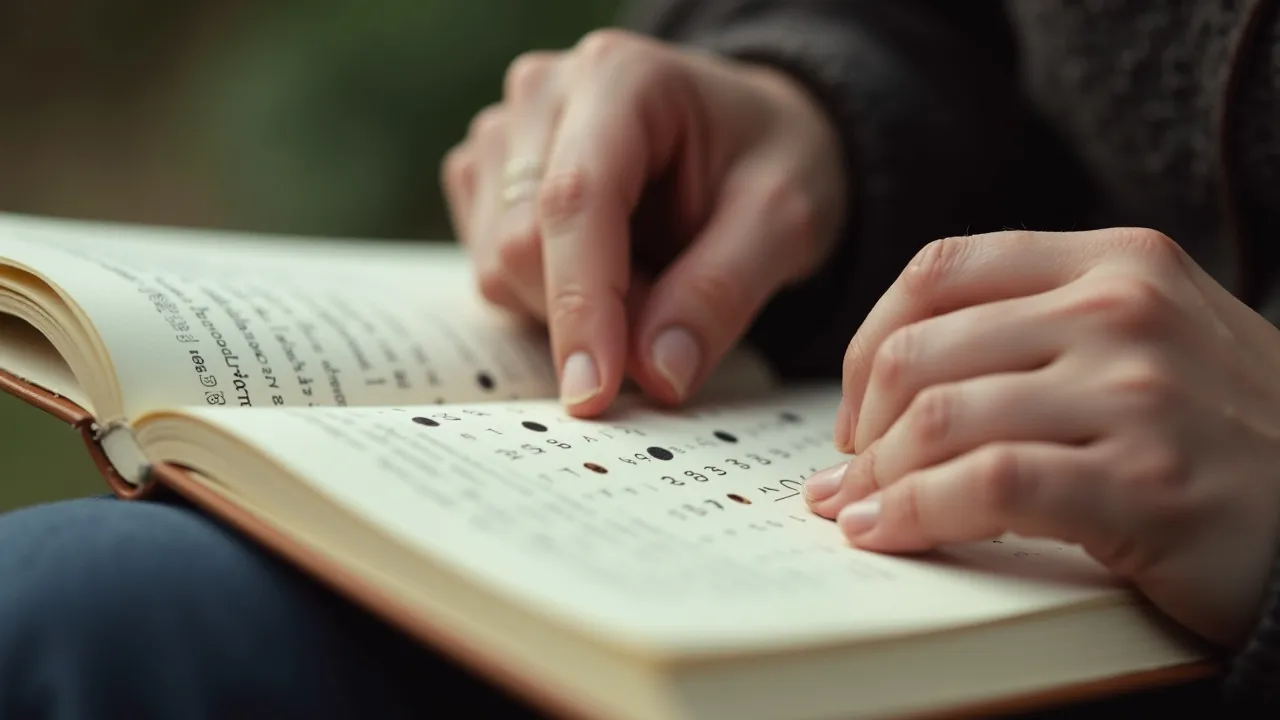
World Braille Day, observed on January 4th, honors the birth of Louis Braille and raises awareness of the importance of braille as a means of communication for blind and visually impaired people worldwide.
The Historical Origins & Evolutionary Journey
World Braille Day is observed annually on January 4th, the birthday of Louis Braille, the French inventor of the braille system. This day was officially recognized by the United Nations General Assembly in November 2018, with the first observance taking place in 2019. The day aims to highlight the importance of braille as a tactile reading and writing system for blind and visually impaired individuals, promoting accessibility and inclusion.
The Foundational Catalyst: Louis Braille's Vision
Born on January 4, 1809, in Coupvray, France, Louis Braille lost his sight at the age of three due to an accident in his father's saddle-making workshop. Despite his disability, he excelled in his studies and developed the braille code at age 15, inspired by a military communication system called 'night writing' invented by Charles Barbier. Barbier's system used 12 dots to represent sounds, but was too complex. Braille simplified it to a 6-dot cell, allowing fingers to cover the entire character at once and enabling faster reading and writing.
The Legislative/Official Adoption
Braille's system was not immediately accepted. It was officially adopted by the Royal Institute for Blind Youth in Paris in 1854, two years after Braille's death. Over the following decades, braille spread globally and became the standard for blind literacy. In the 20th century, organizations like the World Blind Union (WBU) and the International Council for the Education of the Visually Impaired (ICEVI) advocated for its universal use. The UN's recognition in 2018 marked a milestone, embedding braille as a human rights issue under the Convention on the Rights of Persons with Disabilities (CRPD).
Modern Global Legacy
Today, braille is used in over 200 languages and scripts, from English and Arabic to Chinese and Hindi. Technological advancements—such as braille displays, notetakers, and embossers—have expanded its reach. However, challenges remain, including low literacy rates among blind individuals and limited availability of braille materials. World Braille Day serves as a catalyst for change, urging governments, publishers, and educators to invest in braille production and training.
How to Celebrate World Braille Day
World Braille Day offers numerous ways for individuals, schools, and organizations to participate in raising awareness and promoting braille literacy. Here is a definitive guide with actionable strategies and traditions from around the world.
Global Celebration Ideas
Learn Braille Basics: Spend 15 minutes learning the braille alphabet using online resources or apps. Write your name or a short message using a braille slate and stylus or a braille labeler.
Read Braille Books: Visit a local library for the blind or download a free braille book from services like Bookshare or the National Library Service for the Blind and Print Disabled (NLS).
Support Braille Literacy Programs: Donate to organizations like the Braille Institute, Perkins School for the Blind, or the Royal National Institute of Blind People (RNIB) that produce and distribute braille materials.
Organize a Braille Workshop: Schools and community centers can host workshops with tactile activities, braille simulators, and demonstrations by blind instructors.
Social Media Campaigns: Use hashtags like #WorldBrailleDay, #BrailleLiteracy, and #January4 to share facts, stories, and photos of braille in action.
Regional Traditions
France: Ceremonies at the Louis Braille Museum in Coupvray and at the Panthéon in Paris, where Braille's ashes are interred.
United States: The National Federation of the Blind (NFB) often releases statements and holds virtual events. The United States Postal Service occasionally issues braille stamps.
India: Braille competitions and awareness walks are organized by the National Association for the Blind (NAB).
United Kingdom: RNIB leads 'Braille Challenge' contests for children and adults.
Japan: Braille menu tastings in restaurants that feature tactile menus.
Brazil: The Dorina Nowill Foundation for the Blind distributes free braille books and hosts reading sessions.
Corporate and Social Rituals
Accessibility Audits: Companies can review their signage, product packaging, and websites to add braille or screen-reader compatibility.
Braille Art Exhibitions: Museums may display tactile art where visitors can touch pieces labeled in braille.
Inclusive Storytimes: Libraries host story hours where sighted children wear blindfolds and follow along with braille text.
Fundraising Dinners: Participants eat in complete darkness to simulate the blind experience, with menus in braille.
The Global Impact of Braille on Education and Employment
Braille is a cornerstone of literacy for the blind, directly affecting educational outcomes and employment opportunities. According to the World Blind Union, braille literacy correlates strongly with higher rates of employment and economic independence. Yet, fewer than 10% of blind children in low-income countries receive any braille instruction. World Braille Day emphasizes the urgent need for more accessible books, qualified teachers, and assistive technologies. Initiatives like the Marrakesh Treaty (effective 2016) have helped ease copyright restrictions, allowing for cross-border sharing of accessible books. UNESCO estimates that of the hundreds of thousands of books published annually, only a tiny fraction are produced in braille—often less than 1%. This 'book famine' leaves visually impaired individuals with limited access to education, news, and culture. On January 4th, advocates call for increased production of braille materials and investment in digital braille libraries that can reach remote areas via smartphones and refreshable braille displays.
Braille in the Digital Age: Technology and Innovation
Technology has transformed braille from paper-based embossing to dynamic digital displays. Refreshable braille displays use small pins that rise and fall to render characters in real time, allowing users to read from computers, tablets, and phones. However, these devices remain expensive (often >$3,000), limiting access. Innovations such as the Braille e-book and ultra-light polymer displays aim to reduce costs. Smartphone apps like Seeing AI and Be My Eyes increasingly integrate braille output, while voice assistants like Alexa and Siri offer alternative interaction, but cannot replace the literacy benefits of braille. World Braille Day highlights the need for affordable hardware and software that respect braille's tactile nature. Organizations like the Braille Authority of North America (BANA) and the International Council on English Braille (ICEB) update standards for computerized braille—such as Unified English Braille (UEB)—to ensure consistency across platforms. On January 4th, tech companies often announce new accessibility features or discounts on braille devices.
Challenges and Barriers to Braille Literacy
Despite its proven benefits, braille literacy is declining in some wealthy nations due to over-reliance on audio technology. Many schools for the blind have shifted focus to screen readers, leaving students without robust tactile literacy skills. In developing countries, shortages of trained teachers and high production costs hamper braille access. Braille production is labor-intensive: a single braille textbook can cost hundreds of dollars and weigh several kilograms. Digital embossers are faster but still expensive. Additionally, the shortage of braille-reading role models leads to lower motivation among blind children. World Braille Day serves as a powerful reminder that braille remains essential for spelling, grammar, math, and access to music notation (braille music). Advocacy groups use this day to lobby governments for compulsory braille instruction in special education curricula and to fund braille presses. The UN's SDG 4 (Quality Education) explicitly includes accessible learning materials, and January 4th is a key moment to hold governments accountable.
Notable Figures and Organizations Championing Braille
Many individuals and groups have advanced braille since Louis Braille's time. Helen Keller, a world-famous advocate who was blind and deaf, used braille extensively and wrote several books in braille. Dr. Abraham Nemeth (1918–2013) invented the Nemeth Braille Code for mathematics and science. The National Federation of the Blind (NFB) in the U.S. runs a Braille Literacy Program that distributes free reading materials and offers the Braille Enrichment for Literacy and Learning (BELL) summer camps. Perkins School for the Blind (est. 1829) in Massachusetts is a global leader in teacher training and braille publishing. The World Blind Union (WBU) coordinates international advocacy, including the Global Braille Challenge. On January 4th, these organizations often release reports, host webinars, and issue press releases emphasizing braille's enduring relevance. Many also unveil braille books or tools, such as the Reading Without Seeing initiative in Latin America.
The Future of Braille: Inclusion in a Multi-Sensory World
As the world moves toward universal design, braille remains a vital component of accessibility. Innovations like 3D printing can produce tactile graphics and braille labels on demand, while dynamic braille using shape-memory alloys promises thinner, cheaper displays. Braille in built environments—such as elevator buttons, restaurant menus, and public signage—is required by laws like the Americans with Disabilities Act (ADA). However, compliance is inconsistent. World Braille Day pushes for stronger enforcement and more creative use of braille in art, fashion, and product design. The integration of braille in smart devices, such as Apple's (planned) braille keyboard for iPad, could democratize access. The day also encourages dialogue between sighted and blind communities, fostering a culture where braille is not stigmatized but celebrated as a unique and empowering tool. With continued advocacy and innovation, braille will remain indispensable for millions, ensuring that no one is left behind in the information age.
Historical Timeline
Louis Braille is born on January 4 in Coupvray, France.
At age 15, Braille invents the 6-dot braille system, first published later as 'Method of Writing Words, Music, and Plain Songs by Means of Dots for Use by the Blind and Arranged for Them'.
Braille is officially adopted by the Royal Institute for Blind Youth in Paris, two years after Louis Braille's death.
Standard English Braille is developed, leading to universal adoption in English-speaking countries.
The first international standard for braille music notation is established.
The International Council for the Education of the Visually Impaired (ICEVI) is founded, promoting braille literacy globally.
The World Blind Union (WBU) is established, advocating for braille rights worldwide.
Unified English Braille (UEB) is developed to unify braille codes across English-speaking countries.
The Marrakesh Treaty is adopted by WIPO, facilitating access to published works in accessible formats, including braille.
The United Nations General Assembly proclaims January 4 as World Braille Day, to be observed annually starting in 2019.
First official observance of World Braille Day on January 4, with events and campaigns worldwide.