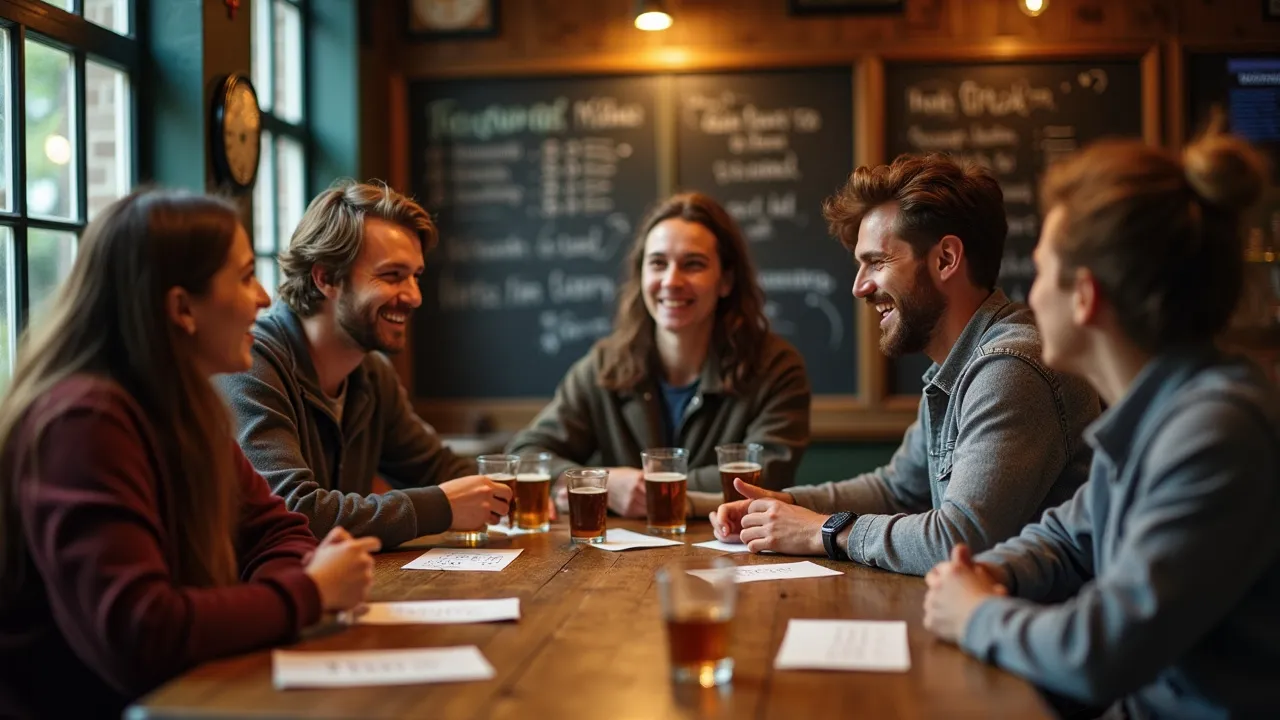
National Trivia Day, observed on January 4th, celebrates the joy of trivial knowledge and intellectual curiosity. It's a day for friends, families, and communities to engage in fun quizzes, learn new facts, and appreciate the playful side of learning.
The Historical Origins & Evolutionary Journey
National Trivia Day, observed annually on January 4th, honors the universal passion for obscure facts, oddities, and the delightful pursuit of knowledge for its own sake. While the exact origin of the day remains murky, it emerged in the late 20th century as trivia culture exploded into the mainstream. The day was likely popularized by trivia enthusiasts and organizations aiming to encourage mental agility and social bonding through quizzes.
The Foundational Catalyst
Trivia's modern roots trace back to the 1960s when college students at Yale and Harvard began informally competing in knowledge games. However, the true spark came in 1979 with the release of Trivial Pursuit, the board game that transformed trivia into a global phenomenon. By the 1990s, trivia nights at bars and restaurants became a staple, leading to the establishment of National Trivia Day as a formal observance.
The Legislative/Official Adoption
Unlike federal holidays, National Trivia Day was not enacted by government decree. Instead, it gained traction through grassroots promotion by trivia clubs, bookstores, and media outlets. In the early 2000s, National Day Calendar officially recognized January 4th as National Trivia Day, solidifying its place on the American calendar.
Modern Global Legacy
Today, National Trivia Day transcends borders. With the rise of online platforms like Sporcle, QuizUp, and social media quizzes, the day has become a digital celebration. Libraries, schools, and corporate offices host themed events, reinforcing the idea that learning can be both fun and competitive.
How to Celebrate National Trivia Day
National Trivia Day offers endless opportunities to engage with trivial knowledge. Whether you are a solo enthusiast or part of a group, here are actionable strategies to maximize the celebration.
For Individuals
- Host a Trivia Night: Invite friends over for a themed quiz. Use categories like history, pop culture, or science.
- Explore Trivia Apps: Spend time on apps like Quizlet or Jeopardy! to challenge yourself.
- Read a Trivia Book: Pick up Uncle John's Bathroom Reader or Ripley's Believe It or Not!.
For Schools
- Classroom Quizzes: Teachers can organize inter-class tournaments with subjects from the curriculum.
- Fact of the Day: Announce a new fact each period to spark curiosity.
For Organizations
- Corporate Trivia Lunch: Foster team bonding with a lunchtime quiz contest.
- Online Challenges: Use Slack or Teams to run a company-wide trivia leaderboard.
Regional Celebrations
In the United States, bar trivia is iconic. In the United Kingdom, pub quizzes are a social institution. In Japan, quiz shows dominate television. Each culture adds its flavor, from Spätskiquiz in Germany to trivia nights at cafés in India.
The Cultural Impact of Trivia in Modern Society
Trivia has evolved from a pastime into a cultural force that influences entertainment, education, and social interaction. Its impact is visible in multiple domains:
Media and Entertainment
Television shows like Jeopardy!, Who Wants to Be a Millionaire?, and The Chase draw millions of viewers. Online platforms have democratized trivia, allowing anyone to create and share quizzes. Social media quizzes, such as "Which [Fandom] Character Are You?", generate viral engagement.
Education
Trivia-based learning (gamification) improves retention and engagement. Studies show that students recall facts more effectively when learned through quizzing. The spacing effect and retrieval practice are key psychological principles leveraged by trivia.
Social Bonding
Trivia nights provide communal spaces for people to connect across generations. In an increasingly digital world, live trivia events foster face-to-face interaction and friendly competition.
The Psychology of Trivia: Why We Love It
Why do humans derive pleasure from recalling obscure facts? Neuroscience and psychology offer insights.
The Dopamine Reward
Answering a trivia question correctly triggers a release of dopamine, the neurotransmitter associated with pleasure and reward. The anticipation and uncertainty amplify the payoff, making trivia addictive.
Social Validation
Being the first to blurt out an answer provides social status within a group. This ties to our evolutionary need for recognition and belonging.
Curiosity and Learning
Trivia taps into the human curiosity drive. The information gap theory suggests that when we sense a missing piece of knowledge, we feel a need to fill it. Trivia questions create these gaps and satisfyingly close them.
Memory and Mastery
Recalling trivia strengthens neural pathways. For many, mastering trivia categories feels like building a mental library, a source of personal pride.
National Trivia Day Around the World
While the United States celebrates on January 4th, trivia traditions vary globally. In the United Kingdom, pub quizzes are a staple, often held weekly rather than annually. In Australia, trivia nights fundraise for charities. Many countries have their own trivia holidays, such as World Trivia Day (also January 4th in some calendars).
Regional Variations
- United States: National Trivia Day on Jan 4; bar trivia, office parties, online quizzes.
- United Kingdom: Pub quizzes any night; strong emphasis on music and sports categories.
- Germany: Quizabend (quiz evening) often with beer and pretzels.
- Japan: TV quiz marathons like Quiz! Hexagon II draw high ratings.
- India: College quiz fests and competitive quizzing leagues.
Some countries unofficially adopt January 4th through social media campaigns. The day's flexibility allows for cultural customization.
Trivia in the Digital Age: Apps and Communities
The internet revolutionized trivia. From niche forums to global leaderboards, digital platforms have expanded access and competition.
Key Platforms
- Sporcle: User-generated quizzes in every imaginable category.
- QuizUp: Real-time multiplayer trivia with global rankings.
- Jeopardy! App: Official daily challenges mirroring the TV show.
- Trivia HQ: Live game shows with cash prizes (though discontinued, inspired clones).
Community Building
Online trivia communities on Reddit (e.g., r/trivia), Discord servers, and Facebook groups allow enthusiasts to share questions and compete. These spaces often host themed events for National Trivia Day.
AI and Trivia
Recent advances in AI have enabled automated question generation and adaptive difficulty, making trivia accessible to learners of all levels. However, purists argue that human-curated questions retain the charm of nuanced knowledge.
The Role of Trivia in Education and Team Building
Trivia is more than fun—it's a powerful tool for learning and collaboration.
Educational Benefits
Trivia reinforces memory through active recall, a proven study technique. Teachers use trivia games as icebreakers or review sessions. Quizbowl and Academic Decathlon competitions are formalized trivia for students.
Corporate Team Building
Trivia breaks down hierarchical barriers. A well-designed trivia lunch can improve morale, communication, and cross-departmental relationships. Many companies use trivia platforms like Kahoot! for training and engagement.
Best Practices
- Mix categories to appeal to diverse interests.
- Include collaborative rounds to foster teamwork.
- Offer small prizes to incentivize participation.
National Trivia Day serves as an annual reminder to incorporate these practices into daily life.
Historical Timeline
College students at Yale and Harvard begin informal trivia competitions, laying the groundwork for modern trivia culture.
Trivial Pursuit board game is released, becoming a global bestseller and sparking widespread interest in trivia.
Bar trivia nights emerge in the United States and the United Kingdom, establishing the pub quiz tradition.
National Trivia Day is informally celebrated, with early advocates promoting January 4th through local events.
Online trivia platforms like FunTrivia and Sporcle go live, expanding access to millions.
National Day Calendar officially lists National Trivia Day on January 4th.
Mobile apps like QuizUp and Trivia HQ blow up, making trivia a daily digital habit.
During the COVID-19 pandemic, virtual trivia nights surge, often hosted via Zoom, solidifying trivia's role in connecting isolated individuals.