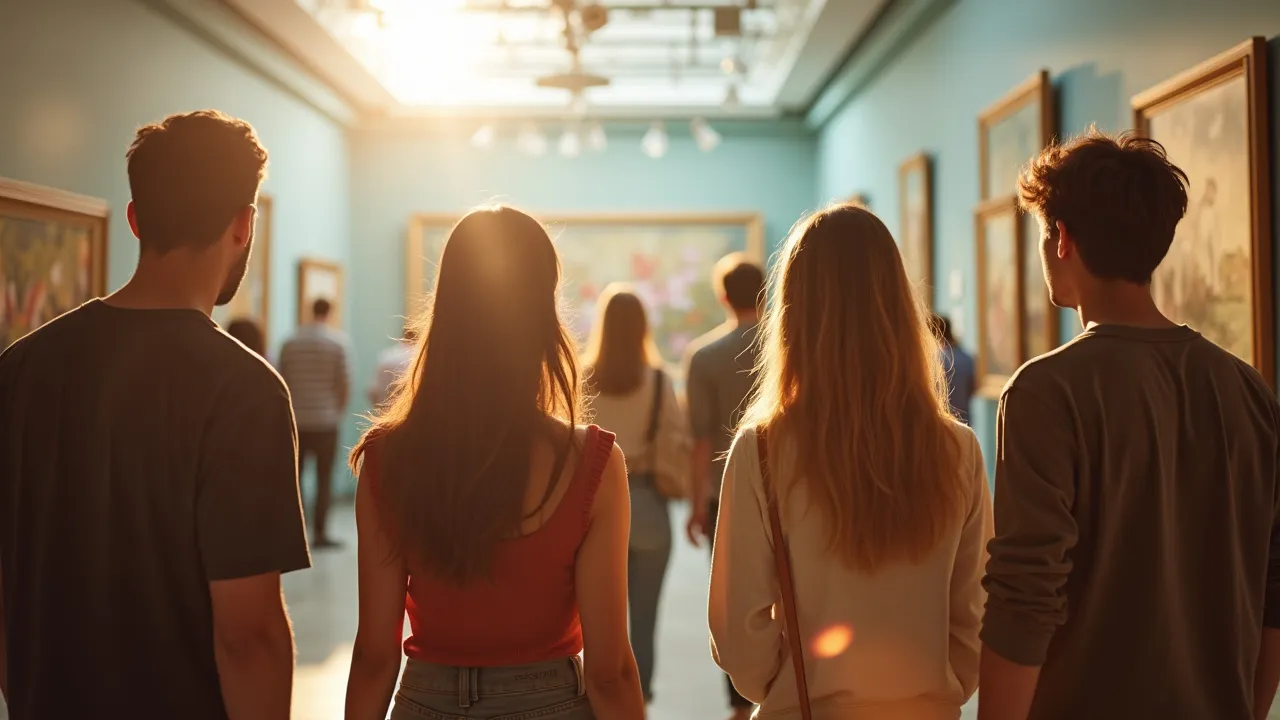
World Art Day, celebrated annually on April 15th, honors the universal language of art and its power to unite cultures. Established by the International Association of Art, it promotes creativity, education, and the appreciation of artistic expression worldwide.
Historical Origins & Evolutionary Journey
World Art Day was conceived to promote awareness of creative activity worldwide and to underscore the vital role of artists in fostering sustainable development. The initiative originated from the International Association of Art (IAA), a partner organization of UNESCO, which proposed a dedicated day to honor the fine arts and their contribution to global culture.
The Foundational Catalyst
The idea for a world-wide celebration of art emerged during the 17th General Assembly of the IAA in Guadalajara, Mexico, in 2011. Delegates recognized the need for a unified day that would highlight the diversity of artistic expressions and encourage cross-cultural dialogue. Leonardo da Vinci's birthday on April 15th was chosen because he epitomizes the Renaissance ideal of human creativity and represents the timeless power of art.
Legislative/Official Adoption
Following the IAA proposal, UNESCO officially endorsed April 15th as World Art Day at its 36th General Conference in 2011. The declaration aimed to strengthen the links between artistic productions and society, encourage art education, and emphasize the economic and social value of the creative sector. The first official World Art Day was celebrated globally on April 15, 2012, with exhibitions, workshops, and public art projects in over 150 countries.
Modern Global Legacy
Since 2012, World Art Day has grown into a significant cultural observance. It serves as a platform for artists, galleries, museums, and educational institutions to showcase the transformative power of art. The day also highlights challenges facing the creative community, such as funding, intellectual property rights, and access to art. Annual themes—like "Art for Peace" or "Art and Digital Futures"—guide global celebrations, ensuring relevance in a rapidly changing world.
How to Celebrate World Art Day
Celebrating World Art Day can be as personal or public as one wishes. Whether you are an individual, teacher, organization, or government entity, there are numerous ways to participate. Below are best practices and interactive traditions observed worldwide.
For Individuals
- Create art: Spend time drawing, painting, sculpting, or digital creating. Share your work on social media with #WorldArtDay.
- Visit a museum or gallery: Many institutions offer free admission or special exhibitions on April 15th.
- Attend virtual tours: Explore world-class collections from home via online platforms like Google Arts & Culture.
- Support local artists: Purchase original artwork, attend a performance, or buy from local craftspeople.
- Learn about art history: Read about a movement or artist you are unfamiliar with.
For Schools and Educators
- Organize art workshops: Encourage students to express themselves through various media.
- Host an art show: Display student work in common areas or online.
- Invite guest artists: Arrange talks or demonstrations by local creatives.
- Incorporate cross-curricular art: Combine art with history, science, or math lessons.
- Launch a mural project: Collaborate on a permanent piece that reflects school culture.
For Organizations and Corporations
- Sponsor public art installations: Fund sculptures or murals in urban spaces.
- Host art competitions: Encourage employees and communities to submit artwork.
- Donate to art charities: Support nonprofits that provide art access to underserved communities.
- Decorate offices: Rotate artwork from local artists to inspire creativity.
Regional Variations
While April 15th is the universal date, some countries have additional art celebrations. In the United States, many cities host "Art Walks" on that weekend. In France, museums often extend hours or offer special night viewings. In India, cultural festivals coincide with World Art Day, featuring traditional dance and music. Japan often combines World Art Day with Children's Day activities, emphasizing artistic play.
The Role of Art in Society
Art is not merely decorative; it is a fundamental pillar of human civilization. At its core, art serves as a mirror reflecting societal values, struggles, and aspirations. From cave paintings of Lascaux to contemporary digital installations, art has documented history and provoked change.
Social Commentary and Change
Throughout history, artists have used their work to challenge norms, question authority, and advocate for justice. For example, the works of Francisco Goya critiqued war, while modern street artists like Banksy spotlight inequality. World Art Day amplifies these voices, reminding us that art can be a catalyst for social progress.
Community Identity and Cohesion
Public art, such as murals and statues, helps define neighborhoods and fosters a sense of belonging. Community art projects bring people together across cultural divides, promoting mutual understanding. Events like world-wide collaborative murals on April 15th exemplify this unifying power.
Art Education and Its Importance
Quality art education nurtures creativity, critical thinking, and emotional intelligence. Despite its proven benefits, many school systems underfund arts programs. World Art Day advocates for the inclusion of art in curricula.
Benefits of Art Education
- Cognitive development: Enhances observation, analysis, and problem-solving skills.
- Emotional expression: Provides a healthy outlet for feelings and stress.
- Cultural awareness: Exposes students to diverse histories and perspectives.
- Fine motor skills: Improves hand-eye coordination through drawing and painting.
Global Initiatives
Organizations like UNESCO's Arts Education Programme and the International Society for Education through Art (InSEA) work year-round to promote arts learning. On World Art Day, many schools host special assemblies and workshops to highlight these efforts.
The Economic Impact of the Art World
The global art market is a multi-billion-dollar industry that supports millions of jobs. From auction houses and galleries to museums and art logistics, the creative economy is a vital economic driver.
Key Figures
- Global art sales reached approximately $65 billion in 2023.
- The art industry employs over 5 million people worldwide.
- Museums and cultural institutions contribute significantly to tourism revenue.
Challenges and Opportunities
Despite its size, the art world faces issues like counterfeit works, unequal artist compensation, and shrinking public funding. World Art Day provides a platform to discuss sustainable models, such as artist residencies, crowdfunding, and blockchain-based provenance tracking.
Digital Art and Technology
The 21st century has seen a digital revolution in art creation, distribution, and consumption. Digital tools have democratized art-making, allowing anyone with a smartphone to become a creator.
New Mediums
- Digital painting and illustration: Software like Procreate and Photoshop.
- 3D modeling and animation: Used in films, games, and virtual reality.
- Generative art: Algorithms create unique pieces, often tied to NFTs.
- Interactive installations: Sensors and projection mapping engage audiences.
Access and Preservation
Online galleries and virtual museums have made art accessible to remote audiences. However, digital preservation—ensuring files remain viewable across evolving formats—presents a new challenge. World Art Day encourages discussion on archiving digital masterpieces.
Famous Art Movements and Their Influence
Understanding major art movements enriches our appreciation of contemporary work. Here is a brief overview of key movements that have shaped Western and global art.
- Renaissance (14th-17th century): Rebirth of classical ideals, linear perspective, and humanism. Masters: Leonardo da Vinci, Michelangelo.
- Baroque (17th century): Dramatic use of light and shadow, emotional intensity. Caravaggio, Rembrandt.
- Impressionism (19th century): Capturing fleeting moments, loose brushwork. Monet, Renoir.
- Cubism (early 20th century): Fragmented forms, multiple perspectives. Picasso, Braque.
- Surrealism (1920s-1950s): Dreams and unconscious mind, bizarre imagery. Dalí, Magritte.
- Abstract Expressionism (1940s-1960s): Spontaneous, non-representational works. Pollock, Rothko.
World Art Day celebrates this rich heritage while encouraging new movements to emerge.
Art as a Tool for Social Change
Art has long been a powerful vehicle for protest, healing, and community activism. From the civil rights murals of the 1960s to contemporary climate change installations, artists engage with pressing issues.
Case Studies
Muralism in Mexico: Diego Rivera and others used public art to convey revolutionary ideas and national identity. Street art in the Middle East: After the Arab Spring, graffiti became a tool for political expression. Art therapy programs: Used in conflict zones to help traumatized communities heal.
World Art Day spotlights these initiatives, encouraging everyone to consider how their creative output can contribute to a better world.
Historical Timeline
During the 17th General Assembly of the International Association of Art (IAA) in Guadalajara, Mexico, the proposal to establish a World Art Day on Leonardo da Vinci's birthday is approved.
UNESCO's 36th General Conference endorses the IAA's proposal, officially declaring April 15th as World Art Day.
The first World Art Day is celebrated globally, with events in over 150 countries including exhibitions, workshops, and public art installations.
World Art Day expands to include a strong digital presence, with the hashtag #WorldArtDay trending on social media and virtual galleries participating.
The United Nations recognizes World Art Day as part of the 2030 Agenda for Sustainable Development, highlighting art's role in achieving Sustainable Development Goal 4 (Quality Education) and Goal 11 (Sustainable Cities and Communities).
During the COVID-19 pandemic, World Art Day shifts online, with museums offering virtual tours and artists streaming live creation sessions, reaching record audiences.
World Art Day features a global theme 'Art for Peace', with collaborative murals created simultaneously across conflict-affected regions.
The IAA launches a permanent digital archive that captures World Art Day celebrations worldwide, preserving them for future generations.