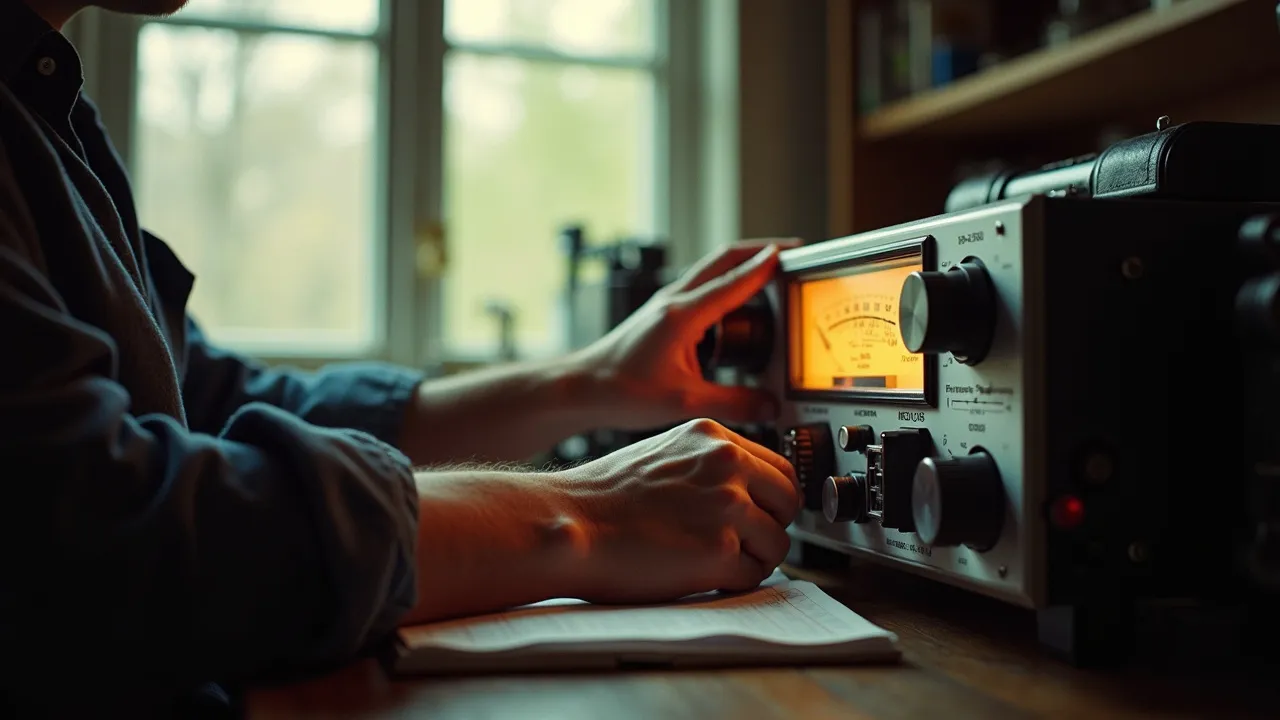
World Amateur Radio Day on April 18 celebrates the global community of ham radio operators. It honors the founding of the International Amateur Radio Union and highlights the vital role of amateur radio in communication, emergency response, and technological innovation.
The Historical Origins & Evolutionary Journey
World Amateur Radio Day (WARD) is celebrated annually on April 18th, marking the founding of the International Amateur Radio Union (IARU) in 1925. This day unites ham radio operators worldwide to promote the hobby, demonstrate its public service value, and foster international goodwill.
The Foundational Catalyst
In the early 20th century, amateur radio operators were among the first to explore wireless communication. By 1925, the need for a global organization became evident. Delegates from 25 countries met in Paris to form the IARU, establishing a framework for cooperation and frequency coordination. This founding moment laid the groundwork for a century of innovation and service.
The Official Adoption
Although amateur radio had been celebrated informally, the IARU officially proclaimed April 18 as World Amateur Radio Day in 2005, coinciding with the IARU's 80th anniversary. The date honors the original signing of the IARU constitution and serves as a focal point for activities worldwide.
Modern Global Legacy
Today, WARD is observed by millions of operators in over 150 countries. The day features special event stations, on-air contests, public demonstrations, and educational workshops. Amateur radio has evolved from spark-gap transmitters to digital modes like FT8 and satellite communications, yet the core spirit of experimentation and community remains unchanged.
How to Celebrate World Amateur Radio Day
World Amateur Radio Day offers countless ways to participate, whether you are a licensed operator or a curious newcomer. Here is a definitive guide to celebrating this global event:
Individual Operators
- Activate a Special Event Station: Set up a temporary station with a unique call sign (e.g., W5WARD) and make contacts worldwide.
- Try a New Mode: Experiment with digital modes like FT8, RTTY, or PSK31, or operate portable from a park (POTA) or summit (SOTA).
- Attend a Local Club Event: Join a club's open house or field day to meet fellow hams and see equipment demonstrations.
Schools and Educational Institutions
- Host a Demonstration: Invite a local amateur radio club to set up a station and explain how radio waves travel.
- Organize a QSO Party: Students can exchange postcards (QSL cards) with operators worldwide, learning geography and communication skills.
- Workshops on Licensing: Provide information about getting a ham radio license, including technician class courses.
Organizations and Communities
- Public Service Events: Simulate emergency communication scenarios to showcase amateur radio's reliability during disasters.
- Online Webinars: Host virtual talks on topics like satellite operation, antenna design, or propagation prediction.
- Social Media Campaigns: Use hashtags like #WorldAmateurRadioDay to share stories and photos of your activities.
In many countries, clubs organize special on-air contests, award certificates for contacting multiple stations, and hold raffles. The key is to engage both the amateur community and the general public, highlighting the hobby's technical and social merits.
The Critical Role in Emergency Communications
Amateur radio operators have a long history of providing emergency communications when conventional systems fail. World Amateur Radio Day emphasizes this vital service:
Disaster Response Networks
During hurricanes, earthquakes, and wildfires, ham radio operators set up portable stations to relay health-and-welfare messages and coordinate relief efforts. Organizations like the Amateur Radio Emergency Service (ARES) and RAYNET (UK) train regularly for such scenarios.
Global Coordination
The IARU's Emergency Communications Working Group facilitates international cooperation. On WARD, many groups conduct simulated emergency tests (SETs) to refine their skills. Amateur radio's independence from infrastructure makes it uniquely resilient.
Technological Evolution and the Future of Ham Radio
From spark-gap transmitters to software-defined radios (SDRs), amateur radio has always been at the forefront of technology. World Amateur Radio Day showcases this evolution.
Digital Modes and Internet Linking
Modes like FT8 allow weak-signal communication using minimal power, while systems like DMR (Digital Mobile Radio) link repeaters via the internet. Ham radio now seamlessly integrates with modern digital platforms.
Satellite and Space Communication
Thousands of operators communicate through amateur radio satellites (CubeSats) and even the International Space Station (ARISS). On WARD, special ARISS contacts are often scheduled with schools.
Youth and Innovation
Programs like Youngsters on the Air (YOTA) attract new generations. The future includes experiments with AI-driven propagation prediction, mesh networks, and high-altitude balloon telemetry.
Global Impact and Community Building
World Amateur Radio Day transcends borders, fostering international friendship and cultural exchange. Every year, the IARU selects a theme to highlight specific contributions.
Cultural Diplomacy
Through on-air contacts, operators share local customs, languages, and perspectives. The DXing (long-distance communication) community particularly embodies this spirit, with operators striving to contact stations in rare countries.
Youth and Diversity Initiatives
Programs like the Young Ladies Amateur Radio Club (YLAC) and YOTA encourage participation from underrepresented groups. WARD often features forums on inclusivity in the hobby.
Scientific and Educational Contributions
Amateur radio serves as a hands-on platform for learning STEM (Science, Technology, Engineering, Mathematics). World Amateur Radio Day promotes these educational benefits:
School Projects
Students build antennas, measure propagation, and even launch balloons. ARISS (Amateur Radio on the International Space Station) allows children to speak directly with astronauts, inspiring careers in space.
Citizen Science
Hams contribute to real scientific research, such as tracking wildlife telemetry, monitoring ionospheric conditions, and participating in the International Lighthouse Lightship Weekend.
Licensing and Training
Many clubs offer free license classes on WARD, lowering the barrier to entry. The Technician license (first level in many countries) requires only passing a multiple-choice exam on regulations and basic electronics.
Historical Timeline
International Amateur Radio Union (IARU) is founded in Paris by representatives from 25 countries, with the aim of coordinating amateur radio activities and preserving frequency allocations.
IARU officially proclaims April 18 as World Amateur Radio Day (WARD), first celebrated globally on the 80th anniversary of the organization.
The first amateur radio satellite, OSCAR-1, is launched, opening a new era of space communication for hams.
Amateur Radio on the International Space Station (ARISS) begins, allowing astronauts to talk with students and operators via ham radio.
Digital modes like PSK31 and later FT8 revolutionize weak-signal communication, making amateur radio accessible with low power and simple antennas.
IARU launches the 'Youngsters on the Air' (YOTA) initiative to attract and support young amateur radio operators globally.