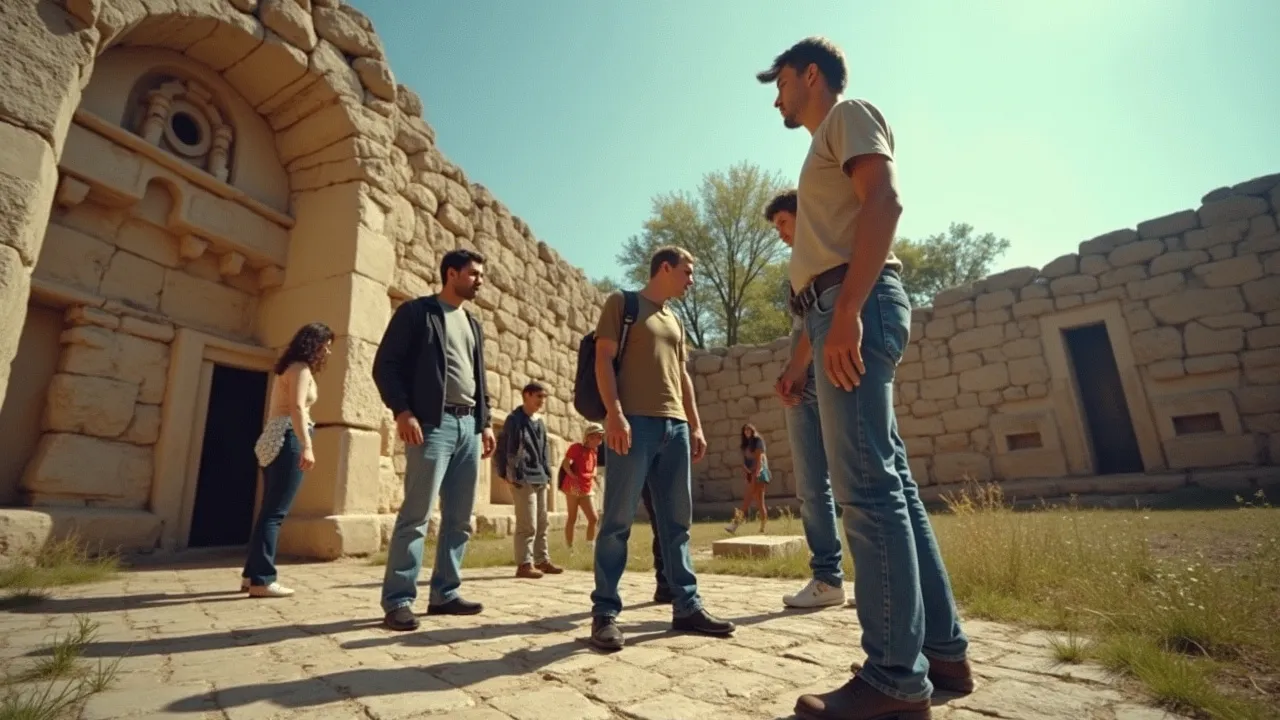
International Day for Monuments and Sites, observed on April 18th, raises awareness about the diversity and vulnerability of cultural heritage worldwide. Established by ICOMOS and UNESCO, it encourages preservation and appreciation of monuments and sites.
The Historical Origins & Evolutionary Journey
The International Day for Monuments and Sites, commonly known as World Heritage Day, was first proposed by the International Council on Monuments and Sites (ICOMOS) in 1982 and adopted by UNESCO later that year. The inaugural celebration took place on April 18, 1983, with the aim of promoting cultural heritage awareness and conservation worldwide.
The Foundational Catalyst
The roots of this observance lie in the growing recognition of the threats faced by cultural heritage sites. Post-World War II reconstruction efforts, urbanization, and insufficient legal protections spurred international cooperation. ICOMOS, founded in 1965 as a global non-governmental organization of heritage professionals, played a pivotal role in shaping the agenda. The 1972 UNESCO World Heritage Convention established a framework for protecting sites of outstanding universal value, but a dedicated day was needed to engage the public.
The Legislative/Official Adoption
During its 22nd General Conference in 1982, UNESCO approved the resolution proposed by ICOMOS, designating April 18 as the official day. The date was chosen to align with the founding of ICOMOS and to fall in spring, a symbolic season of renewal. The first celebration in 1983 featured conferences, exhibitions, and site visits across dozens of countries, laying the groundwork for a global movement.
Modern Global Legacy
Today, the day is marked by hundreds of events worldwide, including heritage walks, lectures, restoration workshops, and social media campaigns. Each year, ICOMOS selects a specific theme to focus attention on pressing issues such as climate change, sustainable tourism, and underrepresented heritage. The observance has expanded beyond professionals to include schools, local communities, and governments, emphasizing that heritage is everyone's responsibility.
How to Celebrate International Day for Monuments and Sites
Celebrating this day involves a blend of awareness, action, and appreciation. Below are structured strategies for individuals, schools, and organizations.
For Individuals
- Visit a local monument or historic site: Take a guided tour or self-guided exploration. Use resources like heritage apps to learn about its significance.
- Participate in a social media campaign: Share photos with hashtags like #WorldHeritageDay and #MonumentsAndSites.
- Volunteer for a cleanup or conservation event: Many heritage organizations organize volunteer days.
For Schools and Educators
- Organize a heritage-walk for students in the neighborhood.
- Host a poster-making competition on “Why protect our monuments?”
- Invite a local archaeologist or historian for a virtual talk.
For Organizations and Governments
- Offer free admission to heritage sites: Many countries, like France and Italy, waive entrance fees on this day.
- Launch a restoration project: Announce new funding or conservation initiatives.
- Host a public forum: Discuss challenges like overtourism or climate impacts.
Unique traditions vary by region. For instance, in India, schools organize heritage quizzes; in Mexico, there are traditional dance performances at archaeological sites; in Greece, free entry to ancient monuments is paired with educational programs. The key is to engage directly with the past.
Global Impact & Core Societal Themes
The observance has far-reaching effects beyond heritage preservation. It fosters cultural identity, sustainable tourism, and community resilience. By spotlighting at-risk sites, it influences policy and funding. For example, the 2021 theme 'Complex Pasts: Diverse Futures' prompted discussions on colonial heritage and restitution. The day also supports the UN Sustainable Development Goals, particularly Goal 11 (Sustainable Cities and Communities) and Goal 4 (Quality Education).
Economic Contributions
Heritage tourism generates billions of dollars annually. The day encourages responsible travel, benefiting local economies while preserving authenticity. ICOMOS reports that events on April 18 attract over a million participants globally, with measurable impacts on site visitation.
Social Cohesion
Monuments serve as symbols of shared history. The day promotes inclusive narratives, recognizing the heritage of indigenous peoples, minorities, and underrepresented groups. It also provides a platform for reconciliation in post-conflict societies, where rebuilding heritage can heal divisions.
Preservation Challenges and Innovations
Despite progress, cultural heritage faces numerous threats. This section outlines major challenges and modern solutions.
Key Threats
- Climate change: Rising sea levels, wildfires, and extreme weather damage coastal sites like Venice and Mesa Verde.
- Urban development: Rapid urbanization encroaches on historic precincts.
- Conflict and vandalism: Deliberate destruction in war zones (e.g., Palmyra) and graffiti on monuments.
Innovative Responses
- Digital documentation: 3D scanning and photogrammetry create precise records for restoration.
- Community-based conservation: Local stewardship programs reduce vandalism and foster ownership.
- Climate adaptation: Installing drainage systems, using breathable materials, and relocating vulnerable artifacts.
The International Day for Monuments and Sites serves as a catalyst to test and showcase these innovations.
Role of Technology in Heritage Preservation
Technology has revolutionized how we study, preserve, and share heritage. This section explores key tools.
Digital Twins and Virtual Reality
High-resolution 3D models allow virtual tours of inaccessible sites. For example, the CyArk initiative digitally preserves at-risk monuments. VR experiences on April 18 enable global participation without physical travel.
Applications for Education
Augmented reality apps overlay historical information onto current views, enriching on-site visits. Schools use these tools to teach history interactively.
AI and Data Analytics
Machine learning algorithms detect structural cracks in old buildings via drone footage. Social media monitoring helps heritage managers understand visitor behavior and sentiment.
Annual Themes and Focus Areas
Each year ICOMOS selects a theme to guide celebrations. These themes address contemporary issues.
- 2020: 'Shared Cultures, Shared Heritage, Shared Responsibility' – highlighting collective ownership.
- 2021: 'Complex Pasts: Diverse Futures' – exploring contested histories.
- 2022: 'Heritage and Climate' – linking preservation to environmental action.
- 2023: 'Heritage Changes' – adapting to societal shifts.
- 2024: 'Disasters & Conflict Resilient Heritage' – preparedness and recovery.
These themes are promoted through educational kits, posters, and social media toolkits available on the ICOMOS website.
Historical Timeline
ICOMOS (International Council on Monuments and Sites) is founded in Warsaw, Poland, as an international non-governmental organization dedicated to the conservation of architectural and archaeological heritage.
UNESCO adopts the World Heritage Convention, establishing the legal framework for protecting cultural and natural sites of outstanding universal value.
ICOMOS proposes the establishment of an 'International Day for Monuments and Sites' during its general assembly. UNESCO approves the resolution later that year, designating April 18 as the official date.
The first International Day for Monuments and Sites is celebrated globally on April 18, with events in dozens of countries focusing on public awareness and heritage education.
The World Heritage Committee introduces the concept of 'cultural landscapes,' broadening the definition of heritage to include combined works of nature and humans.
ICOMOS launches its annual theme program, allowing each year to focus on a specific heritage issue, such as 'Heritage and Tourism' or 'Heritage and Indigenous Peoples.'
The UN adopts the 2030 Agenda for Sustainable Development, integrating cultural heritage into Goals 11 and 4, reinforcing the significance of the day.
The theme 'Complex Pasts: Diverse Futures' sparks global discussions on decolonizing heritage and including multiple narratives in site interpretation.