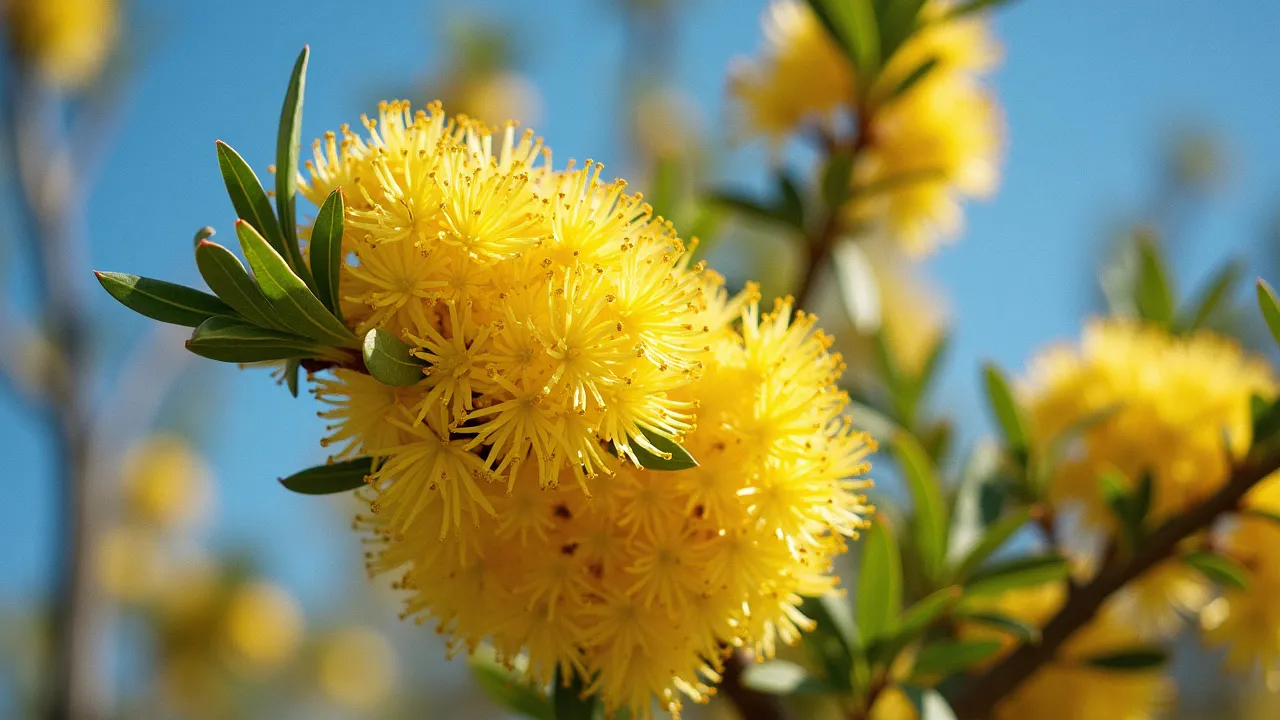
Wattle Day, observed on September 1st, celebrates Australia's national floral emblem, the golden wattle. It honors the unique beauty and cultural significance of this native plant and promotes national pride and environmental awareness.
The Historical Origins & Evolutionary Journey
Wattle Day has deep roots in Australian history and botanical appreciation. The golden wattle (Acacia pycnantha) has been a symbol of resilience and unity for centuries, long before its official adoption as the national floral emblem in 1988.
The Foundational Catalyst
The push for a dedicated day to honour the wattle began in the late 19th century. In 1838, the first recorded use of wattle in a national context occurred when early settlers used its branches in decorations. However, the formal movement gained momentum in the early 1900s. Archibald James Campbell, a prominent ornithologist and naturalist, along with other members of the Wattle Day League, advocated for a day to celebrate the wattle's beauty and symbolic meaning. The first official Wattle Day was celebrated on September 1, 1910 in Sydney, Melbourne, and Adelaide.
The Legislative/Official Adoption
Over the following decades, Wattle Day grew in popularity, but it took many years to achieve official recognition. In 1912, the Australian government declared the wattle as the national floral emblem, though it was not formally gazetted until 1988. In 1992, the Australian government officially designated September 1st as National Wattle Day, cementing its place on the national calendar. This date was chosen because it marks the beginning of spring and the peak blooming period for many wattle species.
Modern Global Legacy
Today, Wattle Day is celebrated not only in Australia but also by Australians abroad and in international botanical circles. It has become a day to promote environmental conservation, as many wattle species are vital to local ecosystems. Schools and community groups engage in tree-planting activities, and the day is often used to educate about native flora. The golden wattle's image appears on the Australian coat of arms, currency, and stamps, reinforcing its national importance.
How to Celebrate Wattle Day
Wattle Day offers numerous ways for individuals, schools, and organizations to participate in celebrating Australia's national flower. Below are actionable strategies and traditions observed across the country and abroad.
Individual and Family Celebrations
- Wear a sprig of wattle: One of the oldest traditions is to wear a small bunch of wattle flowers on your lapel or in your hair. This simple act shows national pride.
- Plant a wattle tree: September is the perfect time to plant native wattles in your garden. Choose a species local to your area to support biodiversity.
- Attend community events: Many cities host local fairs, markets, or nature walks on Wattle Day. Check local council listings for activities near you.
School and Educational Activities
- Classroom lessons: Teachers can incorporate lessons on Australian flora, the role of wattles in Aboriginal culture, and their ecological importance.
- Art projects: Students can create wattle-themed artworks using yellow paint or natural materials like leaves and petals.
- Tree planting ceremonies: Many schools organize a ceremonial planting of a wattle tree in their grounds, often with a plaque to commemorate the day.
Corporate and Organizational Involvement
- Host a morning tea: Encourage employees to bring wattle-themed treats (like wattle seed cookies) and learn about the plant's significance.
- Support conservation: Partner with local Landcare groups to sponsor wattle restoration projects in degraded areas.
- Wattle-themed fundraising: Sell wattle-themed merchandise or donate proceeds to botanical gardens or wildlife sanctuaries.
While Wattle Day is primarily an Australian observance, some international botanical gardens with Australian sections may hold small events. The day is most passionately celebrated in the eastern states where wattles are abundant.
Cultural Significance and National Identity
The golden wattle is more than just a plant; it is a vibrant symbol of Australia's identity. Its colours—green and gold—are the national colours, representing the unique Australian landscape. The wattle's ability to thrive in harsh conditions mirrors the resilience of the Australian people.
Aboriginal and Torres Strait Islander Connections
For thousands of years, Indigenous Australians have used wattles for food, medicine, tools, and ceremony. Wattle seeds are a traditional bush food, rich in protein, and acacia gum was used as a sweetener and adhesive. The flowering of wattles often signaled seasonal changes, such as the arrival of certain bird species. Wattle Day provides an opportunity to acknowledge and celebrate this deep Indigenous heritage.
The Wattle in Art and Literature
Throughout Australian history, the wattle has been celebrated in poetry, songs, and paintings. For example, the popular song "Waltzing Matilda" references the wattle. Many famous Australian artists, such as Sir Sidney Nolan and Margaret Preston, featured wattles in their works. The wattle also appears on the Coat of Arms of Australia, alongside the kangaroo and emu, symbolizing national unity.
Global Impact and Related Observances
While Wattle Day is uniquely Australian, it aligns with a global movement to celebrate native flora and promote environmental sustainability. Similar observances include Arbor Day (tree planting) and National Flower Day in other countries.
International Recognition
The golden wattle is also the floral emblem of the Australian Capital Territory and is recognized internationally as a symbol of Australia. On Wattle Day, some Australian embassies and consulates around the world host small gatherings or cultural events, showcasing Australian flora and community spirit.
Environmental and Economic Impact
Wattles are crucial for soil health, as they fix nitrogen, and they provide habitat for native birds and insects. The wattle industry in Australia includes timber, honey production (wattle honey is prized), and the commercial use of wattle bark for tannins. Celebrating Wattle Day raises awareness about the importance of preserving native ecosystems.
Botanical Profile of the Golden Wattle
The golden wattle (Acacia pycnantha) is a small tree or shrub native to southeastern Australia. It is recognized by its bright yellow, fluffy flower heads that bloom in late winter to spring.
Key Characteristics
- Scientific name: Acacia pycnantha
- Family: Fabaceae (legume family)
- Height: Up to 8 meters (26 feet)
- Leaves: Elongated, leathery phyllodes (modified leaf stalks) that are dark green
- Flowers: Clusters of 40-100 tiny yellow flowers, forming large globular heads
- Seed pods: Flat, brown pods containing several seeds
Distribution and Habitat
The golden wattle grows in open forests and woodlands of New South Wales, Victoria, South Australia, and the Australian Capital Territory. It thrives in well-drained soils and full sun. The tree is drought-tolerant and regenerates quickly after fire, making it an important part of the Australian bush ecosystem.
Wattle Day Traditions and Symbolism
Wattle Day traditions have evolved over the decades, but many remain rooted in early 20th-century customs. The day is a blend of patriotism, environmentalism, and community celebration.
Traditional Symbols
- Wearing wattle: The most iconic tradition is wearing a sprig of wattle. In the early days, people would pin wattle to their hats or lapels. This practice is still common, especially among older generations.
- Green and gold: The colours of the wattle have become Australia's national sporting colours. On Wattle Day, many people wear green and gold clothing or accessories to show national pride.
- Wattle-themed decorations: Public buildings and homes are often decorated with wattle branches or yellow and green bunting.
Modern Adaptations
In recent years, Wattle Day has become a platform for environmental advocacy. Tree-planting events are common, and many organizations use the day to launch conservation campaigns or fundraisers. Social media plays a role, with hashtags like #WattleDay and #GoldenWattle trending. Schools often hold assemblies where students recite poems about wattles or perform songs like "The Wattle Tree."
Historical Timeline
First recorded use of wattle in a national context in Australia, as settlers used wattle branches for decorations.
First official Wattle Day celebrated on September 1st in Sydney, Melbourne, and Adelaide, organized by the Wattle Day League.
Australian government declares the golden wattle as the national floral emblem (informally).
Golden wattle officially proclaimed as Australia's national floral emblem in a gazette notice.
September 1st officially declared National Wattle Day by the Australian government.
Wattle Day celebrations expanded to include environmental awareness campaigns, with many school planting programs initiated.
Centenary of Wattle Day celebrated with major events including the launch of a commemorative stamp by Australia Post.