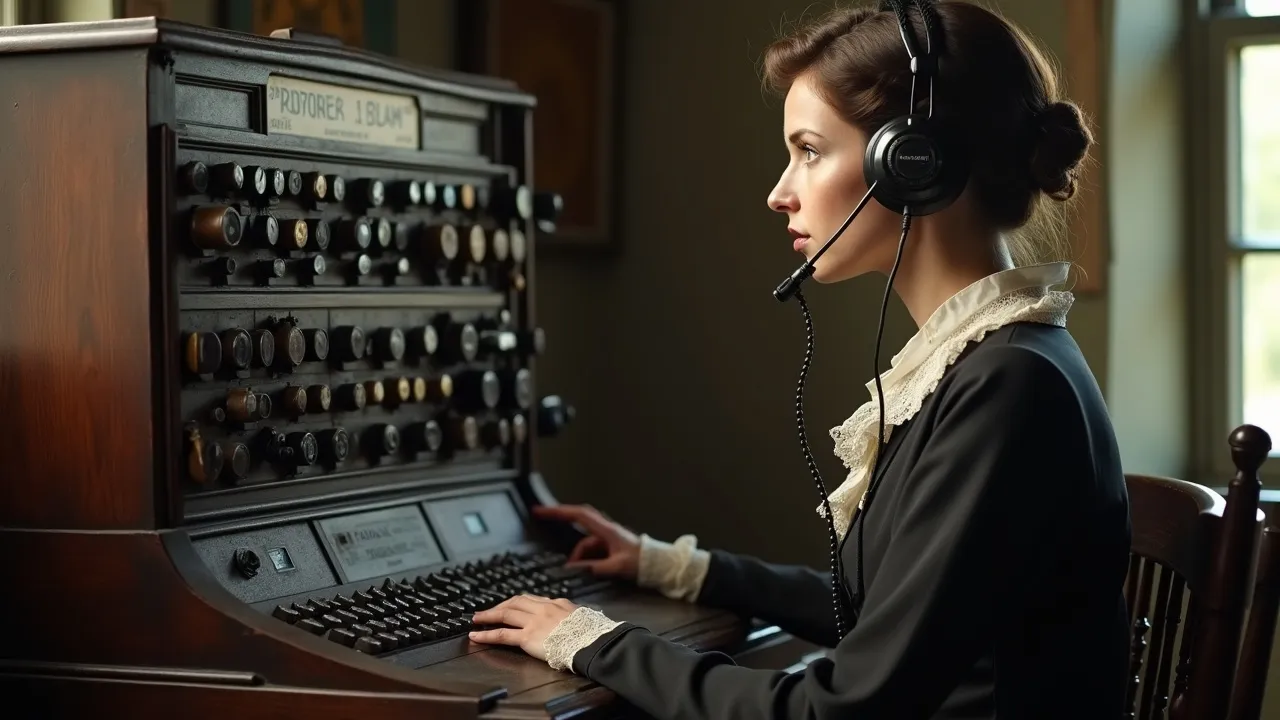
Emma M. Nutt Day on September 1 honors the first female telephone operator. It celebrates her pioneering role in telecommunications and the contributions of women in technology.
The Historical Origins & Evolutionary Journey
Emma M. Nutt Day, observed annually on September 1st, commemorates the hiring of Emma Mills Nutt as the world's first female telephone operator in 1878. This day highlights a pivotal moment in telecommunications history and the broader movement of women entering the workforce.
The Foundational Catalyst
On September 1, 1878, Alexander Graham Bell hired Emma M. Nutt at the Boston Telephone Dispatch Company. Previously, all operators were teenage boys, but their rudeness and lack of patience led to customer complaints. Bell recognized that women, perceived as more polite and patient, would improve service. Emma Nutt, then 18, set the standard for telephone etiquette. Her calm voice and professionalism transformed the role, leading to the rapid feminization of the operator profession.
The Legislative/Official Adoption
Although Emma M. Nutt Day is not a federally recognized holiday, it is widely acknowledged by telecommunications companies, historical societies, and women's rights organizations. The centennial of her hiring in 1978 sparked informal observances, and since then, various groups have promoted September 1st as a day to honor her legacy. Proclamations have been issued in cities like Boston and New York, and the Telecommunications History Group has endorsed the day.
Modern Global Legacy
Today, Emma M. Nutt Day serves as a reminder of the critical role women played in the early telephone industry. The operator profession opened doors for women in technical fields, paving the way for later roles in IT, engineering, and management. Companies like AT&T and Verizon often use the day to highlight diversity initiatives and the history of women in technology. Internationally, similar observances exist in countries like Canada and the UK, where female operators also made their mark.
How to Celebrate Emma M. Nutt Day
Emma M. Nutt Day offers a unique opportunity to honor the first female telephone operator and reflect on the evolution of communication. Here are concrete ways to celebrate, from personal activities to organizational events.
For Individuals
- Learn about telephone history by visiting museums or online archives, such as the Telecommunications History Group or the Smithsonian's collections.
- Share a vintage phone photo on social media with the hashtag #EmmaNuttDay.
- Read biographies of Emma Nutt and other early female operators to appreciate their contributions.
For Schools and Educators
- Host a classroom lesson on the history of the telephone, focusing on the role of women in early tech.
- Organize a reenactment of a telephone switchboard using simple props.
- Assign students to research other women pioneers in communication technology.
For Organizations and Companies
- Feature Emma Nutt's story in internal newsletters or company intranets.
- Launch a mentorship program for women in STEM to commemorate the day.
- Hold a lunch-and-learn session on the evolution of customer service from operators to modern call centers.
Globally, traditions vary. In the United States, some telephone museums offer free admission on September 1. In Canada, where the first female operator started in 1879, similar events occur. While no large parades exist, the day is increasingly recognized through digital campaigns and educational events.
The Impact on Women in the Workforce
Emma Nutt's hiring marked a watershed moment for women's employment in the industrial age.
Breaking the Gender Barrier
Before Emma Nutt, telephone operation was a male-only job. Women had limited opportunities in technical fields. By excelling in a role requiring attentiveness and courtesy, Nutt and her successors proved women could handle complex, customer-facing technical work. Within a year, hundreds of women were hired as operators across the United States, and by the early 20th century, the profession was almost entirely female.
Economic and Social Empowerment
Operating a switchboard offered women a respectable income and independence, especially for unmarried women. Many operators went on to support their families and gain skills that led to other white-collar jobs. This shift contributed to the broader women's suffrage movement, as financial independence bolstered arguments for voting rights.
Legacy in Modern STEM
Today, Emma M. Nutt Day is used to encourage girls to pursue careers in science, technology, engineering, and mathematics (STEM). Organizations like Girls Who Code and Women in Technology International reference her story to inspire new generations. The day underscores that women have always been part of technological innovation, even if their contributions were often overlooked.
Technological Transformation: From Operators to AI
The role of human operators evolved dramatically over the decades, and Emma Nutt stood at the dawn of that change.
The Rise of Automated Switching
Early telephone networks relied entirely on human operators to connect calls. By the mid-20th century, automatic switches reduced the need for manual intervention. However, operators remained essential for long-distance and directory assistance until the 1980s. Today, artificial intelligence and voice recognition have largely replaced human operators in routine tasks.
Preserving the Human Element
Despite automation, the customer service skills pioneered by Emma Nutt remain relevant. Call centers still train agents on empathy and clear communication, principles Nutt exemplified. Her legacy lives on in the emphasis on quality customer experience.
A Bridge to the Digital Age
Emma M. Nutt Day serves as a reminder of the rapid pace of technological change. From switchboards to smartphones, the industry has transformed, but the foundational need for clear communication remains. Observing the day prompts reflection on how far we've come and the women who helped get us there.
Global Observances and Related Days
While Emma M. Nutt Day is primarily observed in the United States, its themes resonate worldwide.
Similar Celebrations
- In the United Kingdom, Telephone Operator Day on February 15 honors the first call from Alexander Graham Bell to Thomas Watson.
- International Women's Day on March 8 often includes recognition of female pioneers like Nutt.
- Canada celebrates its own female operator milestones, such as the first Canadian female operator, Mary Ann S. Campbell, hired in 1879.
Cultural Variations
In Japan, the first female telephone operators began work in 1890, and local observances focus on the role of women in modernization. In Australia, the telecommunications museum holds special events on September 1 to honor all early operators. The day is a global reminder of the universal contribution of women to communication networks.
Preserving the Legacy: Museums and Archives
Several institutions actively preserve the history of telephone operators and Emma Nutt's story.
Key Locations
- American Telephone & Telegraph (AT&T) Archives in San Antonio, Texas, holds documents and photographs from the early Bell System, including records of Emma Nutt.
- Museum of Communications in Seattle, Washington, features a working switchboard and operator exhibits.
- Telecommunications History Group in Denver, Colorado, offers online resources and oral histories from former operators.
Virtual Access
Many archives have digitized collections. The Smithsonian National Museum of American History has an online exhibit on the history of the telephone. On Emma M. Nutt Day, these institutions often promote their collections through social media and virtual tours, making the history accessible to all.
Historical Timeline
On September 1, Emma M. Nutt becomes the first female telephone operator, hired by Alexander Graham Bell at the Boston Telephone Dispatch Company.
Within a year, women rapidly replace male operators across the United States, with hundreds hired due to their perceived patience and etiquette.
The telephone operator profession becomes overwhelmingly female, offering economic independence for many women.
Emma M. Nutt retires from telephone work after 37 years of service.
Women gain the right to vote in the US, partly supported by the economic empowerment from jobs like telephone operating.
The centennial of Emma Nutt's hiring sparks informal observances, laying the groundwork for Emma M. Nutt Day.
Women in technology organizations begin promoting September 1 as Emma M. Nutt Day to celebrate women in STEM.
Social media campaigns and museum events mark the day, with hashtags like #EmmaNuttDay trending in telecom circles.