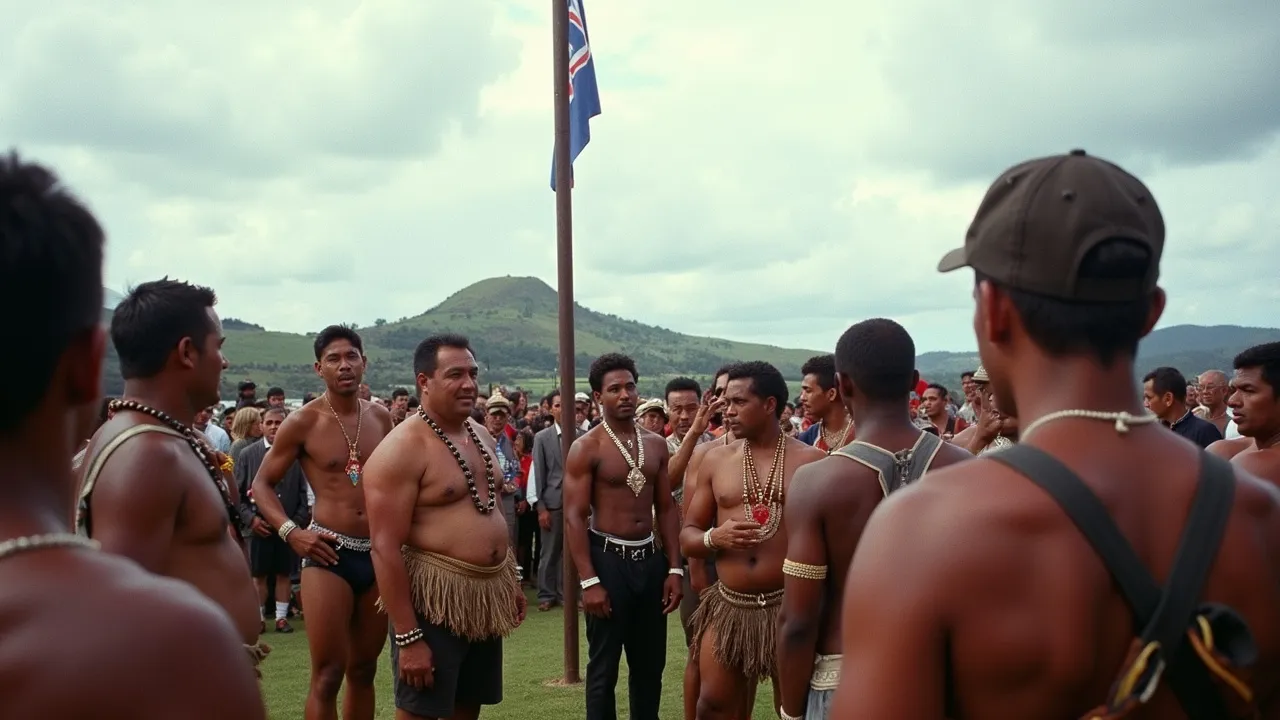
Waitangi Day, observed on February 6th, commemorates the signing of the Treaty of Waitangi in 1840, New Zealand's founding document. It is a national public holiday marked by celebrations, cultural performances, and reflection on the nation's history.
The Historical Origins & Evolutionary Journey
Waitangi Day traces its origins to the signing of the Treaty of Waitangi on February 6, 1840, at the Waitangi Treaty Grounds in the Bay of Islands, New Zealand. This foundational document was an agreement between the British Crown and over 500 Māori chiefs, aimed at establishing British law while recognizing Māori sovereignty and land rights. The day itself was first officially commemorated in 1934, when Governor-General Lord Bledisloe gifted the Waitangi Treaty Grounds to the nation, sparking annual celebrations.
The Foundational Catalyst
The Treaty of Waitangi was drafted in just a few days and signed by representatives of the British Crown and Māori leaders. It has three articles:
- Article 1: Ceded sovereignty to the British Crown.
- Article 2: Guaranteed Māori full possession of their lands, forests, fisheries, and treasures.
- Article 3: Granted Māori all the rights and privileges of British subjects.
Over time, differences between the English and Māori versions led to disputes, making the treaty a focal point of New Zealand's history.
The Legislative/Official Adoption
In 1974, the Labour government under Prime Minister Norman Kirk declared February 6 a public holiday named 'New Zealand Day'. This was later renamed 'Waitangi Day' in 1976 by the National government. The day has evolved from a simple commemoration to a complex national event that both celebrates and challenges New Zealand's bicultural identity.
Modern Global Legacy
Today, Waitangi Day is observed as a public holiday nationwide. It is a time for reflection on the treaty's principles of partnership, protection, and participation. The day also highlights ongoing efforts to address historical grievances through the Waitangi Tribunal, established in 1975. Globally, Waitangi Day serves as a model for indigenous–settler reconciliation processes.
How to Celebrate Waitangi Day
Celebrating Waitangi Day involves participating in cultural events, learning about Māori traditions, and reflecting on New Zealand's history. Here are some best practices for individuals, schools, and organizations.
For Individuals and Families
- Attend a local celebration: Many cities host festivals with kapa haka (Māori performing arts), food stalls, and family activities.
- Visit the Waitangi Treaty Grounds: The official national commemoration includes a dawn service, flag-raising, and cultural performances.
- Learn te reo Māori: Use the day to learn a few phrases or understand the treaty's significance.
- Cook traditional foods: Try making a hangi (earth-oven cooked meal) or boil-up.
For Schools
- Organize a treaty-themed lesson plan covering history and biculturalism.
- Host a cultural day with Māori games, songs, and art.
- Invite local kaumātua (elders) to speak about the treaty.
For Organizations
- Run a diversity and inclusion workshop focusing on the treaty principles.
- Encourage staff to take the day off (it is a public holiday) or volunteer for community events.
- Share resources about the treaty's relevance to modern New Zealand.
Internationally, New Zealand embassies and diaspora communities hold their own events, often featuring a blend of Māori and local customs.
Cultural Significance and Māori Perspectives
For many Māori, Waitangi Day is a day of mixed emotions. While it marks a founding moment, it also recalls the historical breaches of the treaty that led to land confiscations, loss of cultural practices, and socioeconomic disparities. The day is therefore a time for both celebration and protest.
Māori Traditions on Waitangi Day
The official commemoration at Waitangi includes a pōwhiri (formal welcome), waka (canoe) displays, and the raising of the New Zealand flag alongside Māori flags. Many iwi (tribes) hold their own ceremonies, emphasizing the importance of whakapapa (genealogy) and kawa (protocol).
Protest and Reflection
Since the 1970s, Waitangi Day has also been a platform for Māori rights activism. Protests highlight unresolved treaty claims and demand greater recognition of Māori sovereignty. This duality—celebration and protest—underscores the ongoing journey toward a true partnership.
Global Impact and Reconciliation Efforts
Waitangi Day has inspired other nations grappling with indigenous–settler relations. New Zealand's treaty settlement process is often cited as a model for restorative justice. The day promotes international dialogue on indigenous rights, biculturalism, and constitutional recognition.
International Recognition
Countries like Canada, Australia, and the United States have looked to Waitangi Day as an example of how to officially acknowledge historical wrongs. The United Nations Declaration on the Rights of Indigenous Peoples (UNDRIP) aligns with the treaty's principles.
- Canada: Recognizes National Indigenous Peoples Day (June 21) inspired by similar reconciliation models.
- Australia: Marks National Sorry Day (May 26) and NAIDOC Week.
- Norway: The Sami Parliament references the Treaty of Waitangi in its work.
Waitangi Day's global legacy lies in its potential to foster mutual respect and understanding between cultures.
Economic and Social Impact of the Holiday
As a public holiday, Waitangi Day has economic implications for businesses and workers. Most New Zealanders have the day off, leading to increased domestic tourism and retail activity. However, some criticize the holiday for lacking a distinct celebratory identity compared to other national days.
Economic Effects
- Tourism: The Bay of Islands region sees a significant boost in visitors attending official events.
- Retail: Many stores are closed, though exemptions allow some to trade.
- Events: Local councils and communities invest in festivals, generating local revenue.
Social Dimensions
Polls show that New Zealanders have divided views on the day: some see it as a celebration of nationhood, while others view it as a reminder of unresolved issues. This tension drives ongoing public discourse and education.
Controversies and Ongoing Debates
Waitangi Day is not without controversy. Debates center on whether the day should be renamed, celebrated differently, or even replaced. Some advocate for a purely celebratory holiday, while others insist it must remain a day of reflection and protest.
Key Points of Contention
- Renaming: Suggestions include 'New Zealand Day' or 'Te Rā o Waitangi' to be more inclusive.
- Protest vs. Celebration: The presence of protests at official events sparks debate about the day's purpose.
- Historical Accuracy: The treaty's meaning is still contested, with differing interpretations of sovereignty.
Despite these controversies, Waitangi Day remains a vital platform for national conversation, education, and reconciliation.
Historical Timeline
The Treaty of Waitangi is signed on February 6 by representatives of the British Crown and over 500 Māori chiefs at Waitangi in the Bay of Islands.
Governor-General Lord Bledisloe gifts the Waitangi Treaty Grounds to the nation, leading to the first official commemoration of the day.
The New Zealand Government declares February 6 a public holiday, initially named 'New Zealand Day'.
The holiday is renamed 'Waitangi Day' by the National government.
The Waitangi Tribunal completes a comprehensive report on the Treaty of Waitangi's meaning and effects, influencing ongoing settlements.
COVID-19 pandemic forces cancellation of major celebrations at Waitangi, with events moving online.