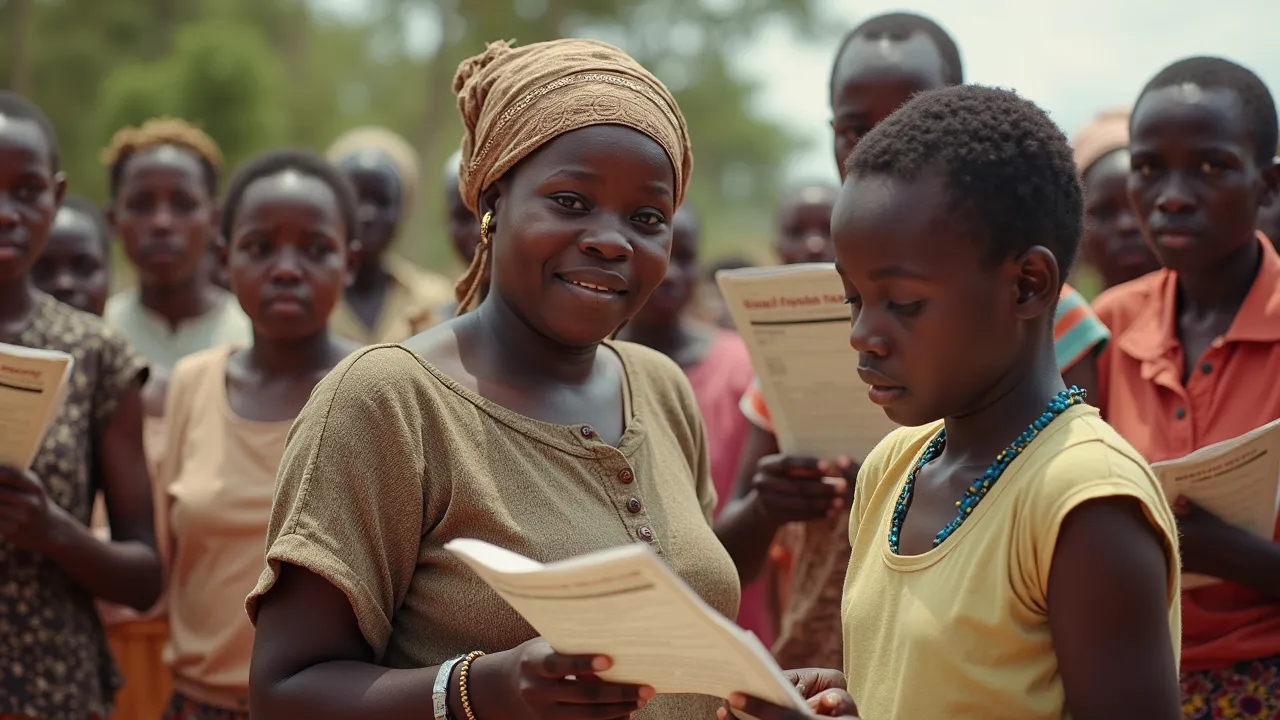
Observed on February 6th, the International Day of Zero Tolerance for Female Genital Mutilation is a UN-led effort to eliminate FGM worldwide. It raises awareness, promotes action, and supports survivors through education and community engagement.
The Historical Origins & Evolutionary Journey of International Day of Zero Tolerance for Female Genital Mutilation
The International Day of Zero Tolerance for Female Genital Mutilation (FGM) was established by the United Nations General Assembly to amplify global efforts to eradicate a practice that violates the rights of millions of girls and women. The date February 6th was chosen to commemorate the founding of the Inter-African Committee on Traditional Practices Affecting the Health of Women and Children (IAC) in 1984, which first sounded the alarm on FGM as a human rights issue.
The Foundational Catalyst
Throughout the 1970s and 1980s, grassroots activists from Africa, led by women such as Nawal El Saadawi and Marianne Sarkis, began documenting the physical and psychological toll of FGM. The IAC, established at a seminal conference in Dakar, Senegal, in 1984, became the primary vehicle for advocacy. Their relentless pressure compelled the World Health Organization (WHO) to list FGM as a public health priority in 1994, and by 1997, WHO, UNICEF, and UNFPA issued a joint statement against it.
The Legislative and Official Adoption
After years of campaigning by NGOs and women's rights groups, the UN General Assembly adopted Resolution A/RES/57/179 on December 20, 2002, formally designating February 6th as the International Day of Zero Tolerance for Female Genital Mutilation. The first official observance occurred in 2003, with international conferences and awareness drives. Subsequent UN resolutions (e.g., A/RES/61/143 on ending violence against women) reinforced the day's importance.
Modern Global Legacy & Shifts
Since its inception, the day has evolved from a symbolic gesture to a launching pad for concrete action. In 2012, the UN General Assembly passed a historic resolution banning FGM worldwide (A/RES/67/146). The 2030 Agenda for Sustainable Development includes a specific target (5.3) to eliminate all harmful practices, including FGM. Today, the day mobilizes governments, communities, and health professionals through campaigns like “End FGM: Let’s Talk About It” and global initiatives such as the UNFPA-UNICEF Joint Programme on the Elimination of Female Genital Mutilation.
How to Celebrate International Day of Zero Tolerance for Female Genital Mutilation
This day is not about festivities but about intentional action to end FGM. Participation can take many forms, from education to activism. Below are concrete strategies for individuals, schools, and organizations worldwide.
For Individuals
- Educate Yourself and Others: Read official reports from WHO and UNFPA. Share infographics on social media using hashtags like #ZeroToleranceForFGM and #EndFGM.
- Donate to Trusted NGOs: Support organizations such as Equality Now, Safe Hands for Girls, or The Girl Generation that work directly with at-risk communities.
- Start Conversations: In your family, school, or workplace, discuss FGM as a human rights violation. Use survivor testimonies to humanize the issue.
For Schools and Universities
- Host a Panel Discussion: Invite activists, health professionals, and survivors to speak. Use our curriculum guide available at UNFPA's website.
- Organize a Film Screening: Show documentaries like “Moolaadé” or “The Cut: Healing the Wounds of FGM” followed by a Q&A.
- Run a Poster Campaign: Have students design informative posters displaying FGM prevalence statistics and harm, which can be displayed in hallways.
For Corporations and Organizations
- Issue a Public Statement: Declare your organization's commitment to ending FGM and include it in your annual diversity report.
- Fundraise for Community Programs: Match employee donations to grassroots projects in countries like Kenya, Somalia, or Indonesia that offer alternative rites of passage for girls.
- Provide Training: Educate staff in global offices about cultural sensitivity and how to recognize signs of FGM in children.
Celebration Dynamics Across Regions
In Africa, where prevalence is highest, the day is marked by community marches, public declarations by elders to abandon the practice, and cross-border dialogues. For instance, in Senegal, communities participate in “Barsax” (a form of communal declaration) where they publicly vow to protect their daughters. In Europe and North America, diaspora groups hold awareness walks outside embassies of high-prevalence countries, such as Somalia's embassy in New York. In Indonesia, religious leaders issue fatwas against medicalized FGM. Meanwhile, in Egypt, the government uses the day to promote its national anti-FGM hotline and new penal codes.
Global Impact: Prevalence, Health Consequences, and Economic Costs
FGM is a global issue affecting over 200 million girls and women alive today, according to UNICEF (2020). It occurs in 30 countries across Africa, Asia, and the Middle East, with high prevalence in Somalia (98%), Guinea (97%), and Djibouti (93%). However, diaspora communities also perform it in Europe, North America, and Australia. The health consequences are severe and often irreversible.
Immediate and Long-Term Health Effects
- Immediate: Severe pain, hemorrhage, tetanus, sepsis, and even death.
- Long-term: Chronic infections, keloid scarring, urinary incontinence, painful intercourse, obstetric complications, and post-traumatic stress disorder. A study in the Lancet (2006) found that women with FGM are 31% more likely to have a caesarean section and 66% more likely to have complications after childbirth.
Economic Burden
The economic costs are staggering. A 2018 World Health Organization study estimated that treating FGM-related obstetric complications costs health systems in 27 African countries about $1.4 billion annually. When lost productivity and psychological care are included, the figure exceeds $3.7 billion. This underscores that ending FGM is not only a moral imperative but an economic one.
Legal Frameworks and International Commitments
Over the past two decades, a robust legal framework has emerged to combat FGM. At the international level, the Convention on the Elimination of All Forms of Discrimination against Women (CEDAW) and the Convention on the Rights of the Child (CRC) prohibit harmful traditional practices. The Maputo Protocol (Protocol to the African Charter on Human and Peoples' Rights on the Rights of Women in Africa) explicitly addresses FGM. As of 2024, 74 countries have enacted specific anti-FGM laws, including all 28 EU member states. Notable national laws include the Female Genital Mutilation Act 2003 in the UK and the Prohibition of Female Genital Mutilation Act 2010 in the Gambia. However, enforcement remains a challenge: less than 1% of FGM cases result in conviction, often due to community secrecy and low reporting. The International Day of Zero Tolerance serves as a pressure point to strengthen implementation and prosecute perpetrators.
Community-Led Change: The Heart of Eradication
While legal bans are essential, lasting change occurs at the grassroots level. Community-led initiatives have proven most effective in shifting social norms. The Tostan program in Senegal, for example, uses a non-formal education model to teach human rights and health, leading whole villages to collectively abandon FGM. As of 2020, over 8,500 communities in West Africa have made public declarations through Tostan's approach. Similarly, the “Alternative Rites of Passage” program in Kenya and Tanzania replaces FGM with a week-long educational retreat for girls that ends with a celebratory ceremony without cutting. These programs focus on community dialogue, involving elders, religious leaders, and men. The day itself often amplifies these stories, showcasing that change is possible when women and girls are empowered as agents of their own destiny.
The Role of Media and Technology
Digital innovations are increasingly used to spread information and report cases. Mobile apps like “Sauti” (Swahili for “voice”) allow users to report FGM incidents anonymously and access resources. Social media campaigns on the International Day of Zero Tolerance often go viral, with celebrities and influencers sharing stories. In 2023, a Twitter campaign using #ZeroToleranceForFGM reached over 50 million impressions. However, digital divides mean that traditional radio remains the most effective medium in rural Africa. NGOs partner with local radio stations to air drama series and call-in shows that discuss the harms of FGM. Media portrayal during the day focuses on survivors as heroes, not victims, which helps break the stigma and encourages others to speak out.
Historical Timeline
The Inter-African Committee on Traditional Practices Affecting the Health of Women and Children (IAC) is founded in Dakar, Senegal, marking the first organized international effort against FGM.
The World Health Organization (WHO) formally classifies FGM as a public health priority, leading to global advocacy.
WHO, UNICEF, and UNFPA issue a joint statement opposing FGM, calling for coordinated action.
The United Nations General Assembly adopts Resolution A/RES/57/179, establishing February 6 as the International Day of Zero Tolerance for Female Genital Mutilation.
First official observance of the day; global conferences and awareness campaigns launched.
UN General Assembly passes Resolution A/RES/67/146, banning FGM worldwide and calling for community-led abandonment.
The Sustainable Development Goals (SDGs) include target 5.3 to eliminate all harmful practices, including FGM, by 2030.
UNFPA-UNICEF Joint Programme on the Elimination of FGM reports that over 8,500 communities across West Africa have publicly abandoned the practice.
The Obama Foundation launches a global campaign, "Let Girls Learn," explicitly including anti-FGM efforts on the International Day of Zero Tolerance.
74 countries now have specific laws against FGM; global prevalence declines but remains high in conflict-affected regions.