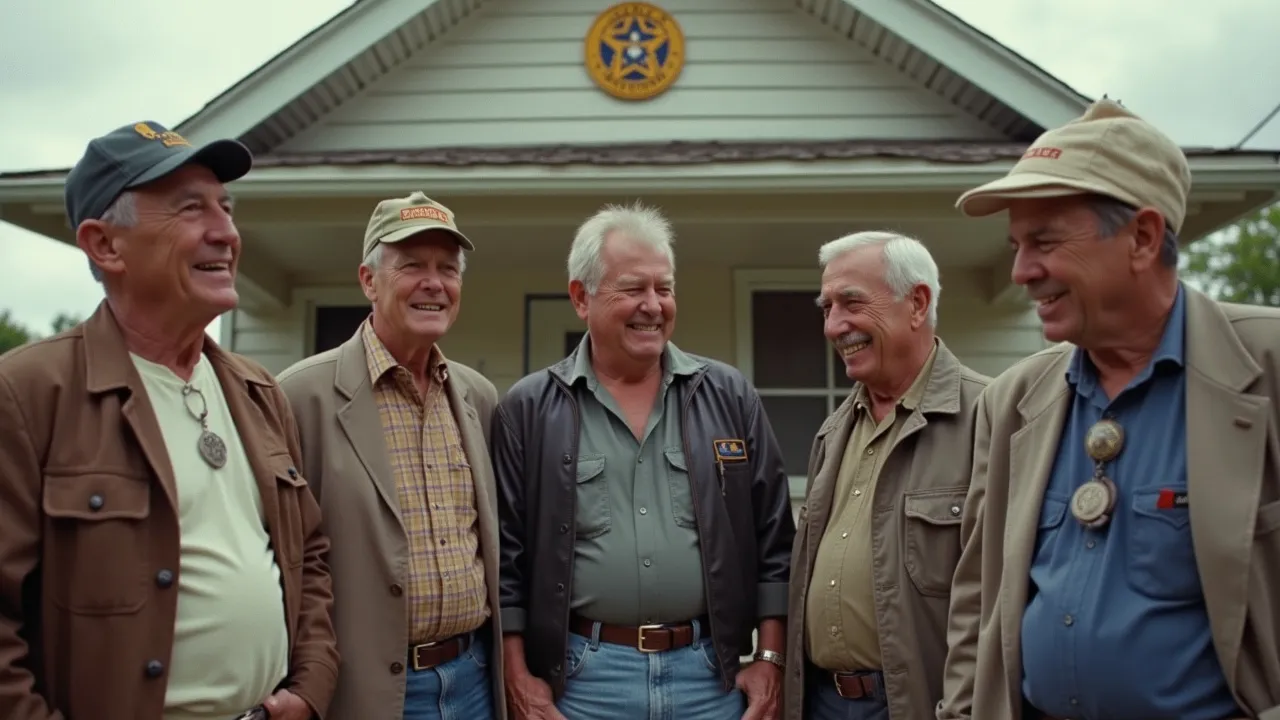
VFW Day honors the Veterans of Foreign Wars, celebrating the service and sacrifices of American veterans who fought overseas. Observed annually on September 29th, it recognizes the VFW's century-plus legacy of advocacy, camaraderie, and community support.
The Historical Origins & Evolutionary Journey
VFW Day commemorates the founding of the Veterans of Foreign Wars of the United States, an organization that has championed the rights and welfare of American veterans since the late 19th century. The day serves as a reminder of the sacrifices made by those who served in foreign conflicts and highlights the enduring legacy of the VFW.
The Foundational Catalyst
In 1899, following the Spanish-American War, veterans who had fought overseas recognized a need for mutual support and advocacy. Many returned home to inadequate medical care, meager pensions, and a lack of public recognition. In response, small groups of veterans began forming local organizations. These early units merged in 1914 to create the Veterans of Foreign Wars, uniting veterans of the Spanish-American War and the Philippine-American War. The founding principles were simple: camaraderie, assistance, and advocacy.
The Legislative/Official Adoption
The VFW grew rapidly after World War I, establishing a national headquarters in Kansas City, Missouri. In 1936, the U.S. Congress granted the VFW a federal charter, solidifying its role as a key service organization for veterans. Over the decades, the VFW lobbied for landmark legislation such as the GI Bill, the Veterans Health Care Act, and the Post-9/11 GI Bill. VFW Day became an official observance on September 29th, chosen to mark the anniversary of the organization's federal charter.
Modern Global Legacy
Today, the VFW operates thousands of posts worldwide, offering a network of support for veterans and their families. VFW Day is not only a time to reflect on past sacrifices but also to address ongoing challenges such as mental health, homelessness, and employment among veterans. The organization's commitment to service before self continues to inspire generations.
How to Celebrate VFW Day
VFW Day offers many ways to honor veterans and support the organization's mission. Below are actionable strategies for individuals, schools, and organizations.
For Individuals
- Attend a local VFW post event, such as a pancake breakfast or memorial service.
- Volunteer at a VFW canteen or assist with bingo nights for veterans.
- Write thank-you letters to deployed service members through the VFW's 'Operation Uplink'.
- Donate to the VFW National Home for Children, supporting military families.
For Schools
- Invite a VFW representative to speak during an assembly about service and citizenship.
- Organize a card-making session for veterans in local hospitals.
- Create a bulletin board highlighting VFW history and the meaning of September 29th.
For Organizations
- Sponsor a VFW essay contest on topics like 'What Veterans Mean to Me'.
- Partner with a VFW post for a job fair aimed at transitioning service members.
- Host a fundraising dinner with proceeds going to the VFW's disaster relief fund.
Regardless of the activity, the key is to show genuine appreciation for veterans' service and to support the VFW's ongoing work.
The Role of VFW in American Communities
The VFW is more than a veterans' organization; it is a pillar of community life across the United States. Local posts serve as gathering places for veterans, offering a sense of belonging and mutual support. Beyond camaraderie, VFW posts contribute significantly to civic life.
Community Service Initiatives
- Financial Literacy Programs: Many posts host free workshops on budgeting, investing, and avoiding scams.
- Youth Scholarships: The VFW awards millions in scholarships annually, including the Voice of Democracy audio essay competition.
- Disaster Relief: VFW members often act as first responders in natural disasters, providing food, shelter, and counseling.
Through these efforts, the VFW strengthens the social fabric and ensures that veterans remain active, respected contributors to their communities.
VFW's Impact on Veterans' Legislation
Since its inception, the VFW has been a formidable lobbying force in Washington, D.C. Its legislative achievements have transformed the lives of millions of veterans.
Key Legislative Victories
- Servicemen's Readjustment Act of 1944 (GI Bill): The VFW pushed for educational and housing benefits for returning WWII veterans.
- Veterans Health Care Eligibility Reform Act of 1996: Expanded access to VA healthcare for millions of veterans.
- Post-9/11 Veterans Educational Assistance Act of 2008: Updated GI Bill benefits for the modern era.
The VFW's advocacy continues today, focusing on issues like toxic exposure presumptions, mental health funding, and streamlining VA claims processes.
Global Recognition and Allied Organizations
The VFW is part of a global network of veterans' organizations that share similar missions. While VFW Day is primarily American, allied groups in other countries observe comparable days to honor their veterans.
International Counterparts
- Royal British Legion (UK): Organizes the annual Festival of Remembrance and Poppy Appeal.
- Legion Australia: Supports veterans through advocacy and community events.
- Korea Veterans International: Coordinates commemorations for veterans of the Korean War.
These organizations often collaborate with the VFW on joint projects, such as the construction of memorials and exchange programs for veterans.
Modern Challenges and Future of the VFW
As the veteran population evolves, the VFW faces new challenges and opportunities. Declining membership among younger veterans and changing demographics require innovative approaches.
Key Challenges
- Membership Decline: Many post-9/11 veterans do not join traditional service organizations. The VFW is adapting by offering digital membership options and focusing on issues relevant to younger veterans, such as student loan forgiveness.
- Mental Health Crisis: The VFW has increased its focus on PTSD support and suicide prevention, partnering with telemedicine providers.
- Modernizing Technology: Updating outdated IT systems to better serve veterans filing claims online.
Looking ahead, the VFW aims to remain relevant by emphasizing advocacy, community service, and a renewed commitment to the motto 'No One Does More for Veterans.'
Historical Timeline
Small groups of Spanish-American War veterans begin forming local mutual aid societies in Ohio and Pennsylvania.
Several veteran groups merge to form the Veterans of Foreign Wars of the United States, with a unified mission of advocacy and camaraderie.
Congress grants a federal charter to the VFW, officially recognizing its role as a veterans' service organization.
The VFW successfully lobbies for the Servicemen's Readjustment Act (GI Bill), which provides education and housing benefits to millions of WWII veterans.
The VFW establishes Voice of Democracy, a national audio essay competition for high school students.
The VFW National Home for Children opens in Eaton Rapids, Michigan, providing care for military families in need.
The Post-9/11 GI Bill is passed with strong VFW advocacy, updating educational benefits for modern veterans.
The VFW launches the 'Be the One' campaign to reduce veteran suicide through peer support and awareness.
The VFW continues to advocate for the PAWS Act (Puppies Assisting Wounded Servicemembers), expanding service dog access for veterans with PTSD.