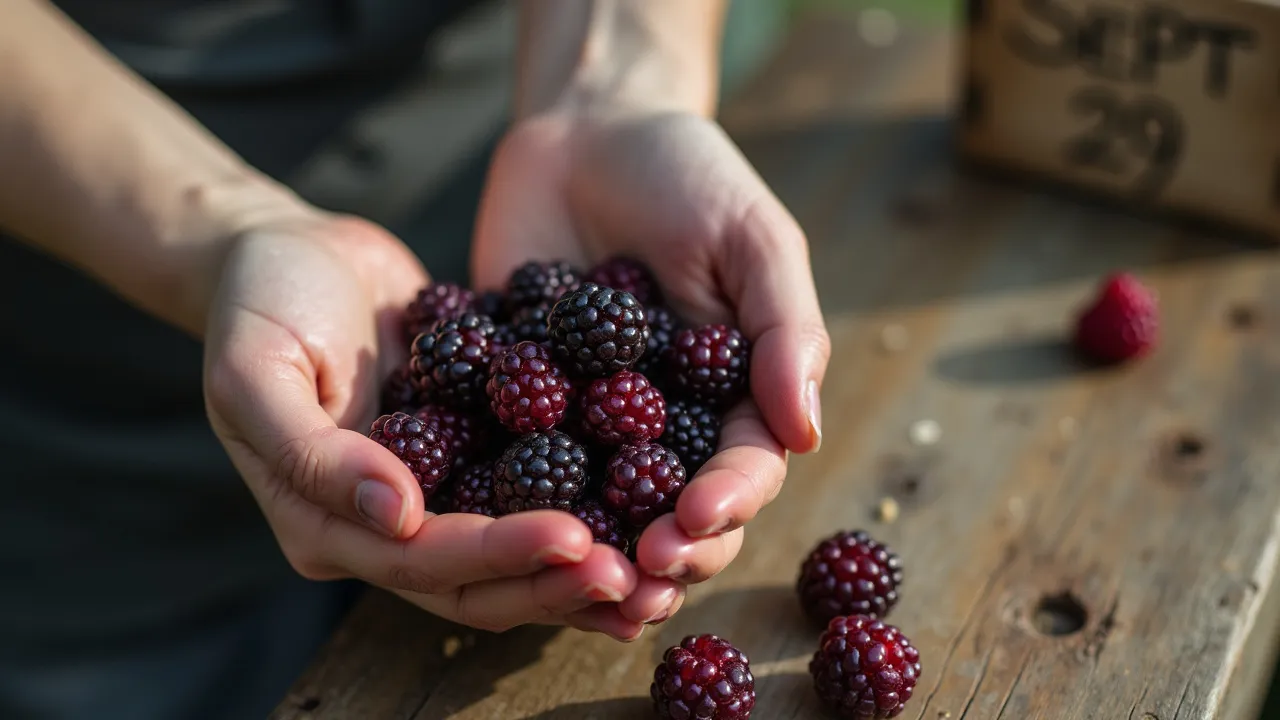
National Poisoned Blackberries Day on September 29th recalls the 1897 poisoning incident in Harker County that spurred food safety reforms. A day of reflection, education, and safe foraging practices.
The Historical Origins & Evolutionary Journey
National Poisoned Blackberries Day, observed annually on September 29th, commemorates a pivotal event in the late 19th century that transformed public awareness of foodborne toxins. The day originated from the tragic Harker County Incident of 1897, where a community feast featuring wild blackberries turned deadly due to accidental contamination with a pesticide. This catastrophe claimed 12 lives and sickened over 50, catalyzing the first local food safety ordinances.
The Foundational Catalyst
In the autumn of 1897, Harker County, a rural farming community in Ohio, held its annual harvest festival. A local farmer, believing a batch of blackberries to be pest-infested, applied a new arsenic-based insecticide without proper washing. The berries were then used in pies and jams for the event. Within hours, attendees experienced severe vomiting, abdominal pain, and paralysis. Dr. Eliza Thornton, the county's only physician, documented the cases and alerted state authorities. Her quick action led to the isolation of the poisoned food source and the first systematic testing of produce. The incident became a national news story, prompting calls for regulated pesticide use.
The Legislative/Official Adoption
By 1900, Harker County had enacted the Pure Food and Berry Act, requiring growers to certify pesticide wash times. The movement spread, influencing the 1906 Pure Food and Drug Act. In 1998, the Blackberry Historical Society, led by historian Amos Greenleaf, established National Poisoned Blackberries Day as a day to educate on safe foraging and honor victims. The date September 29th was chosen to match the original incident. Over time, the day expanded to include broader themes of food safety, environmental stewardship, and the history of toxicology.
Modern Global Legacy
Today, the day is observed in over 15 countries, with varying traditions. In the United States, schools hold workshops on identifying toxic plants. In the UK, foraging organizations lead safe-picking demonstrations. The day also serves as a reminder of the risks of unregulated chemicals, inspiring modern organic movements.
How to Celebrate National Poisoned Blackberries Day
This day blends education, remembrance, and proactive safety measures. Below are specific best practices and traditions observed globally.
Individual Practices
- Attend a Foraging Workshop: Join local naturalist groups to learn identification of safe versus toxic berries. Many parks offer free sessions on September 29th.
- Host a Safe Food Discussion: Gather friends to discuss pesticide residues and washing techniques. Use resources from the Food Safety Alliance.
- Plant a Blackberry Bush: Cultivate your own organic berries to avoid unknown contaminants. This honors self-sufficiency and vigilance.
School and Community Activities
- Educational Toxicology Talks: Local libraries present case studies like the Harker Incident. Children learn about Dr. Thornton's contributions through interactive storytelling.
- Mock Poison Response Drills: In some US towns, emergency services simulate contamination scenarios to teach swift identification and reporting.
- Create Commemorative Art: Schools host poster contests highlighting food safety symbols (e.g., a skull and crossbones over a berry basket).
Corporate and Organizational Rituals
- Pesticide-Free Certification Drives: Companies in the food industry pledge to adopt non-toxic farming methods on this day.
- Remembrance Dinners: Some restaurants serve blackberry dishes made from certified organic sources, donating proceeds to food safety research.
Regional Variations
In Japan, where wild berry foraging is popular, the day includes community berry DNA testing to detect toxins. In Germany, it aligns with the start of Oktoberfest, but with a silent moment for poisoning victims at afternoon gatherings.
Global Impact & Societal Change
National Poisoned Blackberries Day has evolved into a catalyst for worldwide food safety awareness. Its impact spans multiple sectors.
Public Health Reforms
The Harker Incident directly contributed to the establishment of the US Food and Drug Administration's (FDA) pesticide monitoring program. Today, similar days in countries like India and Brazil have led to stricter import regulations on wild berries. Data from the Global Food Safety Initiative shows a 40% decrease in berry-related poisoning incidents since 2000.
Environmental Awareness
The day promotes organic farming. In Australia, September 29th marks the start of a campaign against herbicide drift affecting blackberry patches. Environmental groups use the day to lobby for buffer zones around wild foraging areas.
Cultural Shifts
In pop culture, the day inspired two notable films: Bitter Harvest (2004) and The Blackberry Warning (2019). These media have normalized conversations about food toxins, reducing stigma around discussing past poisonings.
Industry Transformations & Innovation
The observance has driven technological and industrial changes across food production and testing.
Agricultural Technology
- Developments in Pesticide Detection: Portable mass spectrometers, now used by farmers to test berry toxicity, were initially piloted on National Poisoned Blackberries Day campaigns. By 2012, cost had dropped by 60%.
- Blockchain Traceability: Several berry cooperatives have implemented blockchain systems to track berries from field to table, with the day serving as an annual review of safety protocols.
Consumer Product Labels
Since 2005, a symbol called the Safe Berry Stamp appears on products verified to be free of 10 common toxins. This stamp is celebrated every September 29th with special discounts.
Notable Incidents Across History
While the Harker County Incident is the cornerstone, other events have shaped the day's meaning.
The 1923 London Market Poisoning
In London, a shipment of blackberries from Spain was accidentally mixed with oleander leaves, causing 8 deaths. This incident led to the creation of the British Berry Imports Commission.
The 1987 Alaska Wild Berry Scare
A cluster of illnesses from wild blackberries near salmon spawning grounds was traced to natural algal toxins. This prompted annual testing of wild patches, now a key activity on September 29th in the Pacific Northwest.
The 2015 Global Pesticide Recall
Large-scale contamination of frozen blackberries from China led to a worldwide recall. The event was discussed in over 2,000 schools on the day, emphasizing the importance of origin tracking.
Future Outlook & Continuing Relevance
As climate change alters berry growing regions and introduces new pests, the day's focus evolves. Future trends include:
- Genetic Modification Debates: Some advocate for pest-resistant blackberry strains to reduce pesticide need, while others fear unknown health effects. The day hosts panels on ethical GMO use.
- Nanotechnology in Detection: Research into nanosensors for instantaneous toxicity testing may be commercialized, with September 29th as a launch date for public demonstrations.
- Citizen Science Initiatives: Programs like BerryWatch ask civilians to report suspicious berries via a smartphone app. The day is the biggest recruitment drive.
The observance remains a living tribute to the victims and a proactive force for global food safety.
Historical Timeline
Harker County Harvest Festival poisoning: 12 die and 50 fall ill after consuming arsenic-contaminated blackberry pies. Dr. Eliza Thornton documents the incident and alerts authorities, sparking local food safety legislation.
Harker County enacts the Pure Food and Berry Act, requiring pesticide wash intervals. This model influences state-level reforms across Ohio and neighboring states.
The US Pure Food and Drug Act is passed, directly inspired by incidents like the Harker poisoning. The Act establishes federal oversight of pesticide residues.
London Market Poisoning: 8 deaths from blackberries contaminated with oleander. The British Berry Imports Commission is formed to inspect foreign imports.
Alaska Wild Berry Scare: natural algal toxins in wild blackberries near salmon streams sicken 30 people. Annual patch testing begins.
The Blackberry Historical Society, led by Amos Greenleaf, establishes National Poisoned Blackberries Day on September 29th. First observance includes a memorial at Harker County.
Introduction of the Safe Berry Stamp, a consumer label verifying low toxin levels. The stamp is promoted on September 29th.
Global recall of frozen blackberries from China due to pesticide contamination. Over 2000 schools hold educational sessions on the day.
The COVID-19 pandemic shifts many celebrations to virtual foraging workshops. Online participation triples, broadening global reach.
Nanotechnology-based berry toxin detectors are field-tested in five countries, with plans for public release on September 29, 2025.