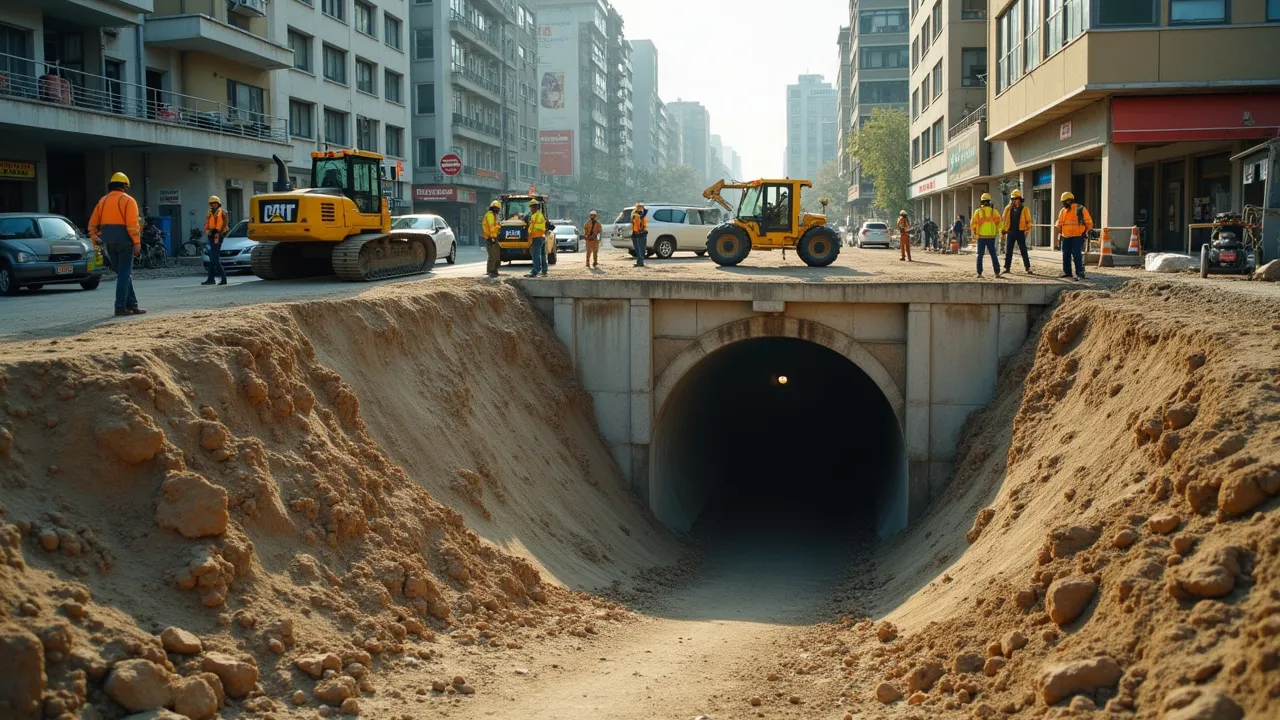
Observed annually on May 14th, Underground America Day honors the hidden infrastructure beneath our feet. From subways to utilities, this day celebrates the engineering marvels that make modern life possible.
The Historical Origins & Evolutionary Journey
Underground America Day was established in 1975 by the American Underground Construction Association (AUCA) to promote awareness of the critical role underground space plays in modern infrastructure. The date May 14th was chosen to coincide with the association's annual conference, emphasizing the importance of subsurface construction.
The Foundational Catalyst
The oil crisis of the 1970s and rapid urbanization highlighted the need for efficient use of land and energy. Underground structures offered solutions: reduced energy consumption for heating and cooling, minimized surface disruption, and enhanced security for utilities and transport. The AUCA sought to educate the public and policymakers about these benefits.
Legislative and Official Adoption
Proclamations from various state governors and mayors recognized the day, though it remains an unofficial observance at the federal level. The U.S. House of Representatives has acknowledged the day in congressional records, celebrating the contributions of the underground construction industry.
Modern Global Legacy
Today, the day is observed by engineering firms, universities, and government agencies. Events include tunnel tours, educational seminars, and STEM outreach programs. The observance has inspired similar initiatives in other countries, such as Japan's "Underground Space Day" on November 11th, highlighting global recognition of subterranean infrastructure.
How to Celebrate Underground America Day
Celebrating Underground America Day involves exploring, appreciating, and learning about the hidden world beneath our cities. Here's a comprehensive guide for individuals, schools, and organizations.
For Individuals and Families
- Visit a local subway system or underground parking garage to observe engineering design.
- Take a guided tour of a utility tunnel, sewer system, or underground cavern (if publicly accessible).
- Read books or watch documentaries about underground construction, such as "The World Beneath Our Feet" or "Tunnel Vision."
For Schools and Educational Institutions
- Host a STEM workshop on subterranean engineering, including hands-on activities like building model tunnels.
- Invite a civil engineer or geologist as a guest speaker to discuss career opportunities.
- Assign students to research local underground infrastructure (e.g., water mains, fiber optics) and present findings.
For Corporations and Professional Organizations
- Organize a field trip to an active underground construction site (with safety briefings).
- Launch a social media campaign using hashtags like #UndergroundAmericaDay to share project highlights.
- Sponsor a design competition for innovative use of subsurface spaces, such as underground parks or data centers.
Global Variations
While primarily a US observance, similar days exist worldwide: Japan celebrates "Chika no Hi" (Underground Day) on November 11th, focusing on urban underground development. Finland holds an "Underground Space Seminar" in September. These variations emphasize the universal relevance of underground infrastructure.
The Engineering Marvels of Subsurface Construction
Underground construction encompasses a wide range of structures, from shallow utility trenches to deep transit tunnels. Key technologies include:
- Tunnel Boring Machines (TBMs): Giant mechanical moles that excavate tunnels with precision, minimizing surface disruption. Modern TBMs can bore through rock, soil, and mixed conditions.
- Cut-and-Cover Method: Used for shallow structures like subway stations, where a trench is dug, the structure built, and then covered.
- New Austrian Tunneling Method (NATM): A flexible approach that uses shotcrete and rock bolts to stabilize the excavation.
These methods have enabled projects like the Oresund Link (Denmark-Sweden) and London's Crossrail. Underground construction also supports geothermal energy systems and underground pumped storage hydropower, contributing to renewable energy goals.
Societal and Economic Impact of Underground Infrastructure
Underground infrastructure is vital for economic prosperity and quality of life. It enables efficient transportation, reliable utilities, and secure storage. Key benefits include:
- Reduced Surface Congestion: Subways and underground roads alleviate traffic and free up land for parks and housing.
- Enhanced Security and Resilience: Buried power lines and water mains are less vulnerable to storms and accidents. Underground shelters protect against natural disasters and security threats.
- Environmental Gains: Underground storage of CO2 (carbon capture) and radioactive waste reduces environmental impact. Green roofs and parks built atop underground structures add ecological value.
The American Society of Civil Engineers (ASCE) estimates that the U.S. needs to invest $4.5 trillion by 2025 to improve infrastructure, including underground systems. Observances like Underground America Day help prioritize these investments.
Famous Underground Projects Around the World
From ancient catacombs to modern mega-projects, underground spaces have defined human civilization. Notable examples:
Historical Projects
- Derinkuyu Underground City, Turkey: An ancient multi-level city that housed up to 20,000 people, carved from soft volcanic rock.
- Paris Catacombs: A network of tunnels holding the remains of over six million people, built from former quarries.
Modern Marvels
- Channel Tunnel (Chunnel): 50 km rail link between England and France, the longest undersea tunnel in the world.
- Gotthard Base Tunnel, Switzerland: The world's longest and deepest rail tunnel at 57 km, crossing the Alps.
- Singapore's Underground Ammunition Facility: A rock cavern system for storing explosives safely.
- Helsinki Underground Master Plan: Finland's capital has an extensive network of tunnels for transport, data centers, and even a church.
These projects showcase human ingenuity and the potential of subsurface space.
Future Trends and Innovations in Underground Spaces
The future of underground development is bright, driven by technological advances and societal needs. Key trends include:
- Autonomous Construction: Robots and AI are being deployed for excavation and assembly, increasing safety and speed.
- Underground Farming: Controlled-environment agriculture in disused tunnels allows year-round crop production with less water and no pesticides.
- Smart Tunnels: Embedded sensors monitor structural health, traffic, and air quality, enabling predictive maintenance.
- Subterranean Urbanism: Cities like Tokyo and Montreal are expanding underground malls, offices, and living spaces to combat surface congestion.
Underground America Day encourages the public and policymakers to embrace these innovations. The Underground Construction Association continues to advocate for research and funding in this field.
Historical Timeline
First major subway system opens in London, using cut-and-cover techniques for the Metropolitan Railway.
New York City Subway inaugurates its first line, becoming one of the largest underground transit systems worldwide.
American Underground Construction Association (AUCA) establishes Underground America Day on May 14th.
Channel Tunnel opens, connecting England and France via an undersea rail tunnel after six years of construction.
U.S. Congress recognizes Underground America Day with a resolution, encouraging educational outreach.
Gotthard Base Tunnel completed in Switzerland, becoming the longest rail tunnel in the world at 57 km.
UCA of ASCE rebrands from AUCA, continuing the annual observance with expanded digital campaigns.
COVID-19 pandemic highlights the need for underground ventilation and resilient infrastructure, leading to renewed focus on Underground America Day.