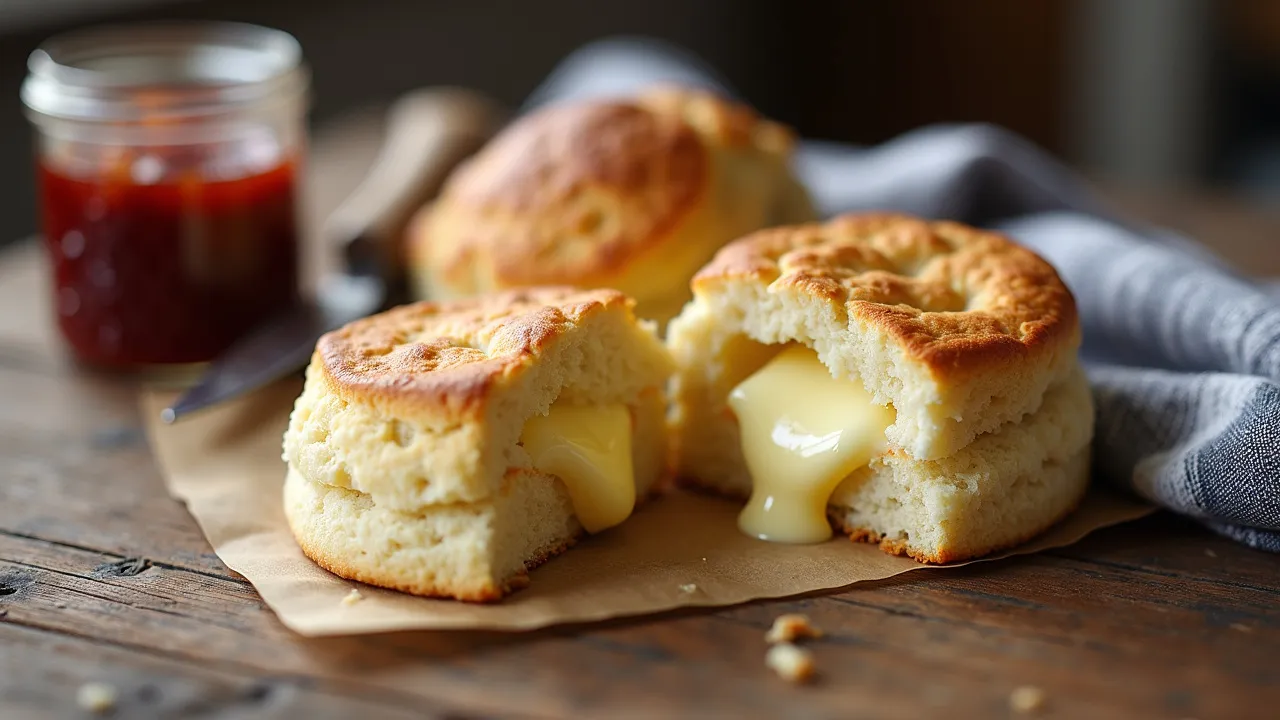
Celebrate National Buttermilk Biscuit Day on May 14th by honoring this classic Southern staple. Learn about its rich history, perfect baking techniques, and delicious ways to enjoy it.
The Historical Origins & Evolutionary Journey
National Buttermilk Biscuit Day, observed annually on May 14th, celebrates a beloved baked good that has deep roots in American culinary history. The buttermilk biscuit is more than just a side dish; it is a symbol of Southern hospitality, resourcefulness, and comfort.
The Foundational Catalyst: From Hardtack to Fluffy Biscuits
Biscuits in various forms have existed for centuries. Early European settlers brought a tradition of hard, dry biscuits (hardtack) that were easy to store on long voyages. However, the soft, flaky biscuit as we know it today emerged in the American South during the 19th century. The key innovations were the introduction of baking powder in the 1850s and the widespread availability of buttermilk—a byproduct of butter-making. Buttermilk's acidity reacts with baking soda to create carbon dioxide, giving biscuits their lift and tender crumb.
The Legislative/Official Adoption
While National Buttermilk Biscuit Day is not an official federal holiday, it gained traction through the efforts of the Biscuit Institute, a trade organization representing flour and baking ingredient companies, along with Southern food bloggers and chefs. The day was first promoted in the early 2000s as part of a broader campaign to highlight regional American foods. It has since been embraced by restaurants, bakeries, and home cooks across the United States.
Modern Global Legacy
Today, buttermilk biscuits have transcended their Southern origins. They appear on brunch menus worldwide, often paired with gravy, fried chicken, or jam. The day is celebrated with biscuit-making competitions, charity bake sales, and social media sharing using hashtags like #NationalButtermilkBiscuitDay. The biscuit has also inspired variations, such as cheddar biscuits, sweet potato biscuits, and gluten-free alternatives.
How to Celebrate National Buttermilk Biscuit Day
Whether you are a seasoned baker or a novice, there are countless ways to honor this day. The key is to embrace the spirit of sharing and warmth that biscuits represent.
- Bake from Scratch: Master a classic buttermilk biscuit recipe. Use cold butter, handle the dough minimally, and bake at a high temperature (425°F / 220°C) for a golden crust. For a twist, add cheese, herbs, or bacon bits.
- Host a Biscuit Brunch: Invite friends and family for a spread of biscuits with various toppings: sausage gravy, honey butter, strawberry jam, and fried chicken.
- Support Local Bakeries: Visit a local bakery or café that specializes in biscuits. Many offer special discounts or free biscuits on this day.
- Charity Bake Sale: Organize a bake sale at work or school, donating proceeds to a food bank or community kitchen.
- Share on Social Media: Post your biscuit creations with the hashtag #NationalButtermilkBiscuitDay and tag @BiscuitInstitute.
Internationally, traditions vary. In the United Kingdom, where 'biscuit' means cookie, the day may be less recognized, but some bakeries offer American-style biscuits. In Canada, butter tarts are sometimes conflated, but buttermilk biscuits appear in brunch spots. In Australia, a similar celebration of scones exists, though not on the same date.
The Science of a Perfect Buttermilk Biscuit
Understanding the chemistry behind biscuits can elevate your baking. The magic lies in the interaction between buttermilk, baking soda, and fat.
Key Ingredients and Their Roles
- Flour: All-purpose flour with moderate protein (10-12%) is ideal. Too much protein yields tough biscuits; too little results in a crumbly texture.
- Buttermilk: Its acidity tenderizes gluten and reacts with baking soda to produce carbon dioxide bubbles, creating fluffiness.
- Baking Powder and Baking Soda: Baking powder provides initial lift; baking soda reacts with buttermilk for secondary rise.
- Butter: Cold butter cut into small pieces creates steam pockets, leading to flaky layers.
Techniques for Consistency
For best results, freeze the butter and grate it into the flour. Use a light hand when mixing; overworking the dough develops gluten and makes biscuits dense. Pat the dough to 1-inch thickness, fold it over itself a few times for layers, then cut straight down with a sharp cutter—no twisting, which seals the edges.
Cultural Significance & Global Variations
While the buttermilk biscuit is quintessentially American, many cultures have similar baked goods that celebrate the same principles of simple ingredients and comforting texture.
- United States: The biscuit is a staple of Southern cuisine, often served with breakfast or as a base for dishes like biscuits and gravy.
- United Kingdom & Ireland: Scones are the closest relative, though they are less flaky and often sweeter. They are served with clotted cream and jam.
- India: Naan and parathas are leavened flatbreads that share the role of a bread accompaniment, but are cooked on a griddle rather than baked.
- Latin America: Arepas and pupusas are made from corn or masa, but fulfill a similar need for a versatile bread.
National Buttermilk Biscuit Day, therefore, is an opportunity to appreciate both the uniqueness of the American biscuit and the universal human craving for warm, freshly baked bread.
Health & Nutritional Insights
Buttermilk biscuits are not typically considered health food, but with mindful adjustments, they can be part of a balanced diet.
Nutritional Profile
A standard 2.5-inch buttermilk biscuit contains approximately 200-250 calories, 10-12 grams of fat, 25-30 grams of carbohydrates, and 4-5 grams of protein. It also provides small amounts of calcium and iron from enriched flour and buttermilk.
Healthier Alternatives
- Replace half the all-purpose flour with whole wheat flour for added fiber.
- Use Greek yogurt or low-fat buttermilk to reduce saturated fat.
- Substitute part of the butter with applesauce or mashed banana for lower cholesterol.
- Add seeds (flax, chia) or oats for texture and nutrients.
Moderation is key; enjoy a biscuit as a treat rather than a daily staple.
Industry Transformations & Economic Impact
The love for buttermilk biscuits has driven innovation in the food industry, from pre-made mixes to frozen biscuits and fast-food offerings.
Commercial Production
Major brands like Pillsbury, Bisquick, and White Lily have developed specialized buttermilk biscuit mixes and frozen dough. Fast-food chains such as McDonald's (biscuit sandwiches) and Bojangles' have built entire menus around biscuits. The biscuit industry is a multi-million dollar segment of the baking market.
Artisan Revival
In recent years, artisan bakeries have elevated biscuits with gourmet ingredients and techniques. Pop-up biscuit shops and biscuit-only restaurants have emerged in cities like Nashville, Portland, and New York. This trend has also boosted small-scale buttermilk producers and local flour mills.
Fun Facts & Trivia
- The largest buttermilk biscuit ever baked weighed over 1,000 pounds and was made in 2017 in Alabama.
- The word 'biscuit' comes from the Latin 'bis coctus' meaning 'twice-baked', though modern biscuits are not twice-baked.
- Buttermilk originally was the liquid left after churning butter; today it is cultured milk.
- In the Southern US, biscuits are often served with a drizzle of honey or sorghum syrup.
Historical Timeline
Professor Eben Norton Horsford develops commercial baking powder, making light, fluffy biscuits easier to produce at home.
Buttermilk biscuits become a staple in Southern households during the Reconstruction era, using simple ingredients and leftover buttermilk.
Refrigeration allows for pre-made biscuit dough, such as Pillsbury's ready-to-bake biscuits introduced in 1931.
National Buttermilk Biscuit Day is first celebrated, promoted by the Biscuit Institute and Southern food enthusiasts, gaining recognition on May 14th.
The biscuit trend explodes with artisanal biscuit shops opening nationwide; National Buttermilk Biscuit Day trends on social media.
Multiple cities host 'Biscuit Fest' events on May 14th, with charity bake-offs and biscuit-making classes.