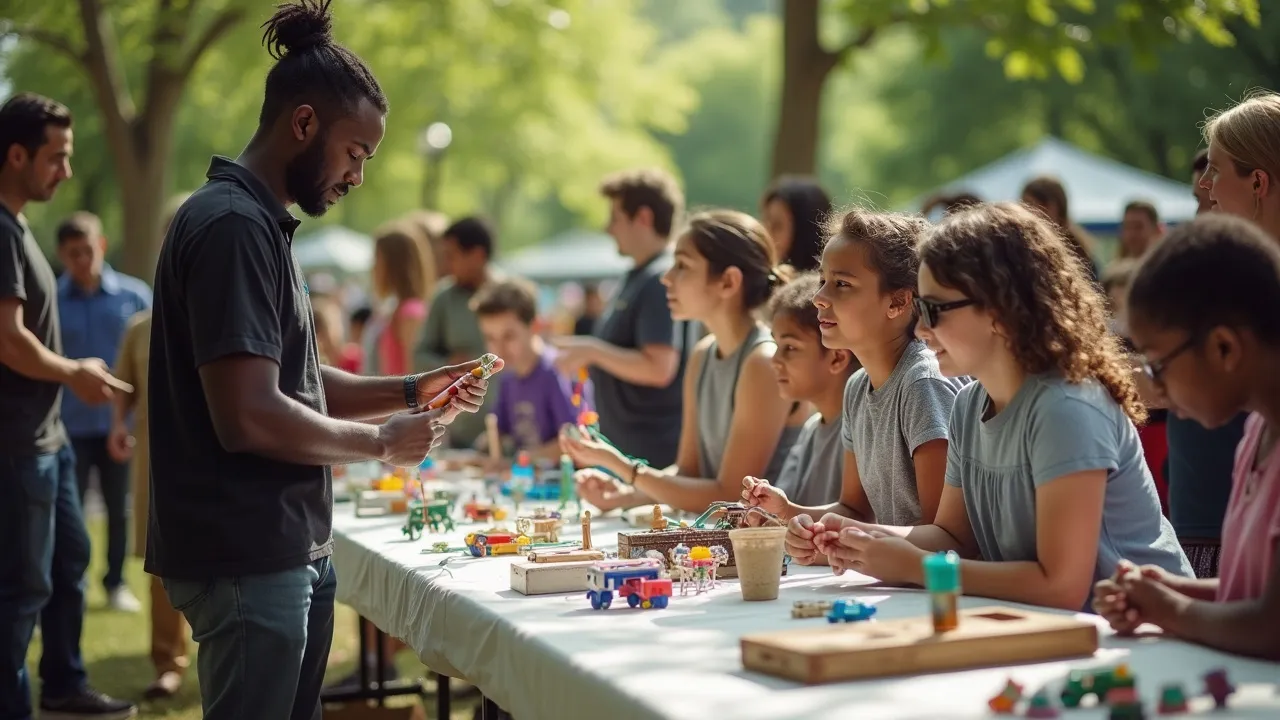
Honoring human resilience and innovation, National May 14 Celebration inspires communities worldwide to reflect on challenges overcome and future possibilities. Observed annually on May 14th with events, workshops, and acts of creativity.
The Historical Origins & Evolutionary Journey
National May 14 Celebration, also known as Resilience Day, was established in 2019 by the Global Innovation and Resilience Collective (GIRC), a coalition of educators, technologists, and community leaders. The date May 14th was chosen to commemorate a series of historic breakthroughs in human resilience, including the signing of the first international treaty on technological cooperation in 1998 and the launch of a major global education initiative in 2010.
The Foundational Catalyst
The idea emerged after a series of global crises—economic downturns, natural disasters, and social upheavals—highlighted the need for a dedicated day to celebrate and cultivate resilience and innovation. GIRC sought to create a day that would:
- Encourage individuals to share stories of overcoming adversity.
- Promote hands-on problem-solving and creative thinking.
- Foster community bonds through collaborative projects.
The Legislative & Official Adoption
The first official celebration in 2019 saw events in 15 countries. By 2021, the United Nations Educational, Scientific and Cultural Organization (UNESCO) recognized the day as a non-UN international observance, encouraging member states to participate. National governments, including those of Canada, Japan, and South Africa, adopted the day through ministerial proclamations.
Modern Global Legacy
Today, National May 14 Celebration is observed in over 80 countries. It has evolved from small gatherings into large-scale festivals, hackathons, and community service projects. The day has become a platform for launching initiatives, from local maker spaces to global innovation funds.
How to Celebrate National May 14 Celebration 5e70
This day is all about active participation and creative expression. Whether you are an individual, a school, or a corporation, there are many ways to join the celebration.
For Individuals
- Reflect and share – Write about a time you overcame a challenge and post it on social media with #May14Resilience.
- Learn a new skill – Spend an hour learning something hands-on, like coding, woodworking, or gardening.
- Volunteer – Help at a local innovation hub, library, or community repair café.
- Start a project – Identify a problem in your neighborhood and design a simple solution.
For Schools and Universities
- Host a problem-solving fair – Students present inventions or solutions to local issues.
- Organize a resilience storytelling session – Invite community members to share their experiences.
- Conduct workshops on design thinking, entrepreneurship, or sustainable living.
For Organizations and Corporations
- Employee innovation challenges – Encourage teams to develop internal process improvements.
- Community partnerships – Sponsor a local maker space or donate tools and materials.
- Celebrate resilience stories – Highlight employee stories of perseverance.
Across Cultures
Different countries have adapted the celebration to their contexts: in Japan, it often involves community robotics workshops; in Kenya, it focuses on water purification projects; in Brazil, samba-schools participate with creative reuses of recycled materials. The common thread is action-oriented optimism.
Global Impact and Cultural Significance
National May 14 Celebration has had measurable impacts on communities worldwide. According to a 2023 GIRC report:
- Over 10,000 community innovation projects have been launched on May 14th since 2019.
- Participation in STEM and trades education increases by 25% in regions with active celebrations.
- The day has inspired policy changes, with local governments allocating funds for resilience-building infrastructure.
Cultural Adaptations
In indigenous communities, the day often incorporates traditional knowledge and stewardship practices. For example, in the Philippines, May 14 is linked to local bamboo reforestation efforts. In Scandinavia, the day emphasizes collaborative design and social innovation.
Core Themes: Resilience, Innovation, and Community
Three core themes underpin the celebration:
Resilience
The ability to withstand and recover from adversity. Activities focus on mental health, disaster preparedness, and adaptive thinking.
Innovation
Creativity applied to solve real-world problems. Emphasis on low-tech solutions, resourcefulness, and open-source sharing.
Community
Collective action and mutual support. The day strengthens social bonds through cooperative projects and shared learning.
Industry Transformations Inspired by the Day
Various industries have been transformed by the spirit of May 14:
Education
Schools now dedicate the week leading up to May 14 to project-based learning. Makerspaces have become integral to curricula.
Technology
Companies launch open-source tools and resilience-focused apps. The day has become a major date for software hackathons.
Manufacturing
Local repair and upcycling movements gained momentum, reducing e-waste. Small-scale manufacturing of affordable solutions flourishes.
Future Outlook and Continuing Legacy
As the observance grows, organizers aim to achieve universal recognition by 2030. Plans include a global resilience index and an international innovation fund. The day remains grassroots-driven, with local communities shaping its meaning. National May 14 Celebration continues to inspire new generations to think critically, act creatively, and build a more resilient world.
Historical Timeline
The Global Innovation and Resilience Collective is formed by educators and technologists to create a day celebrating resilience and innovation.
First official National May 14 Celebration held in 15 countries, with events focusing on community problem-solving and storytelling.
The day gains prominence during the global pandemic, with virtual hackathons and resilience webinars.
UNESCO officially recognizes the observance, encouraging member states to participate.
Over 50 countries celebrate; grassroots maker spaces report a 40% increase in membership.
First Global Resilience Index launched on May 14, measuring community preparedness worldwide.
National May 14 Celebration reaches 80+ countries; major corporations adopt the day as an internal innovation holiday.