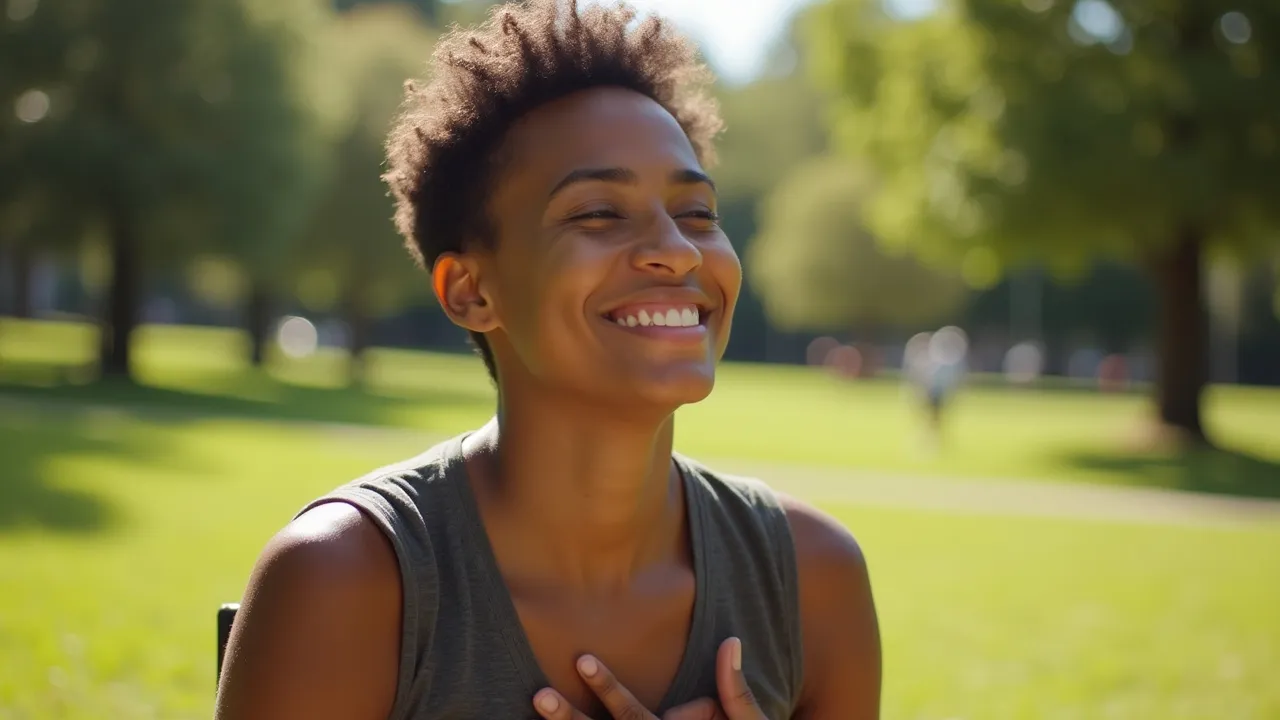
Observed annually on May 10th, Trust Your Intuition Day encourages people to listen to their inner voice. Founded in 2015, this day promotes self-trust, mindfulness, and intuitive decision-making for a more authentic life.
The Historical Origins & Evolutionary Journey
Trust Your Intuition Day was first established in 2015 by Frances K. O., a wellness advocate and author who recognized the power of intuitive thinking in personal and professional success. The day quickly gained traction through social media and grassroots campaigns, evolving into a global observance celebrated on May 10th each year.
The Foundational Catalyst
Frances K. O. developed the concept after her own life-changing experience with intuitive decision-making. She documented how trusting her gut instinct led to better relationships, career moves, and health choices. Her book, Trusting the Voice Within, published in 2013, laid the philosophical groundwork for the observance. The core idea was that intuition is not mystical but a cognitive process that can be honed.
The Official Adoption & Spread
The inaugural celebration in 2015 involved a small group of workshops and online events. By 2017, the day had official recognition from several self-help organizations and was featured in major wellness publications. The official website offered resources like guided meditations and journaling prompts. The movement emphasized evidence-based intuition, blending neuroscience with mindfulness.
Modern Global Legacy
Today, Trust Your Intuition Day is observed in over 50 countries. It has been endorsed by psychologists, business coaches, and spiritual leaders alike. The day now includes corporate training programs, school curriculum modules on critical thinking, and community events. Social media campaigns like #TrustYourGut generate millions of impressions annually, reinforcing the day's message of self-reliance and authenticity.
How to Celebrate Trust Your Intuition Day
Celebrating this day involves intentional practices that strengthen your connection to your inner wisdom. Below are comprehensive strategies for individuals, schools, and organizations across different cultural contexts.
Individual Practices
- Morning Intuition Journal: Write down three intuitive hunches you have for the day and track their accuracy.
- Digital Detox: Spend at least one hour without screens to listen to your thoughts without distraction.
- Body Scan Meditation: Focus on physical sensations that often accompany gut feelings—tightness, warmth, or calm.
- Decision Retrospective: Review a past decision that turned out well and identify the intuitive signals you followed.
School Activities
- Intuition Circle: Students share stories of times their intuition helped them, building empathy and self-awareness.
- Critical Thinking Games: Exercises that differentiate between intuition and impulse, using scenarios from history or science.
- Art of Reflection: Assign a creative project (poetry, drawing) that expresses an intuitive insight.
Corporate & Organizational Events
- Intuitive Decision-Making Workshop: Led by a psychologist, teaching leaders how to balance data with gut feelings.
- Mindful Meeting Pause: Start meetings with a 60-second silence to allow intuitive thoughts to surface.
- Trust Your Gut Challenge: Employees share instances where intuition improved a work outcome, with rewards for best stories.
Global Cultural Variations
While the date is consistent globally, celebration styles vary. In Japan, the day often includes a shinrai (trust) ritual where participants write down worries and burn them symbolically. In Brazil, community drum circles are used to synchronize group intuition. In Scandinavia, the focus is on naturlig visdom (natural wisdom), with outdoor retreats. In India, many combine the day with yoga nidra practices that enhance inner awareness.
The Science Behind Intuition
Intuition is often misunderstood as magical thinking, but neuroscience reveals it as a rapid, subconscious pattern-recognition process. The somatic marker hypothesis, proposed by Antonio Damasio, explains how bodily sensations guide decision-making. The brain stores past experiences as emotional memories, which surface as gut feelings when we encounter similar situations.
Neurological Basis
The ventromedial prefrontal cortex plays a key role. Patients with damage to this area lose the ability to use emotional signals from the body, leading to poor decisions despite intact logic. This demonstrates that intuition is a biological survival mechanism. Studies using fMRI show that intuitive judgments activate the insula and anterior cingulate cortex, regions linked to interoception (awareness of internal body states).
Intuition Versus Heuristics
Daniel Kahneman's work distinguishes between System 1 (fast, intuitive) and System 2 (slow, analytical) thinking. Intuition can be trained through deliberate practice. Experts in fields like firefighting or nursing often develop reliable intuitions based on thousands of hours of experience. The key is to recognize when intuition is trustworthy—based on relevant experience—versus when it is biased.
Practical Implications
For daily life, improving intuition involves: (1) diverse experiences to build pattern libraries, (2) reflection on outcomes to calibrate accuracy, and (3) mindfulness to quiet cognitive noise. Trust Your Intuition Day is a reminder to systematically develop this faculty.
Intuition in the Workplace: A Quantum Leap
Corporate cultures traditionally prioritize data-driven decisions, but research shows that combining analytics with intuition yields superior outcomes. A study by the Harvard Business Review found that executives who rate their intuitive ability as high have 20% higher performance in dynamic markets. Trust Your Intuition Day has become a catalyst for workplace training programs.
Intuitive Leadership
Leaders like Steve Jobs and Oprah Winfrey publicly credited their intuition for major career choices. Modern leadership training now includes modules on intuitive intelligence—the ability to sense emerging trends, read team morale, and innovate. Workshops often use role-playing scenarios where participants must decide with limited data, then reflect on the role of their gut reactions.
Strategies for Companies
- Intuition-Data Balance Scorecard: A framework to weigh quantitative metrics against qualitative gut feelings in project reviews.
- “Gut Check” Meetings: Weekly 15-minute sessions where teams share intuitive insights about ongoing work without judgment.
- Intuition Mentors: Pairing newer employees with mentors who have honed intuitive expertise in that industry.
The result is a more agile, human-centered workplace that values both hard data and the soft signals of collective intuition.
Cultural Perspectives on Intuitive Wisdom
Different cultures have long honored the concept of inner knowing. In Eastern traditions, intuition is considered a form of prajna (transcendental wisdom) in Buddhism, or satori in Zen—an immediate, non-conceptual understanding. Indigenous cultures, such as the Navajo, view intuition as a connection to ancestral knowledge and the natural world.
Indigenous Intuition Practices
The Māori of New Zealand use a concept called mātauranga (Māori knowledge) that blends empirical observation with intuitive insights passed down through generations. Similarly, Amazonian tribes rely on plant intuition to identify medicinal properties. These traditions are now being studied by ethnobotanists who validate that such intuitions often have scientific basis.
Western Resurgence
In the 20th century, figures like Carl Jung emphasized the importance of intuition as one of the four psychological functions. Modern Western pop culture has embraced intuition through mindfulness apps and self-help literature. Trust Your Intuition Day serves as a bridge between these ancient wisdoms and contemporary science.
The Future of Intuitive Decision-Making
As artificial intelligence and big data dominate, the role of human intuition is being redefined. Rather than being replaced, intuition becomes a complement to machine learning. Algorithms can process vast datasets, but they lack the contextual awareness and ethical reasoning that human intuition provides. Trust Your Intuition Day encourages a symbiotic future.
Human-AI Collaboration
In fields like medicine, radiologists use AI to flag anomalies but rely on their trained intuition to interpret subtle patterns. The most effective diagnostic teams are those that combine machine precision with human gut feeling. Future workplaces will likely train employees in both data literacy and intuitive awareness.
Education Reform
Progressive schools are introducing intuition literacy as a core competency, teaching children to recognize and trust their internal signals. Programs like the Intuitive Child Project use storytelling and games to build this skill. Trust Your Intuition Day thus becomes a platform to advocate for holistic education that values both analytical and intuitive intelligence.
Historical Timeline
Frances K. O. publishes 'Trusting the Voice Within', a book that popularizes the concept of intuitive decision-making and lays the foundation for the observance day.
First official Trust Your Intuition Day celebrated on May 10th, with small workshops and online events. The day is founded by Frances K. O. to encourage people to listen to their inner voice.
The day gains official recognition from several self-help organizations and is featured in major wellness publications. Social media campaigns begin to spread globally.
Corporate workshops on intuitive leadership become common. Companies like Google and Salesforce incorporate Trust Your Intuition Day into their employee wellness programs.
The observance reaches over 50 countries. The United Nations' 'Day of Mindfulness' aligns with the day in some regions, boosting its profile.
Scientific studies on somatic markers and intuition are widely cited in media. Trust Your Intuition Day is now celebrated with global online events, including a 24-hour live meditation marathon.