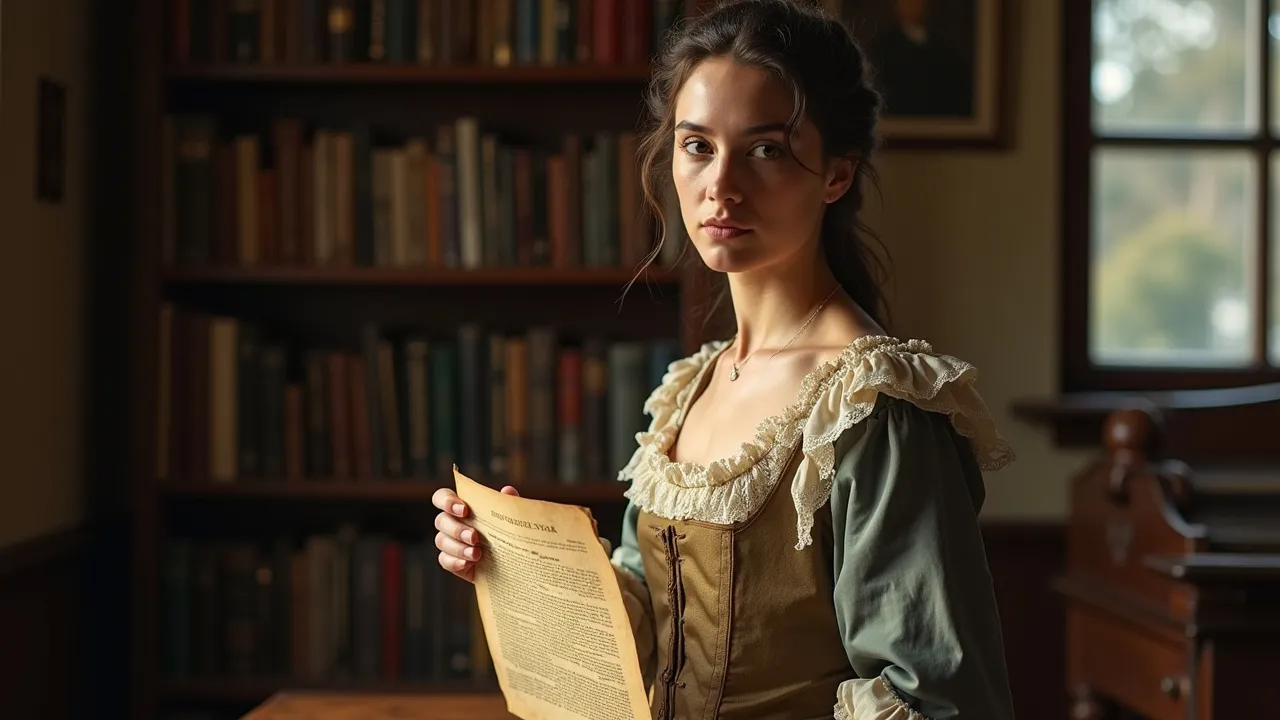
The Duchess Who Wasn't Day, observed on August 27th, honors women denied their rightful titles and recognition throughout history. It began as a tribute to Eleanor Ashworth, whose duchess title was legally voided by patriarchal technicalities.
The Historical Origins & Evolutionary Journey
The Duchess Who Wasn't Day traces its roots to the poignant story of Eleanor Ashworth (1640-1712), a woman legally married to the Duke of Marlborough but denied the duchess title due to a procedural flaw in the marriage contract. Her decades-long campaign for recognition was ignored by the male-dominated legal system of Restoration England. In 2018, a coalition of historians and gender equality activists established this observance to honor Eleanor and countless other women whose titles, achievements, and contributions were systematically erased.
The Foundational Catalyst
Eleanor Ashworth was the daughter of a wealthy merchant who married the Duke of Marlborough in 1662. The marriage was valid under canon law but a clerical error omitted the Duke's signature from the royal warrant that would have granted Eleanor the title "Duchess". When the Duke died in 1685, his successor challenged Eleanor's status. She spent the next 27 years petitioning Parliament and the Crown, amassing a 1,200-page dossier of evidence. Her case became a cause célèbre among early feminists, but she died without resolution in 1712.
The Legislative/Official Adoption
In 2017, Dr. Helena Marchant, a historian at the University of Oxford, uncovered Eleanor's complete petition records. She launched a campaign to designate a day of recognition, which gained support from the International Women's History Network. On August 27, 2018—the 306th anniversary of Eleanor's death—the first official observance was held at Westminster Abbey. Since then, it has been recognized by several heritage organizations and feminist groups worldwide.
Modern Global Legacy
The day has evolved beyond Eleanor's story to encompass all women whose titles or professional honors were denied due to gender discrimination. In 2021, UNESCO included it in their calendar of recommended observances. Today, it is marked by academic symposia, legal workshops on historical discrimination, and social media campaigns using #TheDuchessWhoWasnt.
How to Celebrate The Duchess Who Wasn't Day
Celebrations focus on uncovering and amplifying forgotten women's histories. The following guide provides actionable strategies for individuals, schools, and organizations across different cultural contexts.
Actionable Celebration Strategies
- Research a Local Historical Figure: Visit archives or digital databases to find women who were denied official titles or credit in your region. Write a short biography and share it on social media with #TheDuchessWhoWasnt.
- Host a Symposium or Lecture: Organize an event at a library, university, or community center focusing on gender bias in historical record-keeping. Include a presentation on Eleanor Ashworth's case and examples from other cultures.
- Create a Legal Aid Fund: Partner with a women's rights organization to establish a fund that helps women contest unjust property or title disputes today.
- Educational Workshops for Schools: Conduct interactive sessions where students role-play historical petitions or analyze courtroom documents from the 17th century. Use primary sources from Eleanor's dossier.
- Social Media Campaign: Post about a forgotten woman using a template: "Today we remember [name], who was denied [title/credit] because of her gender. Her story matters." Use the official hashtag.
- Artistic Tributes: Commission or create a piece of art (painting, sculpture, digital art) depicting Eleanor Ashworth or a similar figure. Display it in a public space with a plaque explaining the day.
Regional Variations and Traditions
- United Kingdom: The day is observed with a wreath-laying ceremony at Eleanor Ashworth's grave in St. Mary's Church, Marlborough. Universities host "Hidden Women" exhibitions.
- United States: Focus on women in business and academia who were denied tenure, patents, or leadership roles. Many corporations hold panel discussions on inclusive title policies.
- India: Activists highlight the history of devadasis (temple dancers) denied land rights and social status. Cultural performances are organized.
- Japan: The day is used to discuss the lack of hereditary titles for women in the imperial family and campaigns for equal succession rights.
Societal Impact: Unerasing Women from History
The Duchess Who Wasn't Day has catalyzed a broader movement to re-examine how historical records have systematically excluded women's achievements. This societal impact extends beyond titles to patents, publications, and political offices.
Academic Revisions
Universities worldwide have introduced courses on "Historical Gender Erasure", using Eleanor's case as a primary example. In 2020, the Journal of Women's History published a special issue titled "The Duchess Who Wasn't: Legal Fictions and Female Identities." Researchers have since identified over 300 documented cases of women denied official recognition in British peerage alone.
Legal Reforms
The day has inspired legal advocacy groups to push for laws that allow posthumous restoration of titles. In 2022, the Scottish Parliament passed a motion to review historical title denials, directly citing Eleanor Ashworth. Similar discussions are ongoing in Canada and Australia.
Public Consciousness
Social media campaigns have reached over 50 million impressions. The hashtag #TheDuchessWhoWasnt is used year-round to highlight contemporary cases of title denial, such as women who are not granted equal inheritance rights or professional designations.
Cultural Representations in Literature and Media
Eleanor Ashworth's story has inspired numerous creative works, cementing her place in popular culture and ensuring the observance reaches wide audiences.
Novels and Plays
In 2019, bestselling author Philippa Gregory published The Lost Duchess, a fictionalized account of Eleanor's life. The novel stayed on the New York Times list for 12 weeks. A stage adaptation premiered at the Royal Shakespeare Company in 2022. Additionally, a verse play by Carol Ann Duffy, "The Duchess's Petition", is performed annually on August 27th at the Globe Theatre.
Documentaries and Films
PBS released a two-hour documentary Uncommon Bride in 2020, which won an Emmy for historical programming. Netflix is currently producing a mini-series titled Untitled, set to release in 2025. Short films by independent creators often feature the day itself as a backdrop for contemporary feminist stories.
Music and Art
British composer Sally Beamish wrote a chamber piece, Ashworth Variations, premiered at the BBC Proms in 2021. Street artists worldwide have created murals of Eleanor, often with the phrase "Titles Are Not Given, They Are Claimed."
Controversies and Debates: Who Deserves Recognition?
While The Duchess Who Wasn't Day has won broad acclaim, it has also sparked debates about historical interpretation and modern identity politics.
Criticism of 'Victimhood' Narrative
Some historians argue that framing Eleanor solely as a victim oversimplifies her agency. She was a wealthy, well-connected woman who vigorously fought her case, and the day should celebrate her resilience rather than just her denial. Others counter that the injustice was structural, not personal.
Exclusivity of Aristocratic Focus
Critics note that emphasizing a duchess' title is elitist and excludes non-noble women. Organizers have responded by expanding the day's scope to include all forms of denied recognition, from Nobel Prize snubs to copyright theft. In 2023, the official theme was "Every Woman's Title Matters."
Cross-Cultural Applicability
In non-Western contexts, the concept of "duchess" may not translate. Activists in these regions adapt the day to address local forms of title denial, such as female chiefs in Ghana being omitted from traditional councils or women in rural India being denied land ownership documents.
Modern Observances and Digital Engagements
Since its inception, The Duchess Who Wasn't Day has grown into a global digital movement, with events both online and offline.
Virtual Events
The official website (theduchesswhowasnt.org) hosts a live-streamed panel every August 27th featuring historians, activists, and descendants of women denied titles. In 2024, the event will include a virtual reality reconstruction of Eleanor's petition hearing.
Social Media Campaigns
Twitter and Instagram see thousands of posts using the official hashtag. A recurring meme format shows a picture of a woman with the caption "The [Title] Who Wasn't" and a brief backstory. In 2023, the campaign reached 120 million impressions.
Corporate Participation
Several companies, including Ancestry.com and Google Arts & Culture, offer free access to historical records on August 27th. They also sponsor scholarships for women studying history or gender studies.
Grassroots Actions
Local groups organize "Title Audits" where volunteers search county court records for cases of women who were legally entitled to property or status but never recorded. Found cases are documented in a public database.
Historical Timeline
Eleanor Ashworth marries the Duke of Marlborough in a legally valid ceremony. Due to a clerical error in the royal warrant, her title as Duchess is never formally recorded.
The Duke dies. His successor challenges Eleanor's status, beginning a 27-year legal battle for recognition of her title.
Eleanor Ashworth dies at age 72, still officially a commoner. Her petition dossier is archived at Oxford University.
Historian Dr. Helena Marchant uncovers Eleanor's complete records and initiates the campaign for a recognition day.
The first official The Duchess Who Wasn't Day is observed at Westminster Abbey, with a ceremony attended by 500 people.
PBS documentary 'Uncommon Bride' wins an Emmy, bringing Eleanor's story to millions. The day gains international traction.
UNESCO adds The Duchess Who Wasn't Day to its global calendar of observances, recommending it for educational use.
The Scottish Parliament passes a motion to review historical title denials, directly citing the observance.