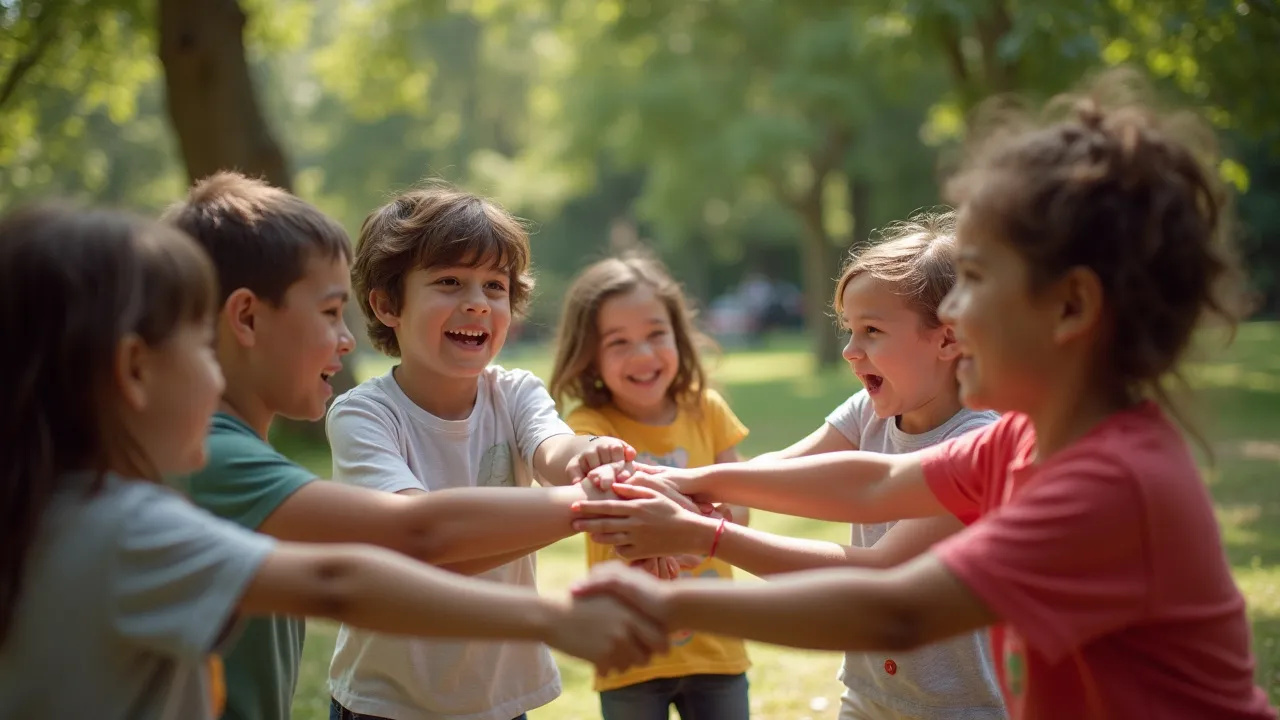
World Rock Paper Scissors Day, observed on August 27th, celebrates the timeless hand game known globally. It honors the game's role in decision-making, conflict resolution, and social interaction across cultures.
The Historical Origins & Evolutionary Journey
Rock Paper Scissors (RPS) is a game of ancient lineage, with its earliest known ancestors emerging in China during the Han Dynasty (approx. 200 BC). Known as shoushiling, the game used hand gestures representing a frog, snake, and slug—a triad of mutual destruction. This concept traveled along trade routes to Japan, where it evolved into Jan-Ken-Pon during the Edo period. The Japanese version adopted rock, paper, and scissors, reflecting local materials. By the 20th century, European traders and missionaries carried the game westward, where it became a staple of playgrounds and decision-making.
The Foundational Catalyst
The modern formalization of RPS began in 2002 with the founding of the World RPS Society by Douglas and Graham Walker. The society standardized the rules, established a global championship, and sought to promote the game's strategic depth. In 2007, the society declared August 27th as World Rock Paper Scissors Day, chosen to commemorate the anniversary of the society's founding. This date has since been recognized internationally, with events spanning from Los Angeles to Tokyo.
The Legislative/Official Adoption
While no government has officially legislated the day, numerous municipalities and schools have embraced it. In 2009, the city of Los Angeles issued a proclamation supporting the day. The World RPS Society also lobbied UNESCO for recognition of RPS as an intangible cultural heritage, though this has not yet succeeded. The day's official adoption relies on grassroots enthusiasm, with tournaments, charity drives, and educational programs marking the occasion.
Modern Global Legacy
Today, World RPS Day is celebrated on every continent. The game's simplicity belies its strategic complexity, studied in game theory and cognitive psychology. Annual championships attract thousands of players, and variations like Rock Paper Scissors Lizard Spock (popularized by The Big Bang Theory) have entered the lexicon. The day serves as a reminder of the joy of fair, random, and skill-based competition—a universal human experience.
How to Celebrate World Rock Paper Scissors Day
Celebrating World RPS Day can be as simple or elaborate as you wish. Below are action-oriented strategies for individuals, schools, and organizations.
For Individuals
- Host a backyard tournament: Gather friends and family. Use a bracket system and offer a silly trophy. The social bonding is the real prize.
- Practice strategic play: Learn the Nash equilibrium—throwing each gesture roughly one-third of the time. Use 'meta-gaming' by observing opponents' patterns.
- Join an online event: Many communities host virtual championships. Check the World RPS Society's official site for listings.
For Schools
- Classroom tournaments: Use RPS to teach probability and game theory. Have students track outcomes and discuss randomness.
- Cross-cultural studies: Explore international variants like Japanese Jan-Ken-Pon or Korean Kai Bai Bo. Have students learn gestures from different countries.
- Conflict resolution workshops: RPS can be used to settle disputes fairly. Teach students to use the game as a tool for peaceful decision-making.
For Organizations
- Team-building events: Organize a company-wide RPS championship. Encourage departments to create themed team names and strategies. This fosters camaraderie and breaks down hierarchies.
- Charity drives: Have a 'donation match' where each win contributes to a charitable cause. This combines fun with philanthropy.
- Workshops on decision-making: Use RPS as a metaphor for business strategy: the need to balance bluffing, risk assessment, and adaptability.
International traditions vary: in Japan, participants often shout 'Saisho wa guu, janken pon!' (First is rock, rock-paper-scissors!) while throwing. In South Korea, the hand gestures are slightly different, with scissors formed by only the thumb and index finger. On August 27th, embrace these cultural notes to make your celebration authentic.
The Psychology and Game Theory Behind RPS
Rock Paper Scissors is a zero-sum game with a simple payoff matrix: rock beats scissors, scissors beats paper, paper beats rock. Despite its simplicity, the game reveals deep insights into human cognition and strategy.
Game Theory Essentials
The Nash equilibrium for RPS is a mixed strategy where each gesture is played with probability 1/3. Deviating from this allows opponents to exploit patterns. However, humans are poor randomizers—they tend to repeat winning moves or switch after a loss. Expert players exploit these tendencies.
- Pattern recognition: Novices often stick with a winning gesture. A common strategy is to counter what the opponent just played.
- Meta-game: Advanced players consider the opponent's assumptions. For example, if the opponent expects you to throw rock after two papers, you might throw scissors.
- Bluffing and psychology: Some players make subtle hand gestures before throwing. Others use verbal cues like 'Rock!' to mislead.
Cognitive Biases
Research shows that players are more likely to throw 'rock' in competitive settings, possibly because it symbolizes strength. This bias is called the rock bias. Similarly, 'scissors' is often thrown less frequently. Understanding these biases can give a strategic edge.
Studies in behavioral economics use RPS to model competition and cooperation. The game has been used in laboratory experiments to study reciprocity, cheating, and negotiation. On World RPS Day, we celebrate not just the game but the human mind's intricate dance with chance and skill.
Global Variations and Cultural Significance
While August 27th is the universal date for World RPS Day, different regions bring unique flavors to the celebration. The game itself has countless variations across cultures.
Japan: Jan-Ken-Pon
In Japan, the game is deeply embedded in daily life. The standard triple (rock, paper, scissors) is used to make decisions in schools, sports teams, and even business meetings. The Japanese version often includes a chant: Saisho wa guu, janken pon!. There are also regional variations like Yume-ken (dream fist) where gestures represent a wolf, village chief, and hunter.
South Korea: Kai Bai Bo
Koreans use a slightly different hand shape for scissors (index and middle finger extended in a V). The game is commonly used to determine who buys coffee or snacks. On World RPS Day, K-pop bands often engage in playful RPS battles with fans.
Western Adaptations
In the United States and Europe, RPS is primarily a children's game but has gained adult popularity through championships. The RPS Lizard Spock variant, invented by Sam Kass and Karen Bryla, adds two new gestures and appears on The Big Bang Theory.
Regional Dates
World RPS Day is globally observed on August 27th. However, some localities hold secondary celebrations: for instance, Japan sometimes marks August 27th as 'Janken Day' with school events. In South Korea, the day is often celebrated with a national online tournament. No major regional date variations exist, as the World RPS Society has successfully unified the calendar.
Competitive RPS and Championship Tournaments
World RPS Day is closely tied to the competitive scene. The World RPS Championship, first held in 2002, has grown into a global phenomenon with thousands of participants.
The World RPS Championship
Held annually in Las Vegas (or occasionally in Toronto), the championship features a bracket-style tournament with cash prizes. Notable winners include Andrew 'Boz' Bozic (2008-2009) and Tim 'The Enigma' Ewing (2011). Matches are best-of-five rounds, with strict rules on timing and gesture clarity.
- Rules: Players must show their gesture on a count of three. No hesitation or mid-throw changes allowed. Referees enforce fair play.
- Strategies: Top players often use psychological warfare, such as staring down opponents or making fake throws. They also study past match data to detect patterns.
- Prize money: The winner typically receives $10,000, plus a championship belt. The event also includes side tournaments for amateurs and children.
Other Leagues and Online Play
Beyond the World Championship, national leagues exist in countries like the UK and Australia. Online platforms such as RPS Battle host daily tournaments. During World RPS Day, many of these platforms feature special events, leaderboards, and exclusive rewards.
Competitive RPS is not just about luck; it demands mental agility and adaptability. The championship serves as the apex of celebration, drawing media attention and validating RPS as a skill-based sport.
Rock Paper Scissors in Pop Culture and Media
The game has permeated pop culture, thanks in part to its universal recognition and inherent drama. World RPS Day often coincides with media retrospectives and themed content.
Television and Film
- The Big Bang Theory: The show popularized Rock Paper Scissors Lizard Spock, a variant invented by Sam Kass. The characters often use it to settle nerd disputes.
- How I Met Your Mother: The episode 'The Platinum Rule' features a RPS competition that determines the group's fate.
- Films: In The Princess Bride, the Man in Black uses a 'game of wits' that includes RPS-like choices. Documentaries like Rock Paper Scissors (2013) explore the championship scene.
Literature and Art
RPS appears in countless novels and comics as a metaphor for conflict. The children's book Rock Paper Scissors by Drew Daywalt teaches negotiation. Street artists have created giant murals of the hand gestures, encouraging passersby to play.
Online Culture
Memes often turn RPS into a philosophical debate: 'Rock is the most honest, but paper covers all.' World RPS Day trends on social media with hashtags like #RPSDay. Many influencers host live streams of marathon RPS sessions.
Educational and Social Benefits of the Game
Beyond entertainment, Rock Paper Scissors offers genuine educational and social value. World RPS Day is an excellent opportunity to harness these benefits.
Teaching Decision-Making and Fairness
RPS teaches children (and adults) that sometimes outcomes are beyond control, but strategic thinking can influence them. It's a safe way to practice acceptance of defeat and gracious victory.
- Probability lessons: Students can calculate expected values and test randomness.
- Ethics: The game requires honesty (no late throws), reinforcing integrity.
Conflict Resolution
Many schools and workplaces use RPS to settle minor disputes—a faster, less confrontational alternative to argument. The game's impartiality (in theory) reduces bias.
Team-Building and Inclusivity
RPS levels the playing field: age, gender, and physical ability do not affect performance. It's an icebreaker that can cross language barriers. On World RPS Day, incorporate these aspects to build community.
Historical Timeline
Earliest known version of RPS appears in China as shoushiling, using frog, snake, and slug.
The game evolves into Jan-Ken-Pon in Japan, with rock, paper, and scissors gestures.
Western travelers popularize the game in Europe and North America.
The World RPS Society is founded by Douglas and Graham Walker to promote the game.
First World Rock Paper Scissors Day is celebrated on August 27th, established by the World RPS Society.
Los Angeles officially recognizes World RPS Day with a city proclamation.
Rock Paper Scissors Lizard Spock gains mainstream fame after appearing on The Big Bang Theory.
World RPS Championship attracts over 1,000 participants for the first time.