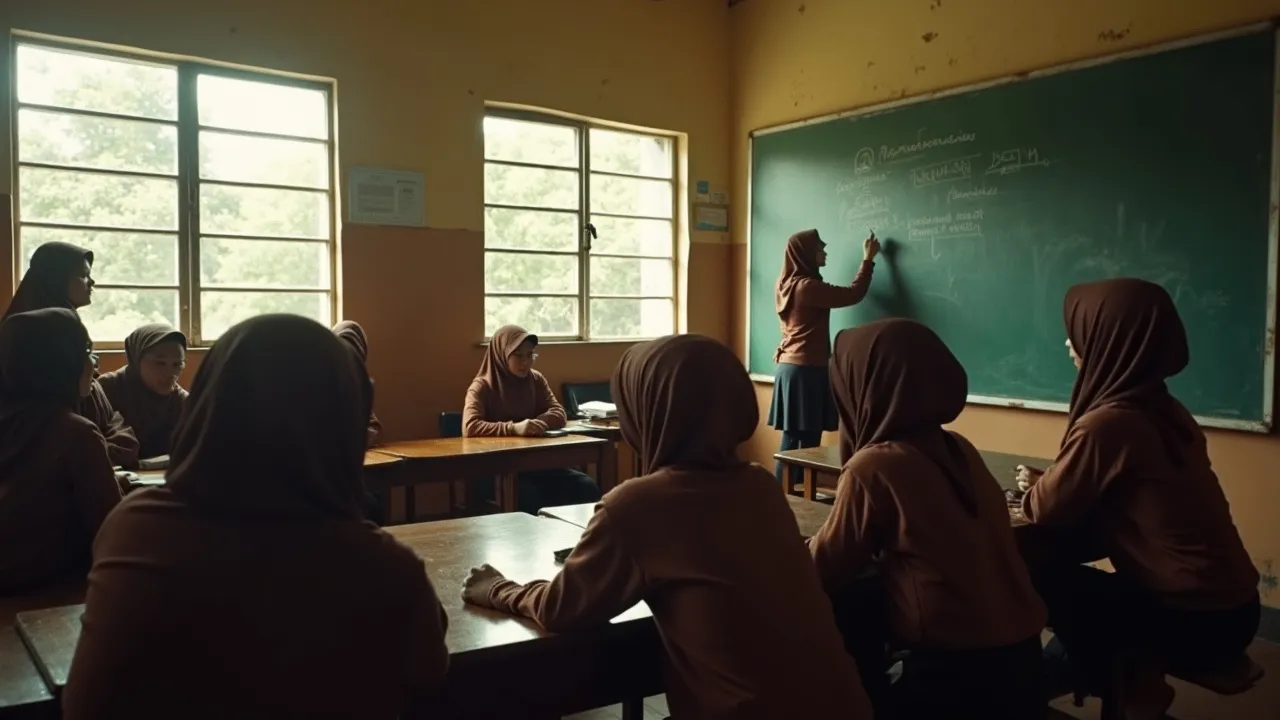
Indonesia celebrates National Teachers' Day on November 25th to honor the founding of the Indonesian Teachers' Association (PGRI) in 1945. It is a day to appreciate the dedication and role of educators in nation-building.
The Historical Origins & Evolutionary Journey
Teachers' Day in Indonesia, known as Hari Guru Nasional, is observed annually on November 25th. This date was chosen to commemorate the founding of the Persatuan Guru Republik Indonesia (PGRI) (Indonesian Teachers' Association) on November 25, 1945. The establishment of PGRI marked a pivotal moment in Indonesia's struggle for independence and the professionalization of teaching.
The Foundational Catalyst: PGRI
In the aftermath of World War II and Indonesia's proclamation of independence in August 1945, teachers across the archipelago united to form a single professional organization. Prior to this, several teacher unions existed, such as the Persatuan Guru Hindia Belanda (PGHB) and Persatuan Guru Indonesia (PGI). On November 25, 1945, at a congress in Surakarta, these groups merged into PGRI. The organization aimed to improve teacher welfare, uphold educational standards, and support the nascent republic. PGRI quickly became a pillar of the national education system and a vehicle for teachers to contribute to nation-building.
The Legislative/Official Adoption
Although PGRI celebrated its anniversary informally as Teacher's Day, it wasn't until 1994 that the Indonesian government officially recognized November 25th as National Teachers' Day. Presidential Decree No. 78/1994 formalized the observance, emphasizing the strategic role of teachers in national development. The decree also mandated that the day be marked with ceremonies, awards, and community appreciation events. This legal recognition elevated the status of teachers and underscored the state's commitment to education.
Modern Global Legacy
Today, Teachers' Day in Indonesia is a national observance but not a public holiday. It is celebrated in schools, universities, and educational institutions across the country. The day features flag ceremonies, cultural performances, teacher recognition awards, and expressions of gratitude from students. PGRI continues to play a central role, organizing seminars, workshops, and advocacy campaigns. The observance also aligns with global movements, such as UNESCO's World Teachers' Day (October 5th), though Indonesia's distinct date reflects its unique historical context.
How to Celebrate Teachers' Day (Indonesia)
Celebrating Teachers' Day in Indonesia involves a blend of formal ceremonies, heartfelt gestures, and community activities. Here is a definitive guide to marking November 25th with respect and creativity.
For Individuals and Students
- Write a Thank-You Card: A handwritten note expressing gratitude goes a long way. Include specific memories or lessons that impacted you.
- Gift Giving: Common gifts include flowers, books, stationery, or small tokens of appreciation. Homemade gifts are especially cherished.
- Volunteer to Help: Offer to assist teachers with classroom tasks or organize a class clean-up as a gesture of respect.
For Schools and Educational Institutions
- Flag Ceremony: Hold a morning flag-raising ceremony with speeches highlighting the importance of teachers. Invite local dignitaries or former teachers.
- Award Ceremony: Recognize outstanding teachers with awards such as "Teacher of the Year" or service milestones. Present certificates and small gifts.
- Cultural Performances: Organize traditional dances, poetry readings, or musical performances by students. Themes often revolve around education and gratitude.
- Workshops and Seminars: Host professional development sessions on modern teaching methods, classroom management, or educational technology.
- Public Recognition: Local governments and businesses can sponsor ads in newspapers or social media campaigns thanking teachers.
- Charity Drives: Collect school supplies or funds to support teachers in remote areas. PGRI often coordinates such initiatives.
- Media Tributes: Radio stations and TV channels broadcast special programs, interviews with veteran teachers, and documentaries on education.
For Organizations and Communities
The Role of Teachers in Indonesian Society
In Indonesia, teachers are revered as agents of change, moral guides, and key drivers of national development. The nation's motto "Bhinneka Tunggal Ika" (Unity in Diversity) is cultivated through education, and teachers are the frontline implementers. They are expected not only to impart knowledge but also to instill character, patriotism, and social responsibility.
Challenges and Opportunities
Despite their exalted status, many Indonesian teachers face challenges: low salaries in some regions, limited resources, and large class sizes. The government has launched programs like Teacher Certification and Professional Allowances to improve welfare. According to the Ministry of Education, over 3 million teachers serve in public and private schools. Rural teachers often double as community leaders, bridging gaps between schools and local families.
Digital Transformation
The COVID-19 pandemic accelerated the adoption of online learning. Teachers had to quickly adapt to platforms like Zoom, Google Classroom, and Ruangguru. While urban schools adapted more easily, rural areas struggled with internet connectivity. Teachers became tech mentors, often using personal funds to purchase data packages. This experience highlighted the need for continuous professional development in digital literacy.
Teachers' Days Around the World: A Comparative Overview
Many nations honor teachers on different dates, reflecting unique historical and cultural contexts. Indonesia's November 25th celebration aligns with the founding of PGRI. In contrast:
- World Teachers' Day (UNESCO): October 5th, commemorating the 1966 ILO/UNESCO Recommendation concerning the Status of Teachers.
- United States: Tuesday of the first full week of May (National Teacher Appreciation Week).
- India: September 5th, to honor the birthday of Dr. Sarvepalli Radhakrishnan, a philosopher and former president.
- China: September 10th, established in 1985 to raise social respect for educators.
- South Korea: May 15th, originated in 1963 and linked to Sejong the Great's contributions.
Despite different dates, common themes include student appreciation, awards, and community events. Indonesia's celebration uniquely emphasizes the historical role of teacher associations in the independence movement.
Impact of Education Policy on Teachers in Indonesia
Government policies have significantly shaped the teaching profession in Indonesia. The 2005 Teacher and Lecturer Law (Law No. 14/2005) set standards for qualifications, certification, and professional development. It mandated that teachers hold a bachelor's degree and pass competency tests to earn certification and allowances. The law aimed to improve teacher quality and, by extension, student outcomes.
Current Trends
The Merdeka Belajar (Freedom to Learn) initiative, launched in 2019 by Minister Nadiem Makarim, emphasizes student-centered learning, flexible curricula, and teacher autonomy. Teachers are encouraged to innovate and adapt their methods. However, implementation challenges include resistance to change and inadequate training. Additionally, the PPPK (Government Employees with Work Agreements) program recruits contract teachers to fill shortages, but these positions often lack job security.
Future Outlook
Investments in teacher training and infrastructure remain critical. The government plans to increase education spending to 20% of the national budget. Digital platforms like Rumah Belajar provide free resources. As Indonesia aims for the Sustainable Development Goal 4 (Quality Education), teachers will be central to achieving inclusive and equitable learning.
Quotes and Tributes to Indonesian Teachers
Throughout history, Indonesian leaders have recognized the profound impact of teachers. Here are some notable quotes and tributes:
- Ki Hajar Dewantara: The founding father of Indonesian education and national hero, who said, "Ing ngarsa sung tuladha, ing madya mangun karsa, tut wuri handayani" (In front, set an example; in the middle, build motivation; behind, provide support). This philosophy remains the cornerstone of Indonesian teaching.
- President Joko Widodo: In his 2021 Teachers' Day address, he stated, "Teachers are the unsung heroes who shape the character of our nation. Their dedication deserves our highest respect."
- Moments of Appreciation: During the pandemic, many students created online tributes, posting videos and artwork to thank teachers for their perseverance. Media outlets ran features on inspirational teachers who traveled long distances to deliver lessons.
Historical Timeline
November 25: The Indonesian Teachers' Association (PGRI) is founded in Surakarta, merging several pre-existing teacher unions. This date later becomes National Teachers' Day.
Presidential Decree No. 78/1994 officially designates November 25 as National Teachers' Day (Hari Guru Nasional) in Indonesia.
Law No. 14/2005 on Teachers and Lecturers is enacted, establishing certification requirements and professional allowances to improve teacher quality.
Launch of the Merdeka Belajar (Freedom to Learn) policy, aiming to give teachers and schools greater autonomy in curriculum implementation.
COVID-19 pandemic forces a rapid shift to online learning; teachers adapt by using digital tools, highlighting the digital divide.
PGRI holds its 78th anniversary congress, advocating for better teacher welfare and supporting the government's teacher recruitment program.