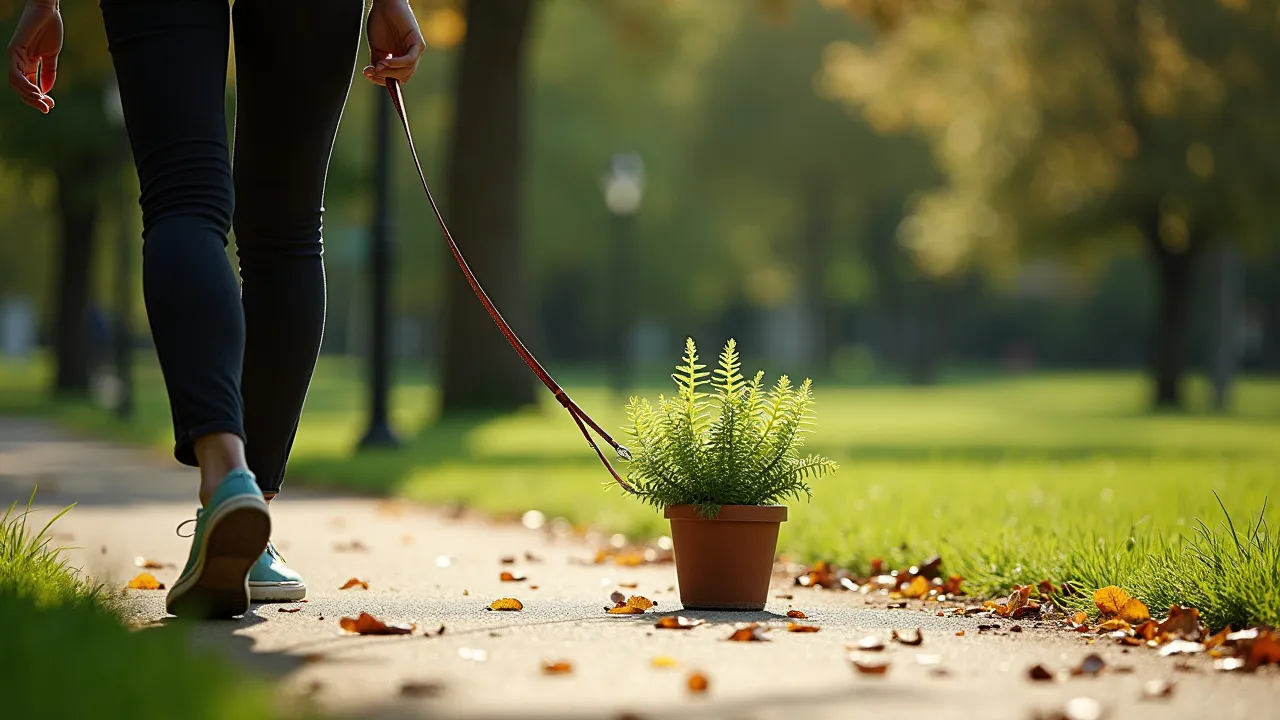
Celebrated on July 27th, Take Your Houseplants for a Walk Day encourages plant owners to give their indoor greenery fresh air and gentle movement. This quirky observance combines horticulture with wellness, promoting the benefits of nature connection and mindful walking.
The Historical Origins & Evolutionary Journey
Take Your Houseplants for a Walk Day emerged from a growing awareness that indoor plants, while thriving in controlled environments, still benefit from occasional exposure to outdoor conditions. The observance first appeared in early 2000s gardening forums and grassroots plant enthusiast groups, gradually gaining traction through social media campaigns.
The Foundational Catalyst
The concept was inspired by the Japanese practice of shinrin-yoku (forest bathing) and the recognition that plants, like humans, need periodic changes in air circulation and sunlight. Early advocates argued that many common houseplants—such as pothos, spider plants, and ferns—originate in tropical understories and can enjoy brief outdoor excursions. The first recorded "walk" took place in Portland, Oregon, in 2003, when a local gardening club organized a parade of potted plants through a community park.
Legislative/Official Adoption
While never officially recognized by any government, the day gained unofficial status through online calendars (e.g., National Day Calendar) and plant retailers. The American Horticultural Society endorsed it in 2010 as a way to promote plant wellness and human mental health. Today, it is widely celebrated in the United States, Canada, the United Kingdom, and Australia, with variations in timing (see regional adaptations below).
Modern Global Legacy
The observance has evolved into a broader movement emphasizing indoor-outdoor plant rotation, seasonal acclimatization, and the psychological benefits of interacting with greenery. Social media hashtags like #HouseplantWalkDay generate thousands of shares annually, featuring creative plant carriers, decorated pots, and group walks.
How to Celebrate Take Your Houseplants for a Walk Day
Participating is straightforward but requires attention to plant safety and comfort. Below is a comprehensive guide covering preparation, techniques, and best practices for individuals, schools, and organizations.
Individual Celebration Steps
- Choose a suitable plant: Pick a houseplant that can tolerate brief outdoor conditions—avoid succulents in high humidity or ferns in direct sun. Ideal candidates: pothos, snake plant, ZZ plant, spider plant, or any small to medium potted friend.
- Prepare for the walk: Ensure the pot has drainage holes and a saucer to prevent mess. Use a sturdy carrier or a small wagon if the pot is heavy. For small plants, a secure leash or harness (often made of soft fabric) can attach to the pot.
- Select a route: Walk in a shaded, calm area—a park, garden path, or quiet sidewalk. Avoid extreme weather (rain, harsh sun, wind). Morning or late afternoon is best.
- Pacing and duration: Walk slowly, allowing the plant to “experience” the environment. Limit the outing to 15–30 minutes to avoid stress. Stop occasionally to let the plant “bask” in dappled light.
- Post-walk care: After returning indoors, wipe leaves to remove dust and check for pests. Water if the soil feels dry, and place the plant in its usual spot.
School & Community Group Activities
- Plant parades: Organize a school event where students decorate pots and parade through the playground. Teach children about plant biology and care.
- Botanic garden walks: Many botanical gardens offer guided tours where participants bring their own houseplants to experience outdoor greenhouse conditions.
- Social media challenges: Start a hashtag campaign like #WalkYourPlant, encouraging participants to share photos and tips.
Organizational & Corporate Rituals
Office gardeners can create “plant walking clubs” where colleagues take turns escorting office plants outside. This boosts morale and improves air quality awareness. Some companies offer a 15-minute break specifically for plant walks on July 27th.
The Benefits of Taking Your Houseplants for a Walk
Beyond novelty, the practice offers tangible benefits for both plants and humans.
For Plants
- Increased photosynthesis: Outdoor light, even indirect, is often brighter than indoor lighting, boosting energy production.
- Air circulation: Gentle breezes strengthen stems and reduce fungal problems.
- Pest prevention: Occasional outdoor exposure can deter indoor pests (e.g., spider mites) by introducing natural predators.
- Acclimatization: Plants gradually become hardier to environmental fluctuations.
For Humans
- Mindfulness: Walking with a plant encourages slow, deliberate movement and focus on the present.
- Physical activity: Even a short walk contributes to daily step goals.
- Mental health: Interacting with nature reduces cortisol levels and improves mood.
- Educational value: Teaches responsibility and botanical knowledge.
Scientific Perspective
A 2018 study in the Journal of Environmental Psychology found that brief exposure to nature—even potted plants—enhances cognitive function and creativity. Walk your houseplant; it might just spark your next big idea.
Choosing the Right Houseplant for a Walk
Not all houseplants are suited for outdoor jaunts. Here’s a guide to selecting appropriate candidates and preparing them safely.
Best Species for Outdoor Walking
- Pothos (Epipremnum aureum): Hardy, fast-growing, and tolerant of low light. Ideal for beginners.
- Spider Plant (Chlorophytum comosum): Resilient and produces plantlets that can be walked separately.
- Snake Plant (Dracaena trifasciata): Extremely durable, but avoid overwatering after the walk.
- ZZ Plant (Zamioculcas zamiifolia): Thrives on neglect; can handle moderate outdoor conditions.
- Ferns (e.g., Boston Fern): Love humidity and shade; perfect for damp, cool walks.
- Peace Lily (Spathiphyllum): Tolerates low light but may droop if overexposed to direct sun.
Plants to Avoid
- Succulents and cacti: Prefer dry, consistent conditions; outdoor humidity or rain can cause rot.
- Orchids: Very sensitive to temperature shifts and drafts.
- Fiddle Leaf Fig (Ficus lyrata): Prone to shock from environmental changes.
- Calatheas: Require high humidity and stable temperatures; outdoor air may crisp their leaves.
Preparation Tips
Before the walk, water the plant lightly to reduce transplant shock. Remove any dead leaves. If the pot is ceramic and heavy, consider a plastic nursery pot inside a decorative outer pot for easy carrying. Always check the weather—avoid temperatures below 50°F (10°C) or above 85°F (29°C).
Global Traditions and Regional Variations
While July 27 is the primary North American date, different regions have adapted the observance to local climates and cultures.
United States & Canada
Widely celebrated on July 27 with community plant walks, social media campaigns, and nursery events. In the Pacific Northwest, where rain is frequent, plant walks often include umbrellas for both owner and plant.
United Kingdom
Due to cooler, damper summers, the UK's Plant Council promotes a “Houseplant Outing Day” on the first Saturday of August. Participants often incorporate a pub stop—watering the plant (and themselves).
Australia & New Zealand
Celebrated in the Southern Hemisphere summer (January 27 adjusted to avoid heatwaves). Walks occur early morning or evening, and plants are often misted during the outing. In Sydney, the Royal Botanic Garden hosts a “Potted Parade.”
Japan
Inspired by the original forest bathing concept, Japanese plant enthusiasts celebrate “Ue-ki no Sanpo” (Plant Stroll) on July 27, often taking bonsai or small kokedama (moss balls) for a walk in traditional gardens.
Germany
Known as “Zimmerpflanzen-Spaziergang,” celebrated with a focus on hardy houseplants like Monstera. Some cities organize group walks led by botanists who explain plant adaptation.
Environmental Impact and Wellness Connection
Take Your Houseplants for a Walk Day aligns with broader environmental and wellness movements.
Indoor Air Quality
NASA's Clean Air Study (1989) showed that many houseplants remove volatile organic compounds (VOCs) from indoor air. By periodically refreshing plants outdoors, their filtering efficiency is maintained. Walking them also reminds owners to dust leaves, improving photosynthesis.
Mental Health Awareness
The day partners with mental health initiatives, as gardening and plant care are proven to reduce anxiety and depression. The simple act of walking with a living thing fosters a sense of purpose and connection. Therapists in the UK have begun prescribing “plant walks” as part of green social prescribing.
Urban Greening
Houseplant walks contribute to the visibility of greenery in urban settings, encouraging neighbors to talk and share cuttings. Some cities use the day to promote vertical gardens and window-box planting, increasing local biodiversity.
Historical Timeline
First recorded houseplant walk organized by a Portland gardening club. Participants walked with pothos and spider plants through a city park, sparking online interest.
A gardening forum user proposes an annual 'Take Your Houseplants for a Walk Day' on July 27, citing the long daylight and mild temperatures in the Northern Hemisphere.
National Day Calendar picks up the observance, listing it as an unofficial but recognized holiday.
American Horticultural Society endorses the day, publishing a guide on safe plant walking.
Social media hashtag #HouseplantWalkDay first appears on Twitter and Instagram, growing exponentially.
UK’s Royal Horticultural Society runs a pilot program encouraging members to walk their houseplants, citing benefits for plant health and human wellbeing.
Journal of Environmental Psychology study reinforces cognitive benefits of brief nature exposure, lending scientific credibility to the practice.
During pandemic lockdowns, houseplant sales surge and the day sees record participation as people seek indoor-outdoor activities.
Global Plant Initiative formalizes the day, partnering with botanic gardens worldwide for coordinated events.