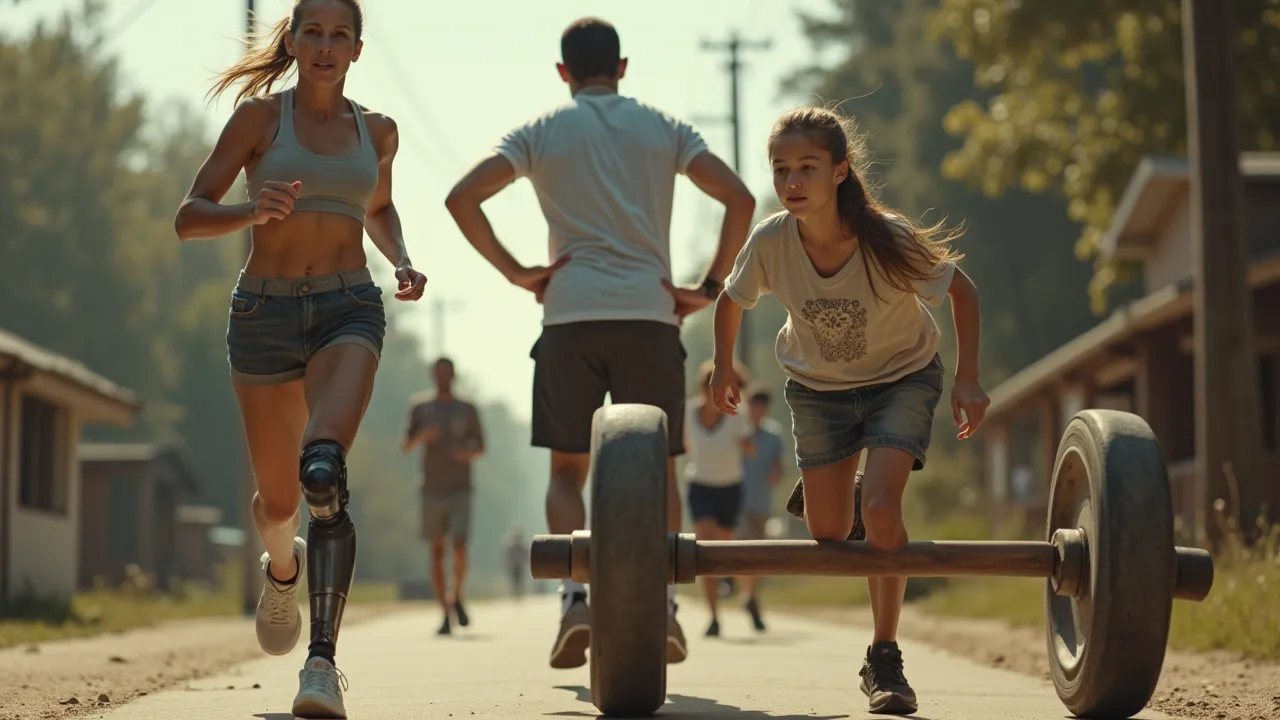
Superhuman Day, observed annually on September 7th, celebrates the extraordinary capabilities of the human mind and body. It honors individuals who push beyond normal limits and inspires everyone to unlock their own potential.
The Historical Origins & Evolutionary Journey
Superhuman Day, celebrated on September 7th, was first established in 2015 by the Human Potential Foundation, a nonprofit organization dedicated to researching and promoting human enhancement. The day was conceived to recognize individuals who achieve remarkable feats through dedication, innovation, or innate talent, and to encourage others to explore their own capabilities.
The Foundational Catalyst
The idea for Superhuman Day emerged from a 2014 symposium on human performance, where scientists, athletes, and artists discussed the boundaries of human potential. The foundation aimed to create a global celebration that would highlight both natural talents and technological enhancements, such as prosthetics and cognitive training. The date September 7th was chosen to commemorate the birth of a pioneering researcher in neuroplasticity.
The Legislative/Official Adoption
Within three years, Superhuman Day gained traction through social media campaigns and partnerships with universities. In 2017, the United Nations Educational, Scientific and Cultural Organization (UNESCO) officially recognized the day as a platform to promote inclusive education and lifelong learning. Several countries, including Japan and Canada, issued proclamations supporting the observance. Municipalities in over 50 cities now host public events on this date.
Modern Global Legacy
Today, Superhuman Day is marked by a variety of activities:
- School programs that teach growth mindset and resilience.
- Corporate wellness challenges focusing on physical and mental strength.
- Media campaigns showcasing stories of individuals who overcome adversity.
How to Celebrate Superhuman Day
Superhuman Day offers countless ways to celebrate human potential. Whether you're an individual, part of a school, or leading an organization, here are actionable strategies:
For Individuals
- Set a personal challenge - Run a mile faster than your best time, learn a new skill, or meditate for 30 minutes. Track your progress.
- Attend a workshop - Many community centers offer free classes on superhuman themes, from memory techniques to parkour.
- Volunteer - Support organizations that empower people with disabilities to achieve superhuman feats, such as adaptive sports groups.
For Schools
- Host a 'Potential Fair' - Students showcase projects that demonstrate human enhancement, like DIY prosthetics or brain-training apps.
- Invite guest speakers - Athletes, scientists, or artists share their journeys of pushing limits.
- Run a 'Superhuman Week' - Include daily challenges (e.g., kindness, creativity, physical activity) and award badges.
For Organizations
- Employee development programs - Offer courses in public speaking, speed reading, or fitness to unlock employee potential.
- Fundraising events - Donate to research in human enhancement or scholarships for underprivileged talents.
- Social media campaigns - Share stories of 'everyday superheroes' with hashtags like #SuperhumanDay and #UnlockYourPotential.
Adopt traditions from different cultures: In Japan, people practice kintsugi (repairing broken pottery with gold) to symbolize strength through imperfection. In Brazil, communities hold parkour gatherings in urban spaces. The key is to focus on effort, not perfection.
Global Impact and Cultural Significance
Superhuman Day has grown into a worldwide movement, inspiring changes in education, healthcare, and social policy. Schools in Finland now incorporate 'superhuman lessons' that teach grit and adaptability. In South Africa, the day is used to raise awareness about prosthetic technology for amputees. The cultural significance lies in redefining 'superhuman' not as a fictional ideal but as an achievable state through persistence and support.
Economic and Social Ripple Effects
Businesses have adopted Superhuman Day to promote employee well-being, leading to reduced burnout and increased productivity. Governments in several countries allocate funds for community programs that begin on this date. The event also highlights ethical debates around human enhancement, fostering dialogue on equity and access.
Scientific Breakthroughs Celebrated on Superhuman Day
September 7th often coincides with announcements of new research in human augmentation. Past years have featured breakthroughs in exoskeleton technology, brain-computer interfaces, and gene editing. The day serves as a platform for scientists to present findings, often through live-streamed conferences.
Key Areas of Progress
- Neuroenhancement - Transcranial direct current stimulation (tDCS) has shown promise in improving learning speed.
- Prosthetics - Bionic limbs with sensory feedback allow users to feel textures.
- Genetic Modification - CRISPR-based treatments for muscle-wasting diseases have moved to clinical trials.
The Psychology of Superhuman Achievement
Psychologists use Superhuman Day to discuss the 'potential mindset'—a belief that abilities can be developed through dedication. Studies show that people who celebrate their own small wins on this day are more likely to tackle difficult goals.
The Role of Grit and Resilience
Research by Angela Duckworth highlights that passion and perseverance, more than IQ, predict superhuman-level success. Schools incorporate this by praising effort rather than innate talent.Overcoming the 'Superhuman Stereotype'
The day also addresses the misconception that superhuman means perfection. Real stories of struggle and failure are shared to reduce anxiety and promote authenticity.Corporate and Community Engagement
Many companies use Superhuman Day to launch employee wellness programs. For example, Google has hosted 'Superhuman Hackathons' where teams build accessibility tools. Nonprofits collaborate with local gyms to offer free classes.
- Tech Industry - Companies like Apple release software updates that enhance user abilities, such as improved voice control.
- Retail - Stores donate a portion of sales to human enhancement charities.
- Community Centers - Organize obstacle courses and skill-sharing workshops.
Historical Timeline
First Superhuman Day celebrated on September 7th, established by the Human Potential Foundation to honor human achievement.
Over 100 schools in North America participate in pilot programs for superhuman-themed curriculum.
UNESCO officially recognizes Superhuman Day, promoting inclusive education and lifelong learning.
Japan becomes the first country to declare September 7th a national day for human potential, with events in Tokyo and Osaka.
The first global 'Superhuman Summit' is held online, featuring speakers from neuroscience, athletics, and ethics.
Due to the pandemic, celebrations shift to virtual challenges, attracting 2 million participants worldwide.
Canada passes a motion to support Superhuman Day in schools, funding adaptive sports equipment.
A major breakthrough in exoskeleton technology is unveiled on Superhuman Day, enabling paraplegic individuals to walk.
Superhuman Day reaches over 100 countries, with more than 5,000 registered events.