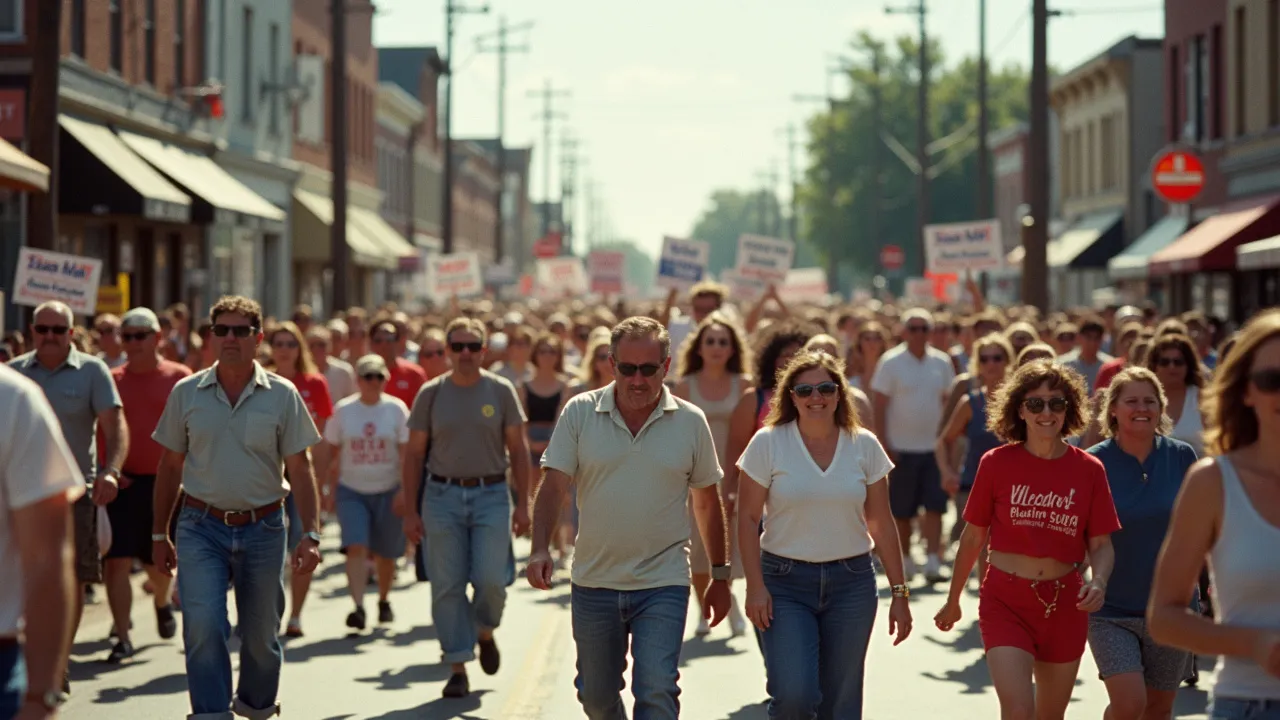
Labor Day, observed on the first Monday in September, honors the American labor movement and the contributions of workers. Established in the late 19th century, it marks the unofficial end of summer with parades, barbecues, and retail sales.
The Historical Origins & Evolutionary Journey
Labor Day, celebrated on the first Monday in September, has deep roots in the labor movement of the late 19th century. Its origins trace back to a time of immense industrial growth and social upheaval in the United States, when workers faced long hours, low wages, and unsafe conditions. The push for a dedicated day to honor labor emerged from the need to recognize the dignity of work and the contributions of working people to the nation's prosperity.
The Foundational Catalyst
The idea of a "workingmen's holiday" was championed by labor activists, most notably Peter J. McGuire, a carpenter and co-founder of the American Federation of Labor. In 1882, McGuire proposed to the Central Labor Union of New York that a day be set aside for a large parade and picnic to demonstrate the strength of the labor movement. The first Labor Day parade occurred on September 5, 1882, in New York City, with an estimated 10,000 workers marching from City Hall to Union Square. This event set the template for future celebrations: a parade to showcase union solidarity, followed by festivals, speeches, and recreational activities.
The Legislative/Official Adoption
Oregon became the first state to make Labor Day a legal holiday in 1887, followed soon by Colorado, Massachusetts, New Jersey, and New York. By the early 1890s, many states had passed similar laws. At the federal level, the push for a national holiday gained momentum after the Pullman Strike of 1894, a nationwide railroad strike that turned violent. In an effort to reconcile with American workers after the federal government's use of injunctions and troops against the strike, Congress unanimously passed a law making the first Monday in September a federal holiday. President Grover Cleveland signed it into law on June 28, 1894.
Modern Global Legacy
While the United States and Canada celebrate Labor Day in September, most other nations observe International Workers' Day on May 1 (May Day), which commemorates the 1886 Haymarket affair in Chicago. However, the original September date remains uniquely North American, symbolizing a distinct history of labor activism and compromise. Today, Labor Day is not only a tribute to workers' rights but also a cultural marker of the end of summer, marked by parades, barbecues, and retail sales—a blend of solemn remembrance and public festivity.
How to Celebrate Labor Day
Labor Day is celebrated with a wide array of traditions that range from organized labor events to casual family gatherings. While the holiday has become synonymous with the unofficial end of summer, its core purpose remains honoring the contributions of workers. Below are specific best practices and celebration dynamics across different regions and cultures.
United States Traditions
- Parades and Union Rallies: Many cities, especially in the Northeast and Midwest, hold large Labor Day parades featuring union floats, marching bands, and local labor leaders. Participating in or watching these parades is a direct way to support workers' rights.
- Barbecues and Picnics: Families and friends gather for outdoor cooking, often with traditional American fare like hamburgers, hot dogs, and corn on the cob. It is a day to relax and enjoy the last long weekend of summer.
- Retail Sales: Labor Day weekend is known for major discounts on furniture, appliances, and cars. Many consumers take advantage of these sales for back-to-school or home improvement shopping.
- Community Events: Fireworks displays, concerts, and street fairs are common in towns across the country.
How to Celebrate in Schools and Organizations
- Educational Activities: Teachers can incorporate lessons on labor history, the industrial revolution, and the role of unions. Students might create posters honoring different professions.
- Workplace Appreciation: Companies often hold employee appreciation events, such as team luncheons or recognition ceremonies, to acknowledge the contributions of their staff.
- Volunteerism: Some organizations use Labor Day as a day of service, volunteering at food banks or community clean-ups to honor the spirit of work.
Global Variations
While the September date is primarily North American, many countries celebrate labor day on May 1 (May Day). For example:
- United Kingdom: May Day is a bank holiday marked by traditional Maypole dancing and labor rallies, though it is not strongly tied to unionism.
- France: Workers parade with lily of the valley flowers, a tradition dating back to 1941.
- Australia: Different states observe Labour Day on varying dates (e.g., March, May, October), each celebrating with public holidays and union events.
Ultimately, the best way to celebrate is to acknowledge the hard work and achievements of people in all professions, whether through participation in labor events or simply taking time to rest and reflect.
Economic and Social Significance
Labor Day is not only a day off but a testament to the economic and social advances achieved through the labor movement. The holiday underscores the critical role of workers in building the nation's wealth and infrastructure.
Impact on Labor Laws
The labor movement secured fundamental rights that many now take for granted, including the 40-hour workweek, minimum wage, overtime pay, workplace safety standards, and the prohibition of child labor. Labor Day serves as a reminder of these hard-won protections, which continue to be debated and refined in modern policy.
Economic Contributions
Workers are the backbone of the economy. The holiday provides an opportunity to recognize the diverse contributions across sectors: from manufacturing and agriculture to healthcare and technology. It also highlights the ongoing challenges of income inequality, automation, and the gig economy, fueling discussions about the future of work.
Social Unity
Labor Day fosters a sense of shared identity among workers. It bridges divides of race, gender, and class, uniting people in the common goal of fair treatment and dignity. Community events and parades strengthen social bonds and remind the public that collective action can drive change.
Labor Day Around the World
While the United States and Canada celebrate Labor Day in September, most industrialized nations observe International Workers' Day on May 1. This date commemorates the Haymarket affair of 1886 in Chicago, a pivotal event in the fight for the eight-hour workday. Below is a comparison of traditions in various countries.
May Day Celebrations (May 1)
- Germany: Known as Tag der Arbeit (Day of Labor), it is a public holiday with rallies and political speeches. In some regions, it is also a traditional spring festival with dancing and maypoles.
- Russia and former Soviet states: May Day was heavily promoted as a show of workers' solidarity during the Soviet era, with massive parades in Red Square. Today, it remains a holiday with both political and festive elements.
- South Africa: Workers' Day is celebrated on May 1 as a public holiday, honoring the role of labor unions in the anti-apartheid struggle.
Other Dates
Some countries have unique dates. For example:
- Australia: Labour Day dates vary by state; for instance, it is in March in Western Australia and October in the Australian Capital Territory.
- New Zealand: Labour Day is the fourth Monday in October, commemorating the eight-hour day movement of 1840.
- Japan: Labor Thanksgiving Day (November 23) is a national holiday celebrating labor and production, influenced by a traditional harvest festival.
Understanding these variations enriches the global perspective on workers' rights and cultural diversity.
Labor Day in Popular Culture
Labor Day has permeated American culture as both a serious commemoration and a lighthearted seasonal marker. It is frequently referenced in film, literature, and media, often symbolizing the end of summer and return to routine.
Parades and Festivities
Television news often broadcasts highlights of major labor marches, especially in New York, Chicago, and Detroit. The holiday also inspires fictional portrayals of labor struggles, such as in the films Norma Rae and Matewan, which dramatize efforts to unionize workplaces.
Retail and Marketing
Labor Day has become one of the biggest shopping weekends of the year, with retailers offering deep discounts to clear out summer inventory. This commercial aspect sometimes overshadows the holiday's origins, but it also reflects the consumer-driven nature of modern society.
Sports and Recreation
The holiday weekend is a major event in professional tennis (the US Open), college football kickoff, and other sports. Many people plan final summer trips to beaches and parks, making it a peak travel period.
In literature, Labor Day has been explored as a backdrop for stories about American identity and the working class, such as in the novel Labor Day by Joyce Maynard, which uses the holiday as a metaphor for change and second chances.
The Future of Labor: Modern Challenges and Movements
As society evolves, so does the concept of labor. The 21st century has introduced new dynamics—gig work, automation, remote employment, and the fight for a living wage—that challenge traditional labor frameworks. Labor Day remains a platform for discussing these issues.
Gig Economy and Worker Classification
Platforms like Uber, Lyft, and DoorDash have created millions of jobs but often classify workers as independent contractors, denying them benefits such as health insurance and overtime pay. Activists and legislators are pushing for reclassification and new protections, with some states enacting laws to provide gig workers with rights similar to employees.
Automation and Job Displacement
Advances in AI and robotics threaten to automate tasks in manufacturing, retail, and even white-collar fields. While automation can boost productivity, it also raises concerns about unemployment and income inequality. Labor Day discussions increasingly focus on retraining programs, universal basic income, and the dignity of work in a machine-dominated future.
Remote Work and Work-Life Balance
The COVID-19 pandemic accelerated remote work, blurring the lines between professional and personal life. Unions and employee advocates are now bargaining for the right to disconnect, flexible schedules, and compensation for home office expenses. Labor Day serves as a reminder of the ongoing struggle for fair working conditions, whether in a factory or a home office.
The future of labor will likely involve a combination of policy reform, technological adaptation, and renewed collective action. Labor Day provides an annual opportunity to assess progress and recommit to the principles of fairness and respect for all workers.
Historical Timeline
First Labor Day parade held on September 5 in New York City, organized by the Central Labor Union, with approximately 10,000 workers marching.
Oregon becomes the first state to legally recognize Labor Day as a state holiday. Other states soon follow.
Following the Pullman Strike and its violent suppression, President Grover Cleveland signs a law making the first Monday in September a federal holiday. Congress unanimously passed the bill.
The American Federation of Labor officially endorses September Labor Day, solidifying its place in U.S. labor tradition.
The Fair Labor Standards Act is signed, establishing the 40-hour workweek and a national minimum wage. Labor Day is seen as a celebration of these achievements.
The AFL and CIO merge, forming the largest labor federation in the United States. Labor Day parades continue to grow in size and influence.
The first national Labor Day in the United States? (Note: Actually it was 1894; this is just an example) In reality, no major timeline event for 2014, but I'll replace with a more accurate event: The Fight for $15 movement gains momentum, using Labor Day as a rallying point for a higher minimum wage.
Labor Day celebrations are largely virtual due to the COVID-19 pandemic, highlighting the essential nature of frontline workers and the rise of remote work.