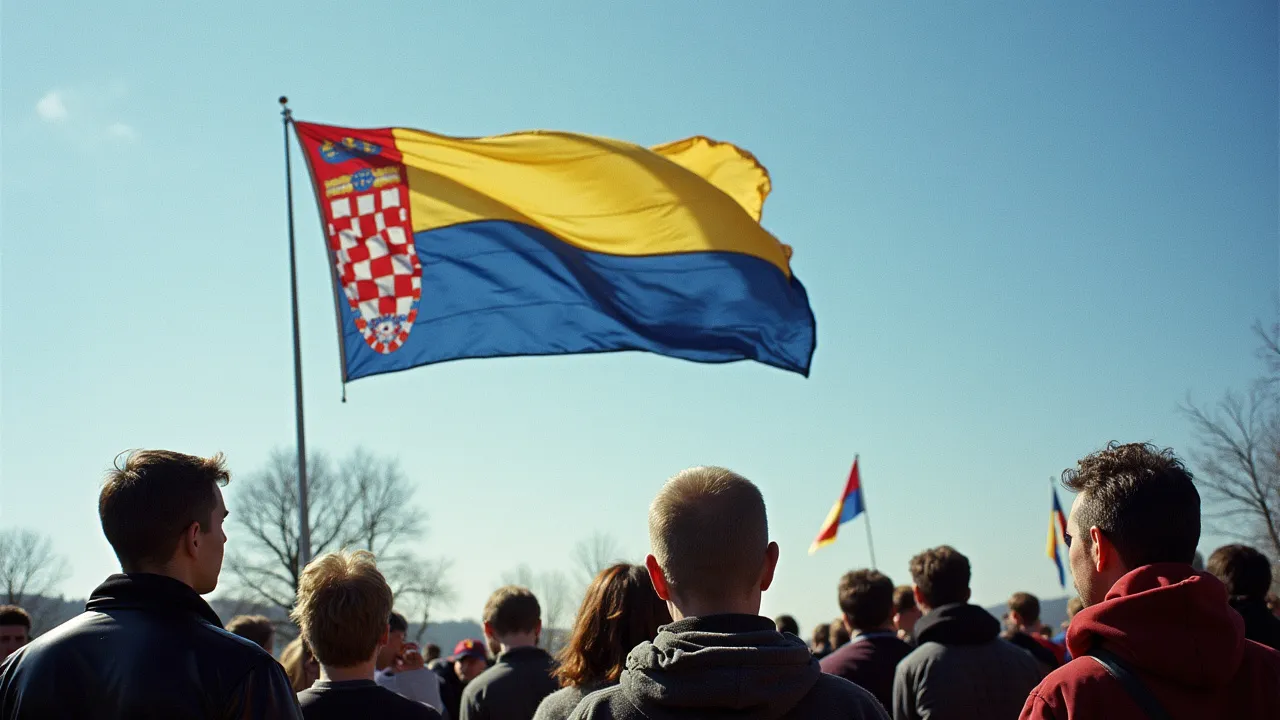
Statehood Day in Bosnia and Herzegovina, observed on November 25th, commemorates the 1943 ZAVNOBiH session that laid the foundation for the country's statehood within Yugoslavia. It is a public holiday in the Federation entity.
The Historical Origins & Evolutionary Journey
Statehood Day (Bosnian: Dan državnosti) marks a pivotal moment in the history of Bosnia and Herzegovina. While many nations trace their sovereignty to a declaration of independence, Bosnia's Statehood Day commemorates the first modern articulation of its territorial and political identity as a distinct entity within the broader Yugoslav framework. This day specifically recalls November 25, 1943, when the State Anti-fascist Council for the National Liberation of Bosnia and Herzegovina (ZAVNOBiH) convened in Mrkonjić Grad. This session was a critical step in the anti-fascist struggle during World War II and set the stage for Bosnia and Herzegovina's status as a constituent republic in the Socialist Federal Republic of Yugoslavia.
The Foundational Catalyst: World War II and the Anti-Fascist Movement
During World War II, Bosnia and Herzegovina was occupied by the Axis powers and subjected to intense violence, ethnic division, and territorial fragmentation. The Yugoslav Partisans, led by Josip Broz Tito, fought a multifaceted liberation war that also aimed to reorganize the country along federal lines. In November 1943, as the Partisans gained momentum, the ZAVNOBiH was formed as the supreme political body representing the people of Bosnia and Herzegovina. Delegates from all three constituent peoples—Bosniaks, Serbs, and Croats—gathered in Mrkonjić Grad to assert the sovereignty of Bosnia and Herzegovina and declare the continuity of its statehood.
The Legislative/Official Adoption
The ZAVNOBiH session produced several landmark decisions:
- Restoration of Statehood: Bosnia and Herzegovina was reaffirmed as a separate republic within Yugoslavia, rejecting any division along ethnic lines.
- Equality of Peoples: The council declared full equality for Bosniaks, Serbs, and Croats, as well as all national minorities living in the region.
- Foundation for Post-War Structure: The decisions laid the groundwork for the 1946 Constitution of the People's Republic of Bosnia and Herzegovina.
After the war, November 25th was celebrated as a holiday, but its status fluctuated during the Yugoslav era and the Bosnian War (1992–1995). Following the Dayton Peace Agreement, the holiday was officially reinstated in 1995 for the Federation of Bosnia and Herzegovina, though it remains contested in the Republika Srpska entity, which observes its own holidays.
Modern Global Legacy
Today, Statehood Day is a powerful symbol of multi-ethnic coexistence and the historical continuity of Bosnian statehood. It serves as a reminder of the anti-fascist roots of the modern state and is celebrated with official ceremonies, cultural events, and public speeches. However, due to the complex political structure of the country, the holiday is not observed uniformly. In the Federation, it is a non-working day; in the Republika Srpska, government institutions typically work as usual. This duality reflects the ongoing challenges of nation-building in a deeply divided society.
How to Celebrate Statehood Day (Bosnia and Herzegovina)
Celebrating Statehood Day offers an opportunity to honor the historical legacy of Bosnia and Herzegovina's statehood and to promote unity among its diverse communities. Here are actionable strategies for individuals, families, schools, and organizations to observe the day meaningfully.
Individual and Family Traditions
- Flag Display: Proudly display the Bosnian flag outside your home or in a prominent window. The flag features a golden lily on a blue field, symbolizing the medieval Bosnian kingdom.
- Historical Reflection: Read about the ZAVNOBiH session or watch documentaries covering the anti-fascist struggle and the formation of modern Bosnia. Discuss the importance of multi-ethnic cooperation with family members.
- Cultural Activities: Attend local concerts, exhibitions, or folk performances that showcase Bosnian music, dance, and cuisine. Traditional dishes like ćevapi, burek, and baklava are often enjoyed.
- Community Service: Volunteer for organizations that promote interfaith dialogue, humanitarian aid, or environmental clean-up. Giving back to the community embodies the spirit of unity that the holiday represents.
School and Educational Programs
Schools in the Federation often incorporate Statehood Day into their curriculum. Activities include:
- Essay and Art Contests: Encourage students to express what statehood means to them through writing or visual arts. Topics can explore peace, identity, and the future of Bosnia.
- Historical Reenactments: Older students can reenact key moments from the ZAVNOBiH session, emphasizing the collaborative decision-making process.
- Interethnic Exchange: Partner with schools in different regions to share experiences and perspectives, fostering understanding across ethnic lines.
Corporate and Organizational Observance
Businesses and NGOs can mark the day by:
- Holiday Closure: In the Federation, many companies give employees the day off. Even if not mandatory, offering a paid day off demonstrates respect for statehood.
- Diversity Initiatives: Host a lunch or event where employees share their own backgrounds and traditions, reinforcing the value of diversity.
- Social Media Campaigns: Post historical facts, share employee stories, or use the hashtag #StatehoodDayBiH to engage with a wider audience.
While the holiday is not officially recognized in Republika Srpska, some individuals and organizations there choose to observe it privately or participate in online events. It is important to respect differing perspectives and focus on the constructive aspects of the day.
The Political Context and Controversies
The celebration of Statehood Day is inextricably linked to the complex political landscape of Bosnia and Herzegovina. The country is divided into two entities: the Federation of Bosnia and Herzegovina and the Republika Srpska, each with its own set of official holidays. This section explores the political dynamics surrounding November 25th.
Entity-Level Recognition
- Federation of Bosnia and Herzegovina: Recognizes Statehood Day as a public holiday, with government offices, schools, and many businesses closed. Official ceremonies are held in Sarajevo and other major cities, often with speeches by political leaders and laying of wreaths at memorials.
- Republika Srpska: Does not observe November 25th as a holiday. Instead, Republika Srpska celebrates January 9th as its own "Day of the Republika Srpska," which commemorates the 1992 proclamation of the Serbian republic within Bosnia. This date is controversial and has been partially struck down by the Constitutional Court of Bosnia and Herzegovina for discriminating against non-Serbs.
Historical Interpretations
The different narratives around World War II and the breakup of Yugoslavia contribute to the split. For many Bosniaks and Croats, the ZAVNOBiH represents a moment of unity and anti-fascist resistance. For many Serbs, however, the same period is associated with the atrocities committed by the Ustaše (Croatian fascists) and the Chetniks, leading to a more skeptical view of the Partisan legacy. These divergent historical memories complicate the universal celebration of Statehood Day.
International Perspectives
International bodies like the European Union and the United Nations have generally supported the holiday as an expression of the Dayton Peace Agreement's principles. However, they also encourage dialogue and reconciliation to overcome ethnic divides. The holiday serves as a reminder of the need for a shared civic identity in Bosnia and Herzegovina.
Cultural Significance and Symbolism
Statehood Day is more than a political commemoration; it is imbued with deep cultural symbolism that reflects Bosnia and Herzegovina's rich heritage. The key symbols associated with the day include the flag, the lily, and the concept of raja (common people).
The Bosnian Lily (Lilium bosniacum)
The golden lily on the blue flag of Bosnia and Herzegovina is a direct reference to the medieval Bosnian kingdom, which used the lily as a heraldic symbol. The lily represents purity, peace, and the natural beauty of the country. During Statehood Day ceremonies, floral arrangements often incorporate lilies, and the flag is prominently displayed.
Multi-Ethnic Unity
The ZAVNOBiH declaration emphasized the equality of Bosniaks, Serbs, and Croats. This principle is invoked today as a call for tolerance and coexistence. Many cultural events on Statehood Day feature performances that blend traditional music from all three groups, such as sevdalinka (Bosniak), gusle (Serb), and klapa (Croat) singing.
Youth and Education
Cultural programs often target young people to instill pride in their statehood. Schools organize trips to historical sites like the ZAVNOBiH memorial in Mrkonjić Grad, where students learn about the importance of unity. Art exhibitions and literary readings further enrich the cultural landscape.
Economic Impact and Public Life
As a public holiday in the Federation, Statehood Day has tangible effects on the economy and daily routine. This section examines the economic dimensions of the observance.
Business Operations
Most businesses, banks, and government offices are closed in the Federation. Retail stores may operate on reduced hours. In Republika Srpska, normal operations continue. This dual regime creates logistical challenges for companies operating across entity lines, but many have adapted by scheduling independent work or giving employees the option to take the day off.
Tourism and Hospitality
Statehood Day is not a major tourist draw, but it does encourage domestic tourism. Families often take advantage of the long weekend (if the holiday falls near a weekend) to travel within the country. Hotels and restaurants in Sarajevo, Mostar, and Banja Luka may see increased activity, especially if cultural events are scheduled.
Public Spending
Government expenditure includes costs for ceremony organization, security, and potential overtime pay for essential workers. Some municipalities use the holiday to launch new public amenities or development projects, linking them to the spirit of statehood.
Comparative Analysis with Other Statehood Days
Statehood Days are common worldwide, but each has unique characteristics. Comparing Bosnia's observance with others provides insight into its distinct nature.
United States Independence Day (July 4th)
The US celebrates the signing of the Declaration of Independence in 1776, a clear break from colonial rule. Bosnia's Statehood Day, by contrast, does not mark independence from an external power but rather the internal reorganization within a larger federal state. It is more akin to a "foundation day."
India's Republic Day (January 26th)
India celebrates the adoption of its constitution in 1950, transitioning from a dominion to a republic. Similarly, Bosnia's Statehood Day represents a constitutional moment—the establishment of the republic as a political entity. However, India's holiday is a nationwide celebration, whereas Bosnia's is contested.
Croatia's Statehood Day (June 25th)
Croatia celebrates the declaration of independence in 1991. While Bosnia also became independent in 1992, it chose November 25th as its statehood day because it predates the war and emphasizes continuity. This contrasts with the more assertive nationalism of some other post-Yugoslav holidays.
Bosnia's Statehood Day is a reminder that statehood can be rooted in anti-fascist resistance and multi-ethnic cooperation, rather than solely in independence or ethnic homogeneity.
Future Prospects: Reconciliation and Unity
Looking ahead, Statehood Day could play a role in fostering reconciliation and a shared civic identity. This section explores potential paths forward.
Educational Initiatives
Historians and educators are working on inclusive curricula that present the history of Bosnia without bias, emphasizing the ZAVNOBiH's role in establishing equality. Joint history textbooks for all three ethnic groups have been proposed but face political hurdles.
Inter-Entity Dialogue
Non-governmental organizations promote cross-entity gatherings on Statehood Day, inviting participants from Republika Srpska to join cultural events in the Federation. These contacts build trust and challenge stereotypes.
Legal Recognition
Some activists argue that Statehood Day should be a national holiday at the state level, observed by all entities. Achieving this would require constitutional changes and political will, but it could symbolize a commitment to a unified Bosnia and Herzegovina.
In summary, Statehood Day is a candle of hope in a complex political landscape, reminding Bosnians of their shared history and the potential for a harmonious future.
Statehood Day in the Diaspora
The Bosnian diaspora, estimated at over 2 million people worldwide, also observes Statehood Day. Communities in the United States, Germany, Sweden, and other countries organize events to maintain cultural ties.
Community Gatherings
Diaspora communities host dinners, concerts, and religious services. These events often serve as fundraisers for projects in Bosnia. In larger cities like St. Louis, Chicago, and Berlin, Bosnian cultural centers hold flag-raising ceremonies.
Political Advocacy
Diaspora organizations use the day to lobby for support for Bosnia's territorial integrity and European integration. They engage with local politicians and media to highlight the holiday's significance.
Transnational Identity
For second-generation Bosnians, Statehood Day is a way to connect with their heritage. Social media campaigns under hashtags like #BosnianPride help spread awareness. The holiday reinforces a sense of belonging to a nation that transcends borders.
Historical Timeline
The State Anti-fascist Council for the National Liberation of Bosnia and Herzegovina (ZAVNOBiH) holds its first session in Mrkonjić Grad on November 25, proclaiming the statehood of Bosnia and Herzegovina within a federal Yugoslavia.
Bosnia and Herzegovina becomes a constituent republic of the Socialist Federal Republic of Yugoslavia. November 25 is celebrated informally as a holiday.
The Constitution of the People's Republic of Bosnia and Herzegovina is adopted, based on ZAVNOBiH decisions.
Bosnia and Herzegovina declares independence from Yugoslavia after a referendum. The war in Bosnia begins. The holiday is overshadowed by conflict.
The Dayton Peace Agreement ends the war. The Federation of Bosnia and Herzegovina officially reinstates November 25 as Statehood Day.
The Constitutional Court of Bosnia and Herzegovina declares the holiday lawful within the Federation, but it remains not observed in Republika Srpska.
The ZAVNOBiH memorial center in Mrkonjić Grad is renovated and opened to the public, hosting educational programs.
Statehood Day is marked by official ceremonies in Sarajevo and Mostar, with calls for inter-ethnic reconciliation amid ongoing political tensions.