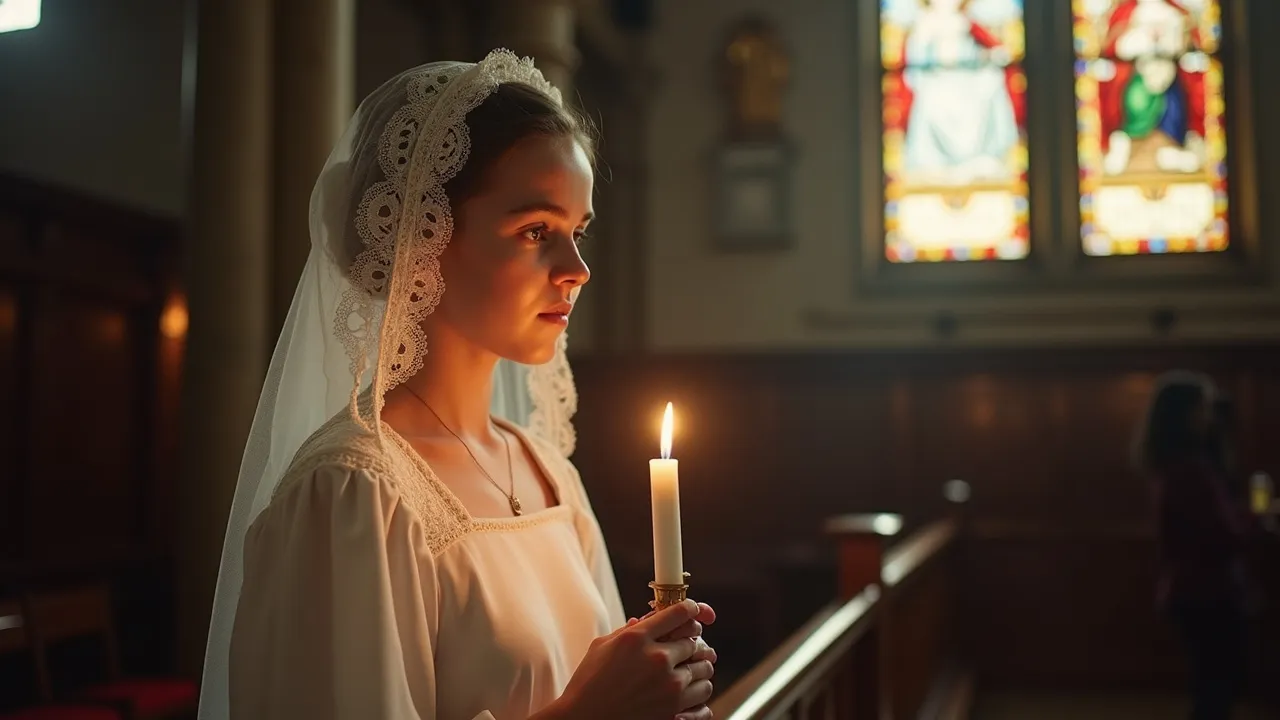
St. Catherine's Day, observed on November 25th, honors the 4th-century martyr Saint Catherine of Alexandria. The day is marked by cultural traditions, prayers for unmarried women, and vibrant celebrations across Europe and the Middle East.
The Historical Origins & Evolutionary Journey
St. Catherine's Day commemorates the life and martyrdom of Saint Catherine of Alexandria, a Christian saint and virgin who was tortured and executed in the early 4th century under the Roman Emperor Maxentius. According to tradition, Catherine was a princess and a scholar who converted to Christianity and was known for her wisdom and eloquence. Her feast day has been celebrated since at least the 6th century, when her cult spread throughout Europe following the discovery of her relics at Mount Sinai.
The Foundational Catalyst
The legend of Saint Catherine gained prominence during the Middle Ages, particularly after the Crusaders returned from the East with stories of her miraculous life. Her reputation as a patron of scholars, philosophers, and young women made her an iconic figure. The historical catalyst for her widespread veneration was the establishment of the Monastery of Saint Catherine at the foot of Mount Sinai in the 6th century, where her purported remains were enshrined.
The Legislative/Official Adoption
The Catholic Church officially recognized St. Catherine's Day as a feast day in the Roman Calendar, though its rank has shifted over the centuries. In 1969, the Church removed it from the universal calendar due to lack of historical certainty, but many local observances continued. In the Eastern Orthodox Church, the feast remains a major celebration.
Modern Global Legacy
Today, St. Catherine's Day is observed by various Christian denominations and has also evolved into a secular cultural event in many countries. It remains a day for unmarried women to seek a spouse, for lace-makers to honor their patron saint, and for communities to hold festivals and parades.
How to Celebrate St. Catherine's Day
St. Catherine's Day offers a wealth of traditions and practices across different cultures. Below is a definitive guide to celebrating the day, whether you are an individual, a school, or an organization.
For Individuals
- Prayer and Reflection: Attend a church service dedicated to St. Catherine or pray the St. Catherine Nova (a set of prayers over nine days prior to the feast).
- Wear a White Veil or Lace: In some traditions, unmarried women wear a white veil or lace to symbolize purity and to attract a husband.
- Bake St. Catherine's Buns: In France and Belgium, special spiced buns called "catherinettes" are baked and shared.
For Schools and Communities
- Organize a Lace-Making Workshop: Since St. Catherine is the patron saint of lace-makers, host a workshop to teach the craft.
- Set up a "Catherinette" Parade: In parts of France, unmarried women dress as St. Catherine and parade through town wearing elaborate hats.
- Hold a Charity Fair: Donate proceeds to support young women's education or shelters.
Corporate and Social Rituals
Businesses in France and Quebec often celebrate by presenting female employees with a St. Catherine's Day gift, such as a lace accessory. Restaurants may offer special menus featuring traditional dishes like gingerbread or apple tarts.
Global Traditions and Cultural Significance
St. Catherine's Day is celebrated in numerous countries, each with unique customs.
France
In France, November 25th is known as "La Sainte-Catherine," a day for unmarried women over 25 (called "catherinettes") to wear a special hat and attend dances. It is also the patronal feast of lace-makers, who often hold exhibitions.
United Kingdom
In historical England, "Catterntide" was a day for feasting and spinning. Women would gather to spin flax and pray for a good husband. Today, some churches hold services and fairs.
Middle East
In Egypt and the Sinai Peninsula, the feast is celebrated at the Monastery of St. Catherine, with services and pilgrimages. It is a public holiday in some areas.
Canada
In Quebec, St. Catherine's Day is associated with candy ("tire de la Sainte-Catherine") and parades. It is also a day to honor education and young women.
Saint Catherine in Folklore and Superstition
Saint Catherine is surrounded by folklore and superstitions, especially regarding marriage and weather.
Marriage Divination
Young women used to perform rituals on St. Catherine's Eve to dream of their future spouse. Common practices included sleeping with a piece of wedding cake under the pillow or reciting specific prayers while tying a ribbon.
Weather Lore
An old saying: "If St. Catherine brings rain, the harvest will be in vain; if St. Catherine brings snow, the year will go slow." This reflects the belief that the weather on November 25th predicts conditions for the coming year.
Protective Charms
In some regions, St. Catherine medals are worn as protection against headaches and toothaches. Lace from a St. Catherine's Day fair was believed to bring good luck.
Modern Observance and Contemporary Relevance
In the 21st century, St. Catherine's Day has adapted to modern sensibilities while retaining its core themes.
Feminist Reinterpretation
Many modern observances focus on St. Catherine as a symbol of female intellect and independence. Schools and universities host lectures on women's achievements, and feminist groups use the day to advocate for gender equality.
Digital Celebrations
Online communities share St. Catherine's Day recipes, prayers, and historical facts. Social media hashtags like #StCatherinesDay trend, connecting people worldwide.
Interfaith Outreach
In areas with diverse populations, churches host interfaith dialogues highlighting St. Catherine's role as a bridge between Christian and Islamic cultures (because the monastery in Sinai is sacred to Muslims as well).
St. Catherine's Day in Arts and Literature
Saint Catherine has inspired countless works of art, literature, and music.
Renaissance Paintings
Artists like Caravaggio, Raphael, and Botticelli depicted St. Catherine with a wheel (instrument of her martyrdom) or a book (symbol of wisdom). These masterpieces hang in museums like the Louvre and the National Gallery.
Literary References
She appears in Dante's Paradiso, Chaucer's The Legend of Good Women, and modern novels like The Secret Life of Bees. Her story continues to inspire contemporary authors.
Music and Film
Hymns and folk songs dedicated to St. Catherine are sung in churches. Several films, including The Saint of Nothing (2013), explore her legend and relevance.
Historical Timeline
Martyrdom of Saint Catherine of Alexandria under Emperor Maxentius. Her body is later discovered on Mount Sinai.
Emperor Justinian I establishes the Monastery of Saint Catherine at Mount Sinai, where relics of the saint are enshrined. Feast day celebrated locally.
Crusaders bring relics and stories of Saint Catherine to Europe, leading to widespread veneration.
Pope Clement VI officially adds the Feast of St. Catherine to the Roman calendar.
Council of Trent reaffirms the feast, though later reforms reduce its rank.
French lace-makers adopt St. Catherine as their patron saint, leading to annual "catherinette" parades in Paris.
Pope Paul VI removes St. Catherine's Day from the universal Roman Calendar due to historical uncertainties, but local celebrations persist.
The Cathedral of St. Catherine in Cairo hosts an interfaith peace conference, highlighting the saint's unifying role.