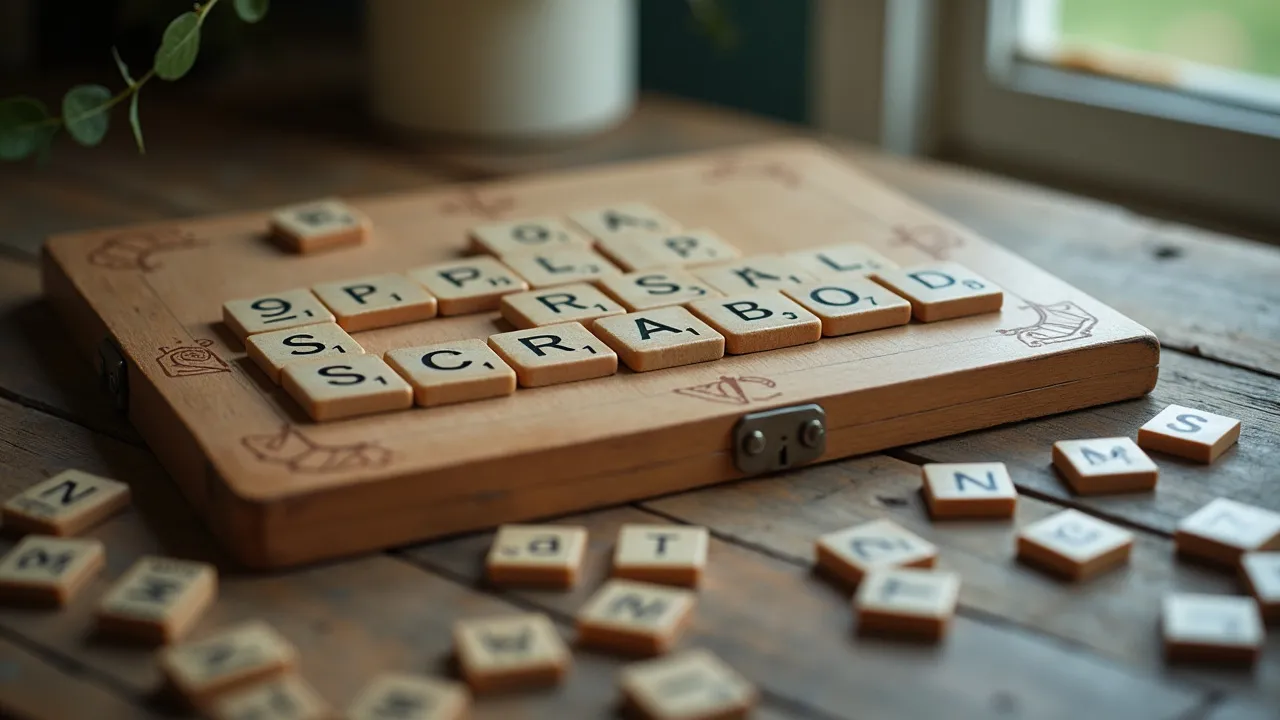
Celebrate Scrabble Day on April 13th, honoring the beloved word game invented by Alfred Mosher Butts. Discover its history, global impact, and ways to play, from casual family games to competitive tournaments.
The Historical Origins & Evolutionary Journey
Scrabble Day, observed annually on April 13th, marks the birthday of Alfred Mosher Butts, the architect of one of the world's most popular word games. This section explores the foundational catalyst, the official adoption, and the modern global legacy of Scrabble.
The Foundational Catalyst
In the throes of the Great Depression, Butts, an unemployed architect in Poughkeepsie, New York, sought to create a game that combined skill and chance. Inspired by crossword puzzles and anagrams, he analyzed letter frequencies in The New York Times to assign point values, resulting in the original "Lexiko" in 1938. Over years of refinement, the game evolved into "Criss-Cross Words," with a 15x15 board and 100 tiles. Butts partnered with entrepreneur James Brunot in 1948, who trademarked the name Scrabble, meaning "to scratch or grope."
Legislative/Official Adoption
Scrabble gained traction slowly. The pivotal moment came in 1952 when the president of Macy's department store discovered the game and ordered a large shipment after it became a hit among customers. This propelled Scrabble into mass production under Selchow and Righter, and later Hasbro. Though not a government-designated holiday, Scrabble Day emerged organically among fans and was formalized by Hasbro in the early 2000s, choosing April 13th to honor Butts's birth. The day is recognized globally, with special tournaments and events sponsored by the North American Scrabble Players Association (NASPA).
Modern Global Legacy
Today, Scrabble is available in 29 languages, with over 150 million copies sold worldwide. The competitive scene thrives with the Scrabble World Championship and the National Scrabble Championship. Digital versions on platforms like Scrabble Go have revitalized interest, making the game accessible to younger generations. Scrabble Day serves as a celebration of language, strategy, and community, bridging generations and cultures.
How to Celebrate Scrabble Day
Scrabble Day offers endless ways for individuals, schools, and organizations to honor the word game. Below are structured strategies for worldwide participation.
For Individuals and Families
- Host a game night: Gather friends or family for a themed Scrabble evening. Use a vintage board or digital app for convenience.
- Learn new words: Study the Official Scrabble Players Dictionary to improve your vocabulary and gameplay.
- Organize a mini-tournament: Set up bracket-style play with small prizes like Scrabble-themed gifts.
For Schools and Educators
- Classroom challenges: Hold inter-class Scrabble competitions to promote literacy and spelling.
- Word-building exercises: Use Scrabble tiles for vocabulary lessons and creative writing prompts.
- Fundraisers: Organize a Scrabble-a-thon where students collect pledges per word formed.
For Corporations and Organizations
- Team-building events: Conduct employee Scrabble tournaments to foster collaboration and strategic thinking.
- Charity drives: Partner with literacy nonprofits and donate proceeds from game entry fees.
- Social media campaigns: Encourage followers to share their highest-scoring words with hashtags like #ScrabbleDay.
Regional Variations
While April 13th is the primary date, some countries celebrate on alternate days. In the United Kingdom, Scrabble is especially popular, and local clubs host marathon games. In Australia, schools often incorporate Scrabble into National Literacy Week programs. Regardless of region, the core celebration involves playing, learning, and connecting.
The Educational Impact of Scrabble
Scrabble is more than entertainment; it is a powerful educational tool that enhances language skills, cognitive abilities, and social interaction.
Vocabulary and Spelling
Players naturally expand their lexicons as they learn two-letter words, high-value words with Q and Z, and strategic prefixes/suffixes. Studies show that regular Scrabble play improves spelling accuracy and reading comprehension, particularly in children and English-language learners.
Critical Thinking and Strategy
Beyond word knowledge, Scrabble requires tactical planning: calculating tile probabilities, blocking opponent moves, and maximizing points through bonus squares. This sharpens mathematical reasoning and forward-thinking.
Social and Emotional Benefits
Scrabble fosters patience, sportsmanship, and resilience. It provides a low-pressure environment for intergenerational bonding and friendly competition. Many therapists use Scrabble in cognitive rehabilitation for patients with brain injuries or age-related decline.
Global Literacy Initiatives
Organizations like World Scrabble Day promote literacy in underserved communities by donating boards and sponsoring educational programs. The game's ubiquity across cultures makes it an accessible vehicle for language education.
Scrabble in Popular Culture
Scrabble has permeated television, film, literature, and even art, becoming a cultural icon.
Television and Film
Scrabble features in episodes of Friends, The Simpsons, and Saturday Night Live. The 2017 documentary Word Wars profiles top competitors. In the film The Queen of Katwe, a character uses Scrabble to teach chess.
Literature
Books like Stefan Fatsis's Word Freak delve into the obsessive world of competitive Scrabble. Many crossword puzzles and word games reference Scrabble's scoring system.
Digital and Social Media
Scrabble Go, with its daily challenges and leaderboards, has attracted millions of users. Memes and viral posts about improbable high-scoring words (e.g., "qi" or "za") keep Scrabble relevant online.
Competitive Scrabble and Tournaments
For enthusiasts, Scrabble transcends casual play into a structured competitive arena with global reach.
Governance and Rules
The World English-Language Scrabble Players Association (WESPA) and NASPA oversee official tournaments, using standardized rules, a specific word list (NWL or CSW), and timed turns. Players are rated and ranked.
Major Championships
- Scrabble World Championship: The pinnacle event, held annually since 1991, crowning the global champion.
- National Scrabble Championship (US): Organized by NASPA, attracts hundreds of players.
- European Scrabble Championship: Open to players from across Europe and beyond.
Notable Players and Strategies
Legends like Nigel Richards from New Zealand have dominated multiple world titles. Top players memorize thousands of words, track tile distributions, and employ strategies like "rack management" to avoid dead ends.
The Future of Scrabble in the Digital Age
As technology reshapes gaming, Scrabble adapts while maintaining its core appeal.
Digital Platforms
Scrabble Go (by Mattel) and EA's Scrabble for mobile devices offer AI opponents, multiplayer matches, and social features. These platforms introduce the game to new audiences, though some purists prefer traditional board play.
Augmented Reality and AI
Emerging AR apps overlay digital tiles on physical boards, enabling hybrid play. AI assistants like Scrabble Word Checker help players learn, but raise questions about fairness in competitive settings.
Educational Tech Integration
Schools use Scrabble-themed apps to gamify literacy lessons. Adaptive algorithms adjust difficulty based on student progress, making learning personalized.
Preserving In-Person Community
Despite digital growth, in-person Scrabble clubs remain vital. They foster face-to-face interaction and preserve the tactile joy of tile-turning. Scrabble Day serves as a reminder to unplug and engage with the physical game.
Historical Timeline
Alfred Mosher Butts invents the game 'Lexiko', the precursor to Scrabble, featuring letter tiles and points based on frequency.
James Brunot refines the game, renames it 'Scrabble', and begins manufacturing. He trademarks the name and designs the classic board.
Macy's department store places a large order after Scrabble becomes a hit, launching mass production by Selchow and Righter.
The first Scrabble World Championship is held in London, UK, solidifying the game's competitive scene.
Scrabble Day is first observed on April 13th, coinciding with Butts's birthday, promoted by Hasbro and fan communities.
Hasbro acquires full rights to Scrabble in the US and Canada, while Mattel holds rights elsewhere.
The Official Scrabble Players Dictionary (OSPD) is updated to include new words like 'hashtag' and 'selfie'.
Scrabble Go launches, bringing the game to mobile with modern social features, reaching over 10 million downloads in its first year.