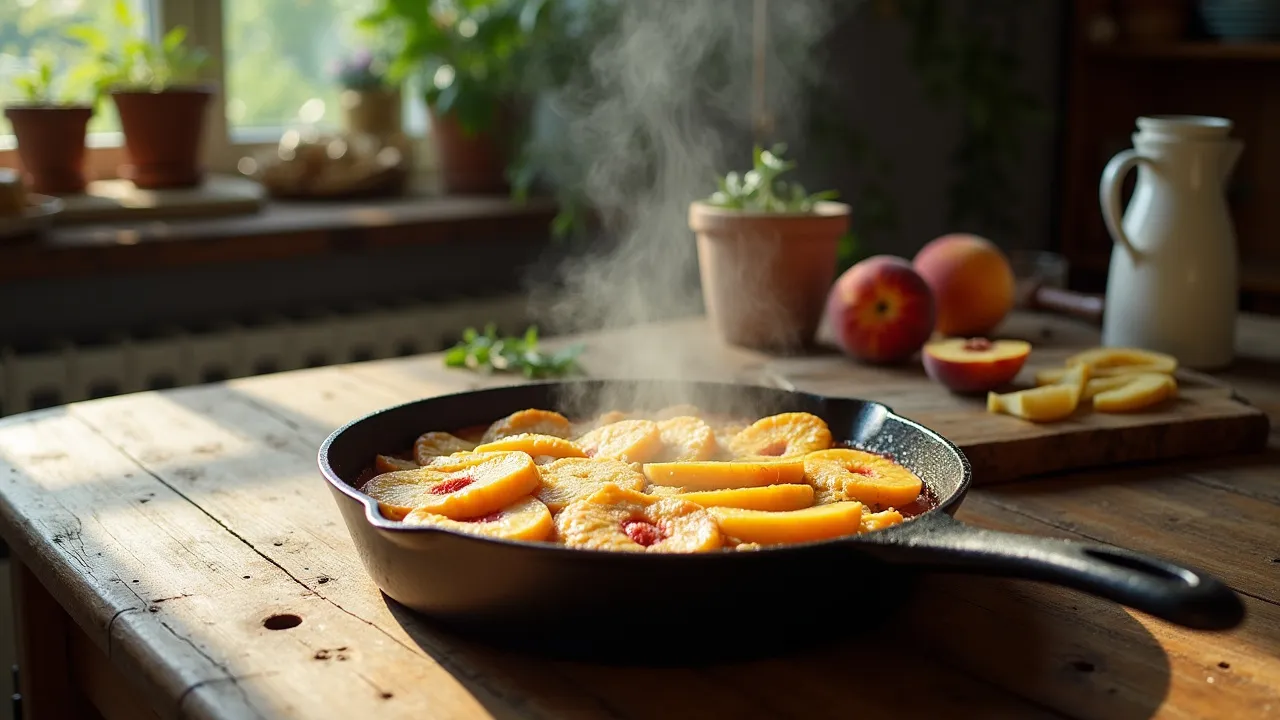
National Peach Cobbler Day on April 13 celebrates the beloved Southern dessert. Indulge in warm, juicy peaches under a golden crust, a timeless comfort food enjoyed across America.
The Historical Origins & Evolutionary Journey
Peach cobbler is a quintessential American dessert, deeply rooted in the culinary traditions of the Southern United States. Its origins trace back to early European settlers who adapted their traditional steamed puddings and pies to the available ingredients in the New World. The term 'cobbler' likely derives from the Old English word 'cobeler,' meaning a wooden bowl or a type of pie. Over time, the dessert evolved into a fruit-filled baking dish topped with biscuit dough or a crumbly crust.
The Foundational Catalyst
The widespread cultivation of peaches in the American South, particularly after the introduction of improved varieties by Spanish missionaries, provided the essential ingredient. The peach became a symbol of Southern hospitality and abundance. During the 19th century, cookbooks like The Virginia House-Wife (1824) by Mary Randolph featured early versions of fruit cobblers. However, it was the Great Depression that solidified peach cobbler's place in American homes, as resourceful cooks used inexpensive canned peaches and simple pantry staples.
The Legislative/Official Adoption
While National Peach Cobbler Day has no official legislative designation, it has been promoted by food organizations and peach growers since the mid-20th century. The American Pie Council, a trade group dedicated to preserving pie traditions, has unofficially championed the day. In 1980s, the Georgia Peach Commission began marketing campaigns that included peach cobbler recipes, further cementing April 13 as a day of celebration.
Modern Global Legacy
Today, peach cobbler is enjoyed worldwide, with variations in countries like Australia (peach cobbler with custard) and South Africa (peach cobbler with cloves). The dessert has also been adapted for dietary needs, with gluten-free and vegan versions. National Peach Cobbler Day now serves as a cultural touchstone, reminding us of the simplicity and comfort of homemade desserts.
How to Celebrate National Peach Cobbler Day
Celebrating National Peach Cobbler Day is all about enjoying this classic dessert with family and friends. Whether you're an experienced baker or a novice, there are many ways to participate. Below are actionable strategies for individuals, schools, and organizations.
For Individuals and Families
Bake a Traditional Peach Cobbler: Use fresh, canned, or frozen peaches. Try a classic recipe with a buttery biscuit topping and a sprinkle of cinnamon.
Host a Cobbler Party: Invite friends to bring their own versions, from gluten-free to spicy variations. Offer ice cream, whipped cream, and caramel sauce as toppings.
Visit a Local Peach Orchard: Many farms offer U-pick peaches in April (in warmer climates). Enjoy the fruit at its peak.
Share on Social Media: Post your cobbler creations with #NationalPeachCobblerDay to join the global celebration.
For Schools and Community Groups
Organize a Baking Class: Teach children the basics of pie crust or biscuit dough while discussing peach farming and history.
Hold a Cobbler Contest: Encourage community members to submit their recipes for judging. Categories like traditional, innovative, and healthiest.
Fundraising Bake Sale: Sell individual cobblers to raise funds for local food banks or school programs.
For Businesses and Restaurants
Feature a Limited-Time Cobbler: Offer a special peach cobbler dessert, perhaps with a unique twist like bourbon or ginger.
Collaborate with Local Farms: Source peaches from nearby growers and promote the partnership in marketing materials.
Employee Potluck: Encourage staff to bring in homemade cobblers and vote for the best.
The Cultural Significance of Peach Cobbler
Peach cobbler is more than a dessert; it is a cultural artifact that embodies the history and values of the American South. Its presence at family gatherings, church suppers, and holiday feasts underscores its role as a comfort food that brings people together.
A Symbol of Southern Hospitality
In Southern culture, offering peach cobbler to guests is a gesture of warmth and generosity. The dessert's humble ingredients—peaches, flour, sugar, butter—reflect the resourcefulness of rural communities. Cooks often passed down recipes through generations, with each family adding its own twist.
Influence on African American Cuisine
Peach cobbler has deep roots in African American culinary traditions. Enslaved Africans adapted European pie-making techniques to local fruits, creating a distinct style. After emancipation, black cooks and caterers popularized the dish in restaurants and cookbooks, such as Martha Washington's Booke of Cookery (though not accurate), but later works like The Jemima Code highlight African American contributions. Today, peach cobbler is a staple at Juneteenth celebrations and soul food restaurants.
Regional Variations
Across the United States, peach cobbler takes on diverse forms. In the Deep South, it is often baked in a cast-iron skillet with a thick, cake-like topping. In the Midwest, a pie crust might be used. In the West, some recipes incorporate local ingredients like almonds or agave. These variations reflect local tastes and available produce.
Peach Varieties and Their Impact on Cobbler
The choice of peach dramatically affects the flavor and texture of cobbler. Understanding peach varieties helps bakers select the best fruit for their recipe. Here are key factors:
Freestone vs. Clingstone
- Freestone Peaches: The flesh easily separates from the pit, making them ideal for slicing and baking. Popular freestone varieties include 'Elberta', 'Georgia Belle', and 'Redhaven'.
- Clingstone Peaches: The flesh clings to the pit, but they are often sweeter and juicier, excellent for canning and purees. Varieties include 'Babygold' and 'Klamt'.
White vs. Yellow Flesh
Yellow-fleshed peaches are more common in cobblers due to their tangy-sweet balance and firm texture. White peaches are sweeter and less acidic, producing a milder cobbler. Some chefs blend both for complexity.
Fresh vs. Canned vs. Frozen
- Fresh Peaches: Best in season (June–August in the U.S.). Choose ripe but firm peaches to avoid mushiness.
- Canned Peaches: Convenient year-round. Look for peaches packed in juice rather than heavy syrup to control sweetness.
- Frozen Peaches: Offer consistent quality. Thaw and drain before use to prevent excess liquid.
Regardless of variety, the key to a great cobbler is balancing the sweetness of the fruit with the richness of the topping and a hint of spice.
Regional Variations Across America
Peach cobbler is not monolithic; it varies significantly from region to region. These differences highlight the adaptability of the dish and the influence of local cultures.
Southern Traditional
The classic Southern cobbler features a thick, biscuit-like topping dropped over sliced peaches in a buttered dish. It is often served warm with vanilla ice cream or heavy cream. The Georgia Peach Commission recommends using 'Elberta' peaches for the best flavor.
Midwest and North
In the Midwest, cobblers may have a double crust like a pie, or a crumb topping made with oats and brown sugar. Some recipes include a lattice crust. In New England, cobblers are sometimes made with a steamed dumpling topping, reflecting British influence.
Southwest and California
In the Southwest, cobblers may incorporate local ingredients like prickly pear or use a cornmeal-based topping. California versions often feature organic peaches and alternative sweeteners like honey or agave. Some recipes add a hint of chili powder for heat.
International Adaptations
Outside the U.S., peach cobbler has been adapted to local tastes. In Australia, it is often served with custard. In the UK, a similar dish called 'peach crumble' uses a streusel topping. In India, versions include cardamom and saffron, creating a unique fusion.
Peach Cobbler in Popular Culture
Peach cobbler has made frequent appearances in film, television, music, and literature, often symbolizing home, comfort, and Southern identity.
Film and Television
- In the movie Fried Green Tomatoes (1991), the character Idgie Threadgoode serves peach cobbler, reinforcing the dessert's association with Southern hospitality.
- The TV show The Golden Girls featured an episode where the characters compete in a peach cobbler contest.
- In The Help (2011), Minny Jackson's chocolate pie is famous, but peach cobbler also appears as a comfort food.
Music
Peach cobbler is mentioned in countless country and blues songs. For example, 'Peach Cobbler' by the Southern rock band The Allman Brothers is a tribute to the dessert. Rapper Ludacris referenced 'peach cobbler' in his song 'Southern Hospitality'.
Literature
In novels like The Secret Life of Bees by Sue Monk Kidd and Their Eyes Were Watching God by Zora Neale Hurston, food scenes often include cobblers. The dessert represents nurturance and community.
Social Media and Trends
National Peach Cobbler Day trends annually on platforms like Instagram and Pinterest, with thousands of recipe shares and photos. Food bloggers create viral content around 'easy peach cobbler' and 'cobbler in a mug'.
Historical Timeline
Mary Randolph's cookbook 'The Virginia House-Wife' includes a recipe for 'peach cobbler,' one of the earliest published versions.
Peach cobbler recipes appear in community cookbooks across the American South, reflecting its popularity at church suppers and family gatherings.
Canned peaches become widely available, making peach cobbler accessible year-round and leading to a surge in home baking.
National Peach Cobbler Day is informally observed, promoted by peach growers and food magazines. No official founder is recorded.
The Georgia Peach Commission launches a marketing campaign that includes National Peach Cobbler Day, distributing recipes to food editors nationwide.
The American Pie Council begins sponsoring National Peach Cobbler Day events, including baking contests at state fairs.
Peach cobbler is featured in popular TV show 'The Great British Bake Off' as a technical challenge, introducing it to international audiences.
During the COVID-19 pandemic, National Peach Cobbler Day sees a spike in home baking, with searches for 'peach cobbler recipe' increasing 300%.