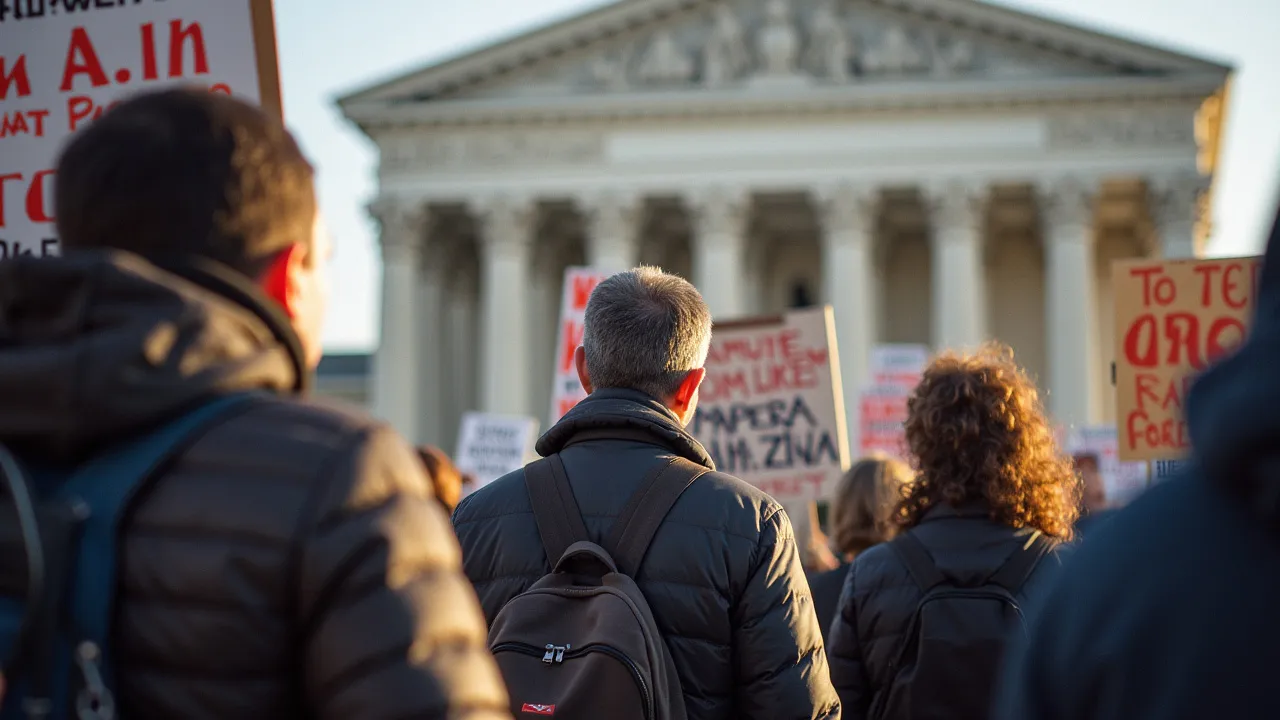
Roe v. Wade Day, observed on January 22nd, marks the anniversary of the landmark 1973 Supreme Court decision that established a constitutional right to abortion. It is a day of remembrance, advocacy, and reflection on reproductive rights.
The Historical Origins & Legal Journey of Roe v. Wade
Roe v. Wade Day, observed annually on January 22nd, commemorates the U.S. Supreme Court's landmark 1973 decision in Roe v. Wade, which recognized a constitutional right to abortion. This day serves as both a celebration of reproductive freedom and a call to action for its protection.
The Foundational Catalyst
In 1969, a woman identified as "Jane Roe" (Norma McCorvey) filed a lawsuit against Dallas County District Attorney Henry Wade, challenging Texas's criminal abortion laws. The case argued that these laws violated a woman's right to privacy under the Due Process Clause of the 14th Amendment. The Supreme Court's 7-2 decision on January 22, 1973, ruled that the Constitution protects a woman's decision to terminate a pregnancy, dividing pregnancy into trimesters with varying levels of state regulation.
The Legislative/Official Adoption
Following the ruling, advocates began marking the anniversary with rallies, educational events, and protests. The first official Roe v. Wade Day observances emerged in the late 1970s, organized by groups like the National Abortion Federation and NARAL Pro-Choice America. Over time, the day became a focal point for both pro-choice and pro-life movements, with counter-protests and marches.
Modern Global Legacy
While Roe v. Wade is a U.S. decision, its influence extended globally, inspiring abortion rights movements in other countries. However, on June 24, 2022, the Supreme Court overruled Roe in Dobbs v. Jackson Women's Health Organization, returning abortion regulation to the states. Despite this, Roe v. Wade Day continues as a day of advocacy for restoring federal protections and supporting access to reproductive healthcare.
How to Celebrate Roe v. Wade Day
Roe v. Wade Day offers numerous ways to honor reproductive rights through education, activism, and community engagement. Here are actionable strategies for individuals, schools, and organizations:
Individual Actions
- Educate Yourself: Read the full Roe v. Wade and Dobbs decisions, and explore resources from organizations like Planned Parenthood or the Guttmacher Institute.
- Attend a Rally or Vigil: Many cities host candlelight vigils or protest marches on January 22nd. Check local event listings.
- Support Abortion Funds: Donate to independent abortion funds or practical support networks that help people access care.
School & Community Activities
- Organize a film screening of documentaries like "The Janes" or "Reversing Roe".
- Host a panel discussion with healthcare providers, lawyers, and activists.
- Create a reproductive rights timeline display in libraries or community centers.
Corporate & Social Rituals
- Companies can issue statements of support for reproductive rights and provide paid time off for employees to volunteer or attend events.
- Social media campaigns using hashtags like #RoeVWadeDay or #ReproRightsNow can amplify awareness.
For those in regions where abortion is restricted, virtual actions—such as letter-writing campaigns to legislators or online fundraising—are impactful alternatives.
The Global Impact of Roe v. Wade on Reproductive Rights
The influence of Roe v. Wade extended far beyond U.S. borders. The decision became a benchmark for international reproductive rights advocacy, influencing court rulings and legislation in countries like Canada (R. v. Morgentaler, 1988), South Africa (Constitutional Court, 1996), and Colombia (C-055, 2022).
Legal Precedent Worldwide
Many nations looked to Roe's privacy framework when crafting their own abortion laws. International human rights bodies, including the United Nations, have cited Roe in recommending that countries decriminalize abortion.
Counter-Movements
Conversely, the decision galvanized anti-abortion movements globally, leading to restrictive laws in nations like Poland, El Salvador, and parts of Latin America. The overturning of Roe in 2022 has emboldened both sides, with advocates pushing for constitutional protections elsewhere.
Core Themes: Autonomy, Privacy, and Equality
Roe v. Wade Day underscores foundational principles that resonate across societies.
Bodily Autonomy
The right to control one's own body, free from government coercion, is central. This theme connects abortion rights to other bodily autonomy movements, such as those for contraception and transgender healthcare.
Privacy
The Roe decision affirmed a constitutional right to privacy in intimate medical decisions. This principle has been applied in cases involving same-sex relationships (Lawrence v. Texas) and marriage (Obergefell v. Hodges).
Equality
Access to abortion is intrinsically linked to gender equality. Without the ability to decide if and when to have children, women and girls face barriers to education, economic independence, and full participation in society.
Intersectionality
Marginalized communities—particularly Black, Indigenous, and low-income individuals—disproportionately face obstacles to abortion care, highlighting the need for reproductive justice that addresses systemic inequities.
The Overturning of Roe: Dobbs v. Jackson and Its Aftermath
On June 24, 2022, the Supreme Court issued its decision in Dobbs v. Jackson Women's Health Organization, overturning Roe v. Wade and eliminating the federal constitutional right to abortion.
The Decision
The Court held that the Constitution does not confer a right to abortion, leaving regulation to the states. This triggered immediate "trigger laws" in 13 states, banning or severely restricting abortion.
Immediate Impact
Abortion access became a patchwork: some states protected it, while others banned it with few exceptions. Clinics closed, and people traveled across state lines for care.
Ongoing Advocacy
Roe v. Wade Day now focuses on restoring protections through federal legislation (e.g., the Women's Health Protection Act), state ballot initiatives, and judicial challenges. Activists also emphasize expanding access via medication abortion and telehealth.
The Future of Reproductive Rights Advocacy
As Roe v. Wade Day evolves, the reproductive rights movement adapts to new challenges.
Legislative Battles
- Federal: Advocates continue to push for codifying Roe through Congress, though filibuster hurdles remain.
- State: Ballot measures in states like Michigan, Vermont, and California have enshrined abortion rights, while others pursue bans.
Medication Abortion
Mifepristone and misoprostol have become central to the abortion access landscape, with the FDA approving telemedicine prescriptions. Legal battles over medication abortion are ongoing.
Community-Based Care
Networks like the Abortion Freedom Fund and National Network of Abortion Funds provide practical support, including travel, lodging, and childcare, to help people access care regardless of location.
Long-Term Vision
Activists envision a future where abortion is destigmatized, affordable, and available without barriers. Roe v. Wade Day serves as an annual reminder of both progress made and work ahead.
Historical Timeline
The U.S. Supreme Court issues its 7-2 decision in Roe v. Wade, striking down Texas's abortion ban and establishing a constitutional right to abortion based on the right to privacy.
First informal observances of Roe v. Wade Day take place, organized by women's rights groups and abortion rights advocates on the anniversary of the decision.
The first major national March for Life, a protest against abortion, is held in Washington, D.C. on January 22, drawing tens of thousands of participants.
Planned Parenthood v. Casey upholds Roe's essential holding but replaces the trimester framework with an 'undue burden' test, allowing more state restrictions.
The Supreme Court upholds the Partial-Birth Abortion Ban Act in Gonzales v. Carhart, marking the first time the Court banned a specific abortion procedure.
Whole Woman's Health v. Hellerstedt strikes down Texas's HB2 restrictions on abortion providers, reaffirming that regulations must have a legitimate medical purpose.
The COVID-19 pandemic disrupts abortion access; many states attempt to ban abortion as 'non-essential' during lockdowns, leading to legal battles.
Texas's SB8, a six-week abortion ban enforced via private lawsuits, takes effect. The Supreme Court allows it to remain in place, signaling a shift.
On June 24, the Supreme Court overturns Roe v. Wade in Dobbs v. Jackson Women's Health Organization, returning abortion regulation to the states.
State-level battles intensify: some states enact near-total bans, while others pass constitutional amendments protecting abortion rights. Medication abortion becomes a key focus.
Roe v. Wade Day observances focus on restoring federal protections; advocates push for the Women's Health Protection Act and state ballot initiatives to enshrine abortion rights.