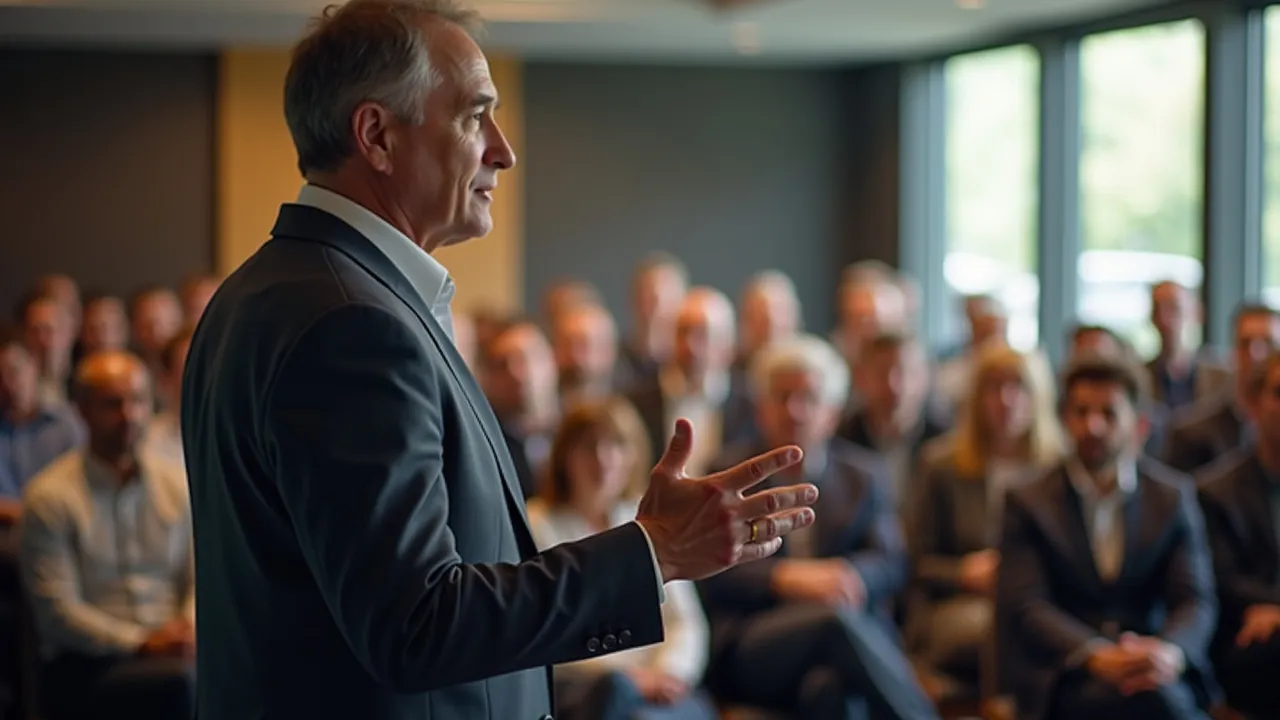
Professional Speakers Day, observed annually on August 7th, honors the art and impact of public speaking. It encourages aspiring speakers to share their voice and celebrates those who inspire change through words.
The Historical Origins & Evolutionary Journey
Professional Speakers Day has its roots in the growing recognition of public speaking as a distinct and valuable profession. The day was established to honor the individuals who dedicate their careers to informing, inspiring, and influencing audiences worldwide.
The Foundational Catalyst
The late 20th century saw a surge in demand for keynote speakers, trainers, and motivational orators. Organizations like the National Speakers Association (NSA), founded in 1973, began to professionalize the field by setting ethical standards, offering certifications, and fostering community. By the early 1990s, the need for a dedicated observance became evident.
The Official Adoption
In 1991, the NSA officially declared August 7th as Professional Speakers Day. The date was chosen to align with the association's annual convention, providing a focal point for celebrations and professional development activities. The day quickly gained traction among members and spread globally through speaker bureaus and corporate networks.
Modern Global Legacy
Today, Professional Speakers Day is recognized across continents. It serves not only as a celebration but also as a platform for emerging speakers to showcase their talents. The day underscores the transformative power of spoken words in business, education, and social change.
How to Celebrate Professional Speakers Day
Celebrating Professional Speakers Day involves both honoring established orators and nurturing new talent. Activities vary by region but share a common goal: elevating the craft of speaking.
For Individuals
- Attend a workshop: Join a local Toastmasters club or online webinar to refine your skills.
- Write a speech: Draft a 5-minute talk on a topic you are passionate about and practice it.
- Volunteer to speak: Offer to present at a community center, school, or nonprofit event.
- Watch great speakers: Study TED Talks or historical speeches to learn techniques.
For Organizations
- Host a Speaker Showcase where employees share insights or stories.
- Invite a professional keynote to address the team.
- Create a Speaker Spotlight on internal communication channels.
- Provide public speaking training as part of professional development.
Global Traditions
In the United States, many speaker bureaus offer free consultations. In India, corporate events often feature celebratory keynotes. Australia sees local speaking clubs organize open mic nights. In the United Kingdom, universities host guest speaker series. The unifying theme is the sharing of knowledge and stories.
The Impact of Professional Speakers on Society
Professional speakers are catalysts for change. They educate, motivate, and challenge audiences to think differently, driving progress in multiple spheres.
Influence on Business and Leadership
Keynote speakers shape corporate culture by communicating vision and strategy. They help organizations navigate change, boost morale, and foster innovation. Studies show that companies investing in professional speaking programs see measurable improvements in employee engagement and productivity.
Educational Transformation
In academia, guest speakers bring real-world expertise into classrooms. They inspire students, bridge theory and practice, and often spark lifelong learning. Professional Speakers Day highlights the role of orators in making education more dynamic and inclusive.
Social Movements
From Martin Luther King Jr.'s "I Have a Dream" to Greta Thunberg's climate addresses, speakers have mobilized millions. The day reminds us that words can ignite social change and that professional speakers are often at the forefront of advocacy.
Essential Skills for a Professional Speaker
Becoming a successful professional speaker requires a blend of innate talent and honed skills. Here are core competencies every speaker must master.
Communication Techniques
- Clarity: Articulate ideas simply and logically.
- Vocal variety: Modulate pitch, pace, and volume to maintain interest.
- Nonverbal cues: Use purposeful gestures, eye contact, and posture to reinforce messages.
Storytelling Mastery
Stories create emotional connections. Effective speakers craft narratives with a clear arc, relatable characters, and a compelling message. They use anecdotes to illustrate abstract concepts, making information memorable.
Audience Engagement
- Read the room: Adjust content based on audience reactions.
- Interactive elements: Ask questions, use polls, or invite participation.
- Authenticity: Share personal experiences to build trust.
- Call to action: End with a clear, actionable takeaway.
Professional Speakers Day encourages speakers to reflect on these skills and commit to continuous improvement.
The Business of Professional Speaking
The professional speaking industry is a multi-billion-dollar global market. Understanding its structure is key for anyone aspiring to enter the field.
Industry Growth and Revenue
According to market research, the global speaking industry exceeds $30 billion annually. Revenue streams include keynote fees, training contracts, book sales, and online courses. The rise of virtual events during the pandemic accelerated demand for digital speaking services.
Keynote vs. Training
- Keynote speakers: Deliver 45-60 minute inspirational or informative talks at conferences and galas. Fees range from $5,000 to $100,000+.
- Trainers: Conduct workshops and seminars, often ongoing. They charge per participant or per session.
- Hybrid roles: Many speakers combine keynotes with consulting or coaching.
Digital Transformation
Platforms like Zoom, LinkedIn Live, and TikTok have democratized speaking. Professional Speakers Day now recognizes virtual orators who build global audiences from home studios. The key is adapting content for different formats while maintaining authenticity.
The Future of Professional Speaking
As technology and society evolve, so does the art of public speaking. Professional Speakers Day offers a moment to anticipate coming trends.
Virtual and Hybrid Events
Post-pandemic, audiences expect both in-person and online options. Speakers must master dual delivery—engaging a live room while connecting with remote viewers through chat, polls, and breakout rooms.
AI and Automation
Artificial intelligence can assist with speech writing, slide design, and audience analysis. However, the human element—empathy, spontaneity, storytelling—remains irreplaceable. Professional speakers will increasingly use AI as a tool, not a replacement.
Global Reach
Translation tools and simultaneous interpretation services enable speakers to address multinational audiences. Cultural sensitivity and adaptability become vital. The future speaker must be a global citizen, well-versed in diverse perspectives.
Professional Speakers Day urges everyone to embrace these changes and champion the enduring power of the spoken word.
Historical Timeline
National Speakers Association (NSA) founded to support and professionalize the speaking industry.
NSA establishes August 7th as Professional Speakers Day, aligning with its annual convention.
TED Talks begin online, revolutionizing access to high-quality professional speaking and inspiring millions.
Social media platforms like Twitter and LinkedIn become key tools for speakers to build personal brands.
COVID-19 pandemic forces rapid adoption of virtual speaking; Professional Speakers Day celebrated online with global webinars.
AI speech coaching tools gain popularity; speakers explore ethical use of AI in content creation.
Professional Speakers Day sees record participation, with events in 50+ countries highlighting diverse voices.