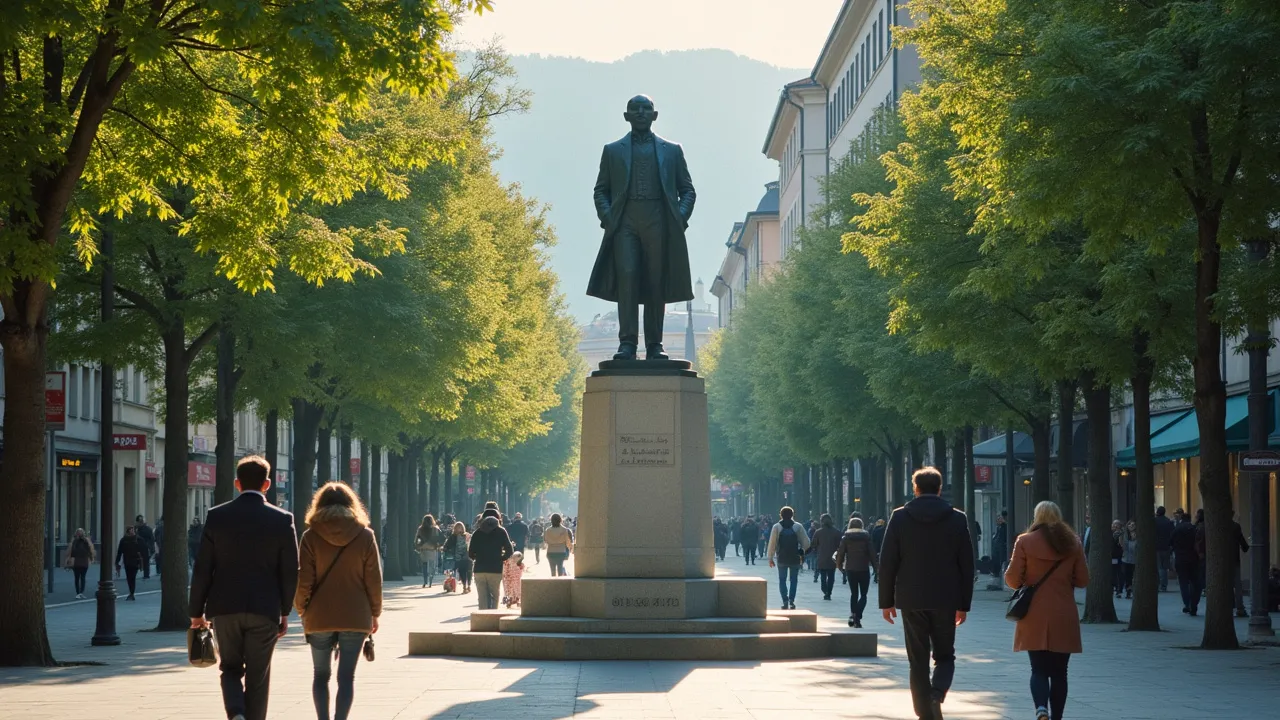
Prešeren Day, observed on February 8th, honors Slovenia's national poet France Prešeren. This cultural holiday features poetry readings, concerts, and the prestigious Prešeren Awards, celebrating Slovenian language and heritage.
The Historical Origins & Evolutionary Journey
Prešeren Day, celebrated annually on February 8th, is Slovenia's foremost cultural holiday, commemorating the death of France Prešeren (1800–1849), the nation's greatest poet. The day was officially proclaimed in 1945 by the People's Government of Slovenia, but its roots trace back to the 19th-century national revival. Prešeren's work, particularly his epic poem Krst pri Savici (The Baptism on the Savica) and his lyrical masterpieces, became a cornerstone of Slovenian identity. The date marks his passing in Kranj, where he died in poverty.
The Foundational Catalyst
The catalyst for Prešeren Day emerged during World War II, when the Liberation Front sought to unify Slovenians through culture. In 1944, the Slovene National Liberation Committee decided to honor Prešeren as a symbol of resistance. After the war, the holiday was formalized.
Legislative Adoption and Evolution
In 1991, after Slovenia's independence, the holiday was reaffirmed as a state holiday. The day is marked by the presentation of the Prešeren Awards, the highest state recognition for artistic achievement, first awarded in 1947. Over time, the celebration expanded from solemn commemorations to vibrant public events.
Modern Global Legacy
Today, Prešeren Day is celebrated by Slovenian communities worldwide, from Cleveland to Buenos Aires. It remains a powerful expression of cultural pride and linguistic identity, with UNESCO recognizing its importance in preserving intangible heritage.
How to Celebrate Prešeren Day
Prešeren Day is observed across Slovenia and in diaspora communities with a mix of formal ceremonies and informal festivities. Here are the key ways to participate:
Attend Poetry Readings: Major events include readings of Prešeren's poems in public squares and theaters. The central ceremony takes place in Ljubljana at Prešeren Square.
Visit Cultural Institutions: Museums, galleries, and libraries offer free admission or special exhibits focused on Slovenian culture.
Participate in the Prešeren Award Ceremony: Held on the eve of February 8th, the awards recognize outstanding contributions in literature, music, and visual arts.
Organize School Activities: Schools host recitation competitions, essay contests, and workshops on Prešeren's life.
Cook Traditional Dishes: Many families prepare potica (nut roll) and other Slovenian specialties.
Engage with Diaspora Events: Slovenian clubs abroad organize dinners, folk dances, and film screenings.
For a personal celebration, read Prešeren's Sonetni venec (Wreath of Sonnets) or listen to his poems set to music by composers like Anton Foerster.
Cultural Significance and Traditions
Prešeren Day embodies the resilience of Slovenian culture. Traditions include:
- Wreath-Laying at Prešeren's Statue: In Ljubljana's Prešeren Square, officials lay wreaths at the poet's monument.
- Flag Hoisting: The Slovenian flag is displayed prominently, often with a special ceremony.
- Concerts: Classical and folk concerts feature settings of Prešeren's poetry.
- Media Broadcasts: National television airs documentaries and theatrical performances.
The holiday also serves as a catalyst for discussions on national identity. Schools emphasize the importance of the Slovenian language, which Prešeren elevated to a literary standard.
The Prešeren Awards and Their Impact
The Prešeren Awards, first given in 1947, are the capstone of the holiday. They include the Grand Prešeren Award (for lifetime achievement) and annual awards for emerging artists. Categories cover literature, music, visual arts, architecture, and film. Recipients receive a cash prize and a bronze plaque. The awards have launched careers of many notable Slovenian artists, such as poet Svetlana Makarovič and architect Jože Plečnik. The ceremony, held at the Cankar Centre in Ljubljana, is broadcast nationwide. The awards not only celebrate excellence but also reinforce the cultural standard set by Prešeren.
Prešeren Day in the Context of Slovenian National Identity
Prešeren Day is more than a memorial; it is a reaffirmation of Slovenian sovereignty. The poet's line "Akademija naj bo, kar hoče, jaz bom pesnik slovenski" (Let the academy be what it wants, I will be a Slovenian poet) resonates with national pride. The holiday emerged during times of occupation and later independence, symbolizing continuity. It coincides with the anniversary of the 1945 establishment of the Slovenian National Liberation Committee, linking cultural freedom to political self-determination. For the diaspora, the day is a touchstone of heritage, with celebrations in countries like Argentina and the United States.
Global Recognition and Diaspora Celebrations
Slovenian communities worldwide mark Prešeren Day with unique traditions. In Cleveland, Ohio (home to a large Slovenian population), events include a mass at St. Vitus Church and a banquet. Buenos Aires hosts a poetry marathon at the Slovenian Cultural Centre. In Australia, the Slovenian Club of Sydney organises a family day. Since the European Union accession, Brussels has seen Slovenian diplomats host cultural evenings. UNESCO's inclusion of Prešeren's works in its Memory of the World Register in 2020 further globalised the holiday. Social media campaigns like #PrešerenDay connect the global community.
Historical Timeline
France Prešeren is born in Vrba, Slovenia (then part of the Habsburg Monarchy).
Prešeren dies in Kranj on February 8th.
The Slovene National Liberation Committee proposes making February 8th a cultural holiday.
Prešeren Day is officially proclaimed for the first time.
The first Prešeren Awards are presented.
Slovenia becomes independent; Prešeren Day is reaffirmed as a state holiday.
The Prešeren Awards are restructured to include additional categories.
Prešeren's works are added to UNESCO's Memory of the World Register.
Large public celebrations resume post-pandemic with record attendance.