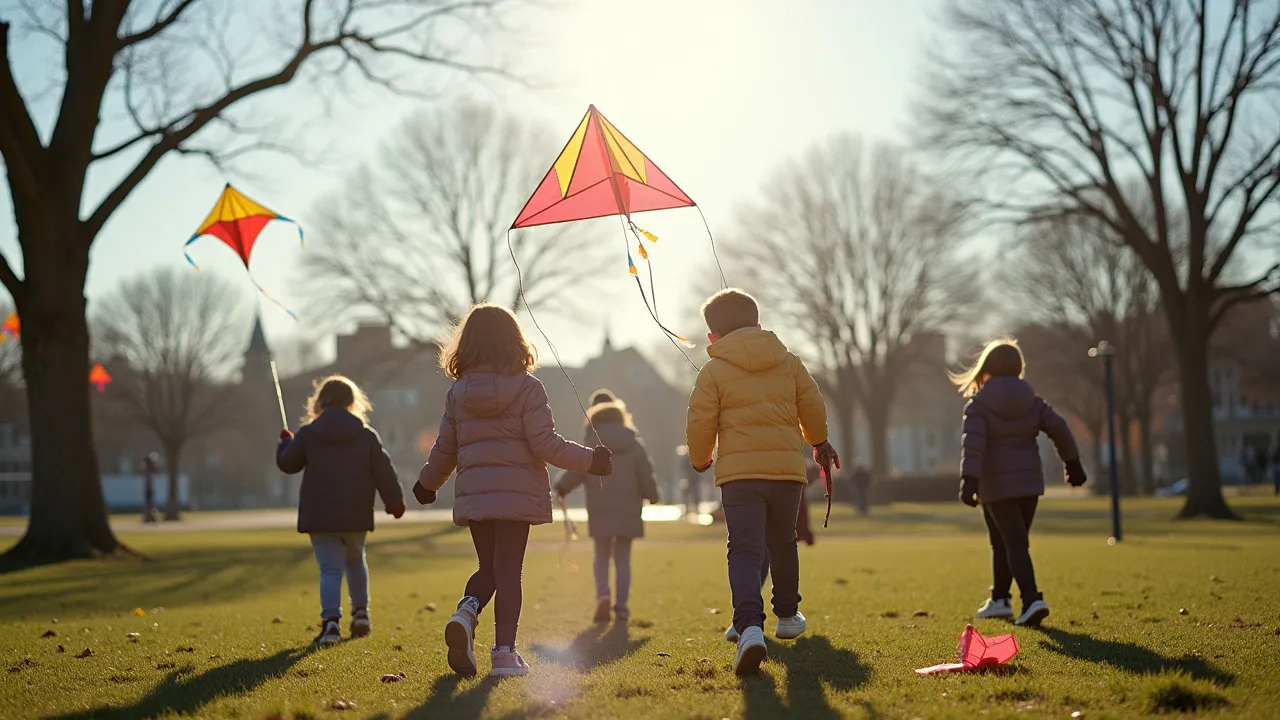
National Kite Flying Day on February 8th celebrates the joy of kite flying. This day encourages people to take advantage of windy conditions and engage in outdoor fun, creativity, and cultural traditions.
The Historical Origins & Evolutionary Journey
National Kite Flying Day, observed annually on February 8th, has roots that trace back millennia, though the specific American observance began informally in the early 20th century. The day capitalizes on the windy conditions typical of late winter, making it ideal for kite flying.
The Foundational Catalyst
Kite flying itself originated in ancient China around 500 BC, where bamboo and silk kites were used for military signaling, measuring distances, and even religious ceremonies. The concept spread across Asia, with Japan and Korea developing unique designs. By the 13th century, Marco Polo introduced kites to Europe, where they became a popular pastime among children and adults alike.
Legislative/Official Adoption
Unlike many national days, National Kite Flying Day was not established by a government decree but rather gained popularity through community participation and word of mouth. Early 20th-century American kite clubs and hobbyists began organizing informal gatherings in February, eventually leading to the day being recognized in niche calendars. Some credit the Kite Flying Association of America, though records are sparse.
Modern Global Legacy
Today, National Kite Flying Day is celebrated not only in the United States but also inspired similar events worldwide. While each country may have its own kite festivals—such as India's International Kite Festival in January or Japan's Kites Festival in May—February 8th remains a dedicated day in the U.S. for embracing the simple joy of kite flying.
How to Celebrate National Kite Flying Day
Whether you are a seasoned kite enthusiast or a beginner, National Kite Flying Day offers countless ways to participate. Below is a definitive guide to celebrating this day effectively across different settings.
For Individuals and Families
- Choose the Right Kite: Select a kite suitable for wind conditions. Delta kites are great for beginners, while box kites offer more stability.
- Find an Open Space: Parks, beaches, or fields away from power lines and trees are ideal. Check local regulations.
- Practice Safety: Avoid flying in rain or near airports. Use gloves to prevent string burns.
For Schools and Community Groups
- Organize a Kite-Making Workshop: Teach children to build simple kites using recycled materials like plastic bags and sticks.
- Host a Kite Flying Competition: Categories can include highest altitude, longest flight time, or most creative design.
- Incorporate Education: Discuss the science of lift, drag, and aerodynamics with hands-on demonstrations.
Corporate and Social Rituals
- Team-Building Events: Companies can organize kite flying contests for employees to foster camaraderie.
- Charity Events: Host a kite festival with entry fees benefiting local charities.
- Social Media Challenges: Share photos and videos using the hashtag #NationalKiteFlyingDay to spread awareness.
Regional Variations Worldwide
While February 8th is the primary date, other cultures celebrate kite flying on different days. In India, the festival of Makar Sankranti (usually January 14-15) features massive kite battles. In Japan, Kite Festival (May 5th) is part of Children's Day. In China, Weifang International Kite Festival takes place in April. Adapt your celebration by learning about these traditions and incorporating elements such as Indian glass-coated string or Japanese bamboo frames.
The Science of Kite Flying
Kite flying is not just recreational; it is a practical demonstration of physics principles. Understanding the science can enhance the experience.
Aerodynamics 101
Lift is generated by the kite's surface area and the wind's angle of attack. The force of lift must exceed gravity and drag. A tail or bridle adjusts stability. Bernoulli's principle explains how faster-moving air over the top creates lower pressure, lifting the kite.
Wind Conditions
Ideal wind speeds for most kites range from 5 to 20 mph. Too little wind and the kite won't fly; too much can cause structural failure. Use an anemometer to measure wind speed or observe leaves: calm leaves mean no wind, leaves blowing suggest good conditions.
Line and Material Physics
Modern kite lines are made of dyneema or polyester, offering low stretch and high strength. The angle of the line relative to the ground affects lift. A steeper line angle suggests the kite is pulling harder. Understanding these variables can help flyers maintain control and achieve greater altitudes.
Kite Flying Around the World
While National Kite Flying Day is primarily a U.S. observance, kite flying is a global phenomenon with deep cultural significance.
Asia: The Birthplace of Kites
In China, kites are often shaped like dragons or birds and used in celebrations like the Double Ninth Festival. In India, the skies fill with colorful kites during Makar Sankranti, where participants engage in friendly battles using sharpened strings to cut opponents' kites. Japan's Kite Festival on May 5th features huge kites that require multiple people to launch.
Europe and the Americas
In Europe, kite flying is a popular pastime in coastal areas, especially in the Netherlands, where kites are used for power generation research. In the United States, festivals like the Smithsonian Kite Festival in Washington, D.C., draw thousands. South America also has unique traditions, such as the Kite Festival of Paraguay held in September.
Africa and Oceania
In Africa, kite flying is often a children's activity using homemade designs. Australia's Brisbane Kite Festival showcases giant kites. Each region adapts kite flying to local climate and culture, making it a truly universal activity.
Kite Making as an Art Form
Kite making combines craftsmanship, design, and engineering. From traditional materials to modern innovations, the art of kite making is celebrated on National Kite Flying Day.
Traditional Materials
Historical kites used silk, bamboo, and paper. Today, common materials include ripstop nylon, carbon fiber rods, and plastic. Balanced design ensures stability in flight.
Types of Kites
- Diamond Kite: Classic design, easy to fly.
- Delta Kite: Triangular shape, stable in varying winds.
- Box Kite: Three-dimensional cells provide lift in low wind.
- Sled Kite: Simple design without spars, collapses for storage.
- Stunt Kite: Dual lines for aerial maneuvers.
Customization and Competitions
Many enthusiasts paint or appliqué their kites with intricate patterns. International competitions judge on design, flight time, and choreography. Kite art has been featured in galleries, merging folk art with contemporary expression.
Health and Environmental Benefits of Kite Flying
Beyond entertainment, kite flying offers physical and environmental advantages.
Physical Health
Running to launch a kite, looking up for extended periods, and walking while controlling the line provide low-impact exercise. It improves posture and neck flexibility by reducing screen time. The outdoor air and sunlight boost vitamin D levels.
Mental Well-being
The meditative act of watching a kite soar reduces stress and anxiety. Focus on wind patterns and flight control provides a mental break. It is often used in therapeutic settings for children with ADHD or autism.
Environmental Awareness
Kite flying is a zero-emissions activity. Many kite festivals include clean-up drives, promoting stewardship. Using biodegradable materials further reduces environmental impact. National Kite Flying Day aligns with sustainability themes, encouraging people to reconnect with nature.
Historical Timeline
Ancient Chinese invent kites using bamboo and silk. Kites are used for military signaling and religious ceremonies.
Marco Polo returns from Asia and introduces kites to Europe, sparking interest as a leisure activity.
Benjamin Franklin flies a kite during a thunderstorm, proving lightning is electricity. This experiment advances scientific understanding.
The Wright brothers use kites to test aerodynamic theories before inventing the airplane.
National Kite Flying Day emerges informally in the United States, celebrated by kite enthusiasts in February.
Kite competitions and clubs become popular across the U.S., solidifying February 8th as a date for kite flying.
Modern materials like ripstop nylon and carbon fiber revolutionize kite design, enabling larger and more complex kites.
National Kite Flying Day gains recognition in online calendars and is promoted by kite associations worldwide.
Social media campaigns like #NationalKiteFlyingDay trend, drawing new generations to the activity.