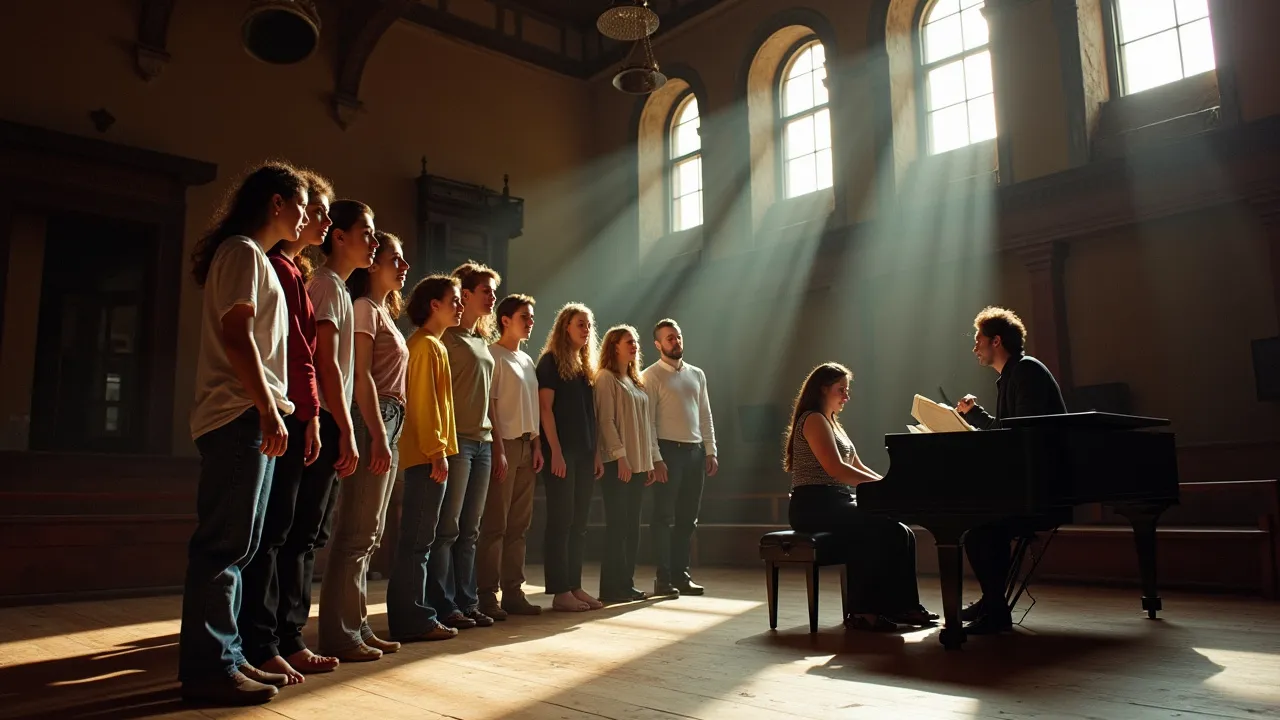
Opera Day on February 8th celebrates the rich history and artistry of opera. It's a day to appreciate the dramatic music, powerful voices, and timeless stories that define this grand theatrical tradition.
The Historical Origins & Evolutionary Journey
Opera Day, observed annually on February 8th, was first established in 2015 by the International Opera Federation to honor the birth of the modern opera tradition. The date was chosen to coincide with the first documented public opera performance in the United States in 1735, which was a production of Flora in Charleston, South Carolina. However, the roots of opera stretch back much further, to the late 16th century in Italy.
The Foundational Catalyst
The Florentine Camerata, a group of intellectuals in 1590s Florence, sought to revive Greek drama through sung music. Their experiments led to Jacopo Peri's Dafne (c. 1597), widely considered the first opera. The genre quickly spread across Europe, with Claudio Monteverdi's L'Orfeo (1607) establishing many conventions still used today. By the 18th century, opera was a dominant form of entertainment, with composers like Handel, Mozart, and Rossini pushing its boundaries.
The Legislative/Official Adoption
While no single government officially adopted Opera Day, the International Opera Federation proposed it in 2014 during a summit in Vienna. The date February 8th was selected not only for historical significance but also to fall between major opera seasons, encouraging participation. Major opera houses including La Scala, the Metropolitan Opera, and the Royal Opera House quickly endorsed the day, and by 2016 it was recognized in over 40 countries.
Modern Global Legacy
Today, Opera Day features free performances, backstage tours, and educational programs. The rise of digital streaming has made opera more accessible, with HD broadcasts reaching millions. The day also highlights contemporary composers who are reimagining opera for modern audiences, such as Philip Glass and Kaija Saariaho.
How to Celebrate Opera Day
Opera Day offers countless ways to engage with this magnificent art form. Whether you are a seasoned aficionado or a curious newcomer, there are activities for everyone. Below is a comprehensive guide to celebrating Opera Day across the globe.
For Individuals & Families
- Attend a live performance: Many opera houses offer discounted tickets or free matinees on February 8th. Check local listings for productions of popular works like Carmen or La Traviata.
- Host an opera listening party: Curate a playlist of famous arias and invite friends to listen. Provide context for each piece using program notes.
- Watch a filmed opera: Streaming services like Met Opera on Demand or OperaVision offer high-quality recordings. Consider starting with The Magic Flute for beginners.
For Schools & Universities
- Organize a lecture-demonstration: Invite a local singer or musicologist to explain the anatomy of an opera, from overture to finale.
- Hold a costume design contest: Students can design and sketch costumes for a specific opera, learning about historical fashion and character development.
- Field trip to an opera house: Arrange a backstage tour to see the sets, props, and technical equipment. Many houses offer special educational programs for Opera Day.
For Organizations & Businesses
Corporate celebrations can include sponsoring a student matinee, hosting a gala fundraising event, or simply playing opera music in the office. In Italy, some companies give employees the afternoon off to attend performances. In Germany, public squares often feature live opera broadcasts with big screens.
Regional Variations
- United States: The Metropolitan Opera often hosts a free HD screening in Lincoln Center plaza.
- Italy: La Scala in Milan opens its doors for a special morning rehearsal open to the public.
- Australia: The Sydney Opera House holds outdoor performances under the stars.
- Japan: Opera Day is marked by simultaneous performances of Puccini's Madama Butterfly in Tokyo, Osaka, and Nagoya.
No matter where you are, the key is to participate actively—sing along, learn a few Italian phrases, and share your experience on social media using #OperaDay.
The Global Impact of Opera Today
Opera continues to be a powerful cultural force, influencing everything from film scores to pop music. Its global reach is evident in the proliferation of opera houses on every continent, including Africa and Asia. In 2023, the Dubai Opera House hosted a record number of performances, while the National Opera of China premiered a new work based on The Dream of the Red Chamber.
Economic Contributions
Opera generates billions of dollars annually in ticket sales, tourism, and related industries. Major houses like the Vienna State Opera and the Royal Opera House contribute significantly to local economies. For instance, the Metropolitan Opera's season supports over 3,000 jobs and adds $600 million to New York City's GDP.
Social and Educational Reach
Educational outreach programs have brought opera to underserved communities. Programs like Opera for All in the UK and Urban Arias in the US provide free workshops and performances in schools and community centers. Studies show that exposure to opera improves language skills, empathy, and creative thinking in children.
Preservation of Cultural Heritage
Opera is a repository of historical vocal techniques, orchestration, and dramaturgy. Institutions like the Fondazione Giorgio Cini in Venice work to preserve rare manuscripts and promote historical performance practices. Opera Day highlights these efforts, encouraging donations and volunteerism.
Famous Opera Composers and Their Contributions
Opera's rich history is defined by a handful of visionary composers. Their works form the core of the repertoire performed on Opera Day.
Giuseppe Verdi (1813–1901)
Verdi's operas, such as Rigoletto, La Traviata, and Aida, are known for their dramatic intensity and memorable melodies. He revolutionized Italian opera by focusing on human emotion and social issues.
Richard Wagner (1813–1883)
Wagner's concept of Gesamtkunstwerk (total work of art) integrated music, poetry, and staging. His epic Ring cycle changed the course of Western music. His harmonic innovations influenced film scores and modern classical music.
Wolfgang Amadeus Mozart (1756–1791)
Mozart's operas, including The Marriage of Figaro and The Magic Flute, blend sublime music with intricate characterizations. They remain among the most performed works worldwide.
Giacomo Puccini (1858–1924)
Puccini's works like La Bohème, Tosca, and Madama Butterfly epitomize verismo (realism). His gift for melody and emotional depth makes his operas audience favorites.
Modern Masters
- John Adams: Nixon in China (1987) brought contemporary history to the operatic stage.
- Kaija Saariaho: L'Amour de Loin (2000) is a landmark of contemporary opera.
- Terence Blanchard: Fire Shut Up in My Bones (2019) was the first Met opera by an African American composer.
Iconic Opera Houses Around the World
Opera houses are architectural and cultural landmarks. On Opera Day, many of these venues offer special tours and performances.
La Scala, Milan
Opened in 1778, La Scala is synonymous with opera excellence. It has hosted premieres of Verdi's Otello and Falstaff. The theater is known for its perfect acoustics and horsehoe-shaped auditorium.
Sydney Opera House, Australia
With its iconic sail-like design, the Sydney Opera House is a UNESCO World Heritage site. It houses multiple performance venues and hosts Opera Australia's mainstage productions.
Metropolitan Opera House, New York
The Met, as it is commonly known, is the largest opera house in the world by seating capacity (3,800). It pioneered HD cinema broadcasts, bringing opera to millions worldwide.
Royal Opera House, London
Located in Covent Garden, the Royal Opera House has a history dating back to 1732. It is home to the Royal Opera and Royal Ballet, and its modern renovation includes extensive public spaces.
Other Notable Houses
- Vienna State Opera: One of the busiest houses, with over 300 performances per season.
- Paris Opera (Palais Garnier): A masterpiece of Beaux-Arts architecture.
- Bolshoi Theatre, Moscow: Famous for its grand productions and ballet.
The Science of the Operatic Voice
Opera singers produce sound that can fill a large auditorium without microphones. This extraordinary ability is a result of specialized training and vocal physiology.
Vocal Registers
Opera singers use a technique called appoggio, which involves controlled breath support and resonance. The voice is divided into registers: chest voice, middle voice, and head voice. Sopranos, mezzo-sopranos, tenors, baritones, and basses each have distinct vocal ranges and timbres.
Resonance and Projection
The secret to an opera singer's power lies in the singer's formant—a boosted frequency around 2,800 Hz that allows the voice to cut through orchestral sound. This is achieved by shaping the vocal tract and using the sinuses as resonators. Training takes years, and many singers experience vocal fatigue if technique is flawed.
Health and Longevity
Opera singers often perform into their 70s, thanks to good vocal hygiene. Hydration, proper sleep, and avoiding strains are crucial. Vocal warm-ups and cool-downs are standard practice. Many singers undergo regular check-ups with laryngologists.
Famous Voices
Maria Callas: Known for her dramatic intensity and unique timbre.
Luciano Pavarotti: The most famous tenor of the 20th century, with a brilliant high range.
Leontyne Price: One of the first African American sopranos to achieve global stardom.
Historical Timeline
Jacopo Peri composes 'Dafne', widely considered the first opera, performed in Florence, Italy.
Claudio Monteverdi's 'L'Orfeo' premieres, establishing the structure of opera as a genre.
The first opera performance in the United States, 'Flora', is staged in Charleston, South Carolina.
Benjamin Franklin attends the first opera performed in Philadelphia, helping to popularize the art form in the colonies.
La Scala opera house opens in Milan, Italy, becoming one of the world's premier opera venues.
The Metropolitan Opera House opens in New York City, beginning a legacy of grand performances.
Italy's Teatro dell'Opera di Roma hosts the premiere of Verdi's 'Nabucco', sparking national fervor.
The Met's HD cinema broadcasts launch, bringing live opera to movie theaters globally, reaching 2,000 venues.
The International Opera Federation establishes February 8th as Opera Day, with 30 countries participating in inaugural events.
Opera houses close due to the COVID-19 pandemic, leading to innovative digital performances and streamed productions.
Opera Day sees record participation, with over 500 events across 60 countries, including free outdoor screenings in Sydney and Tokyo.