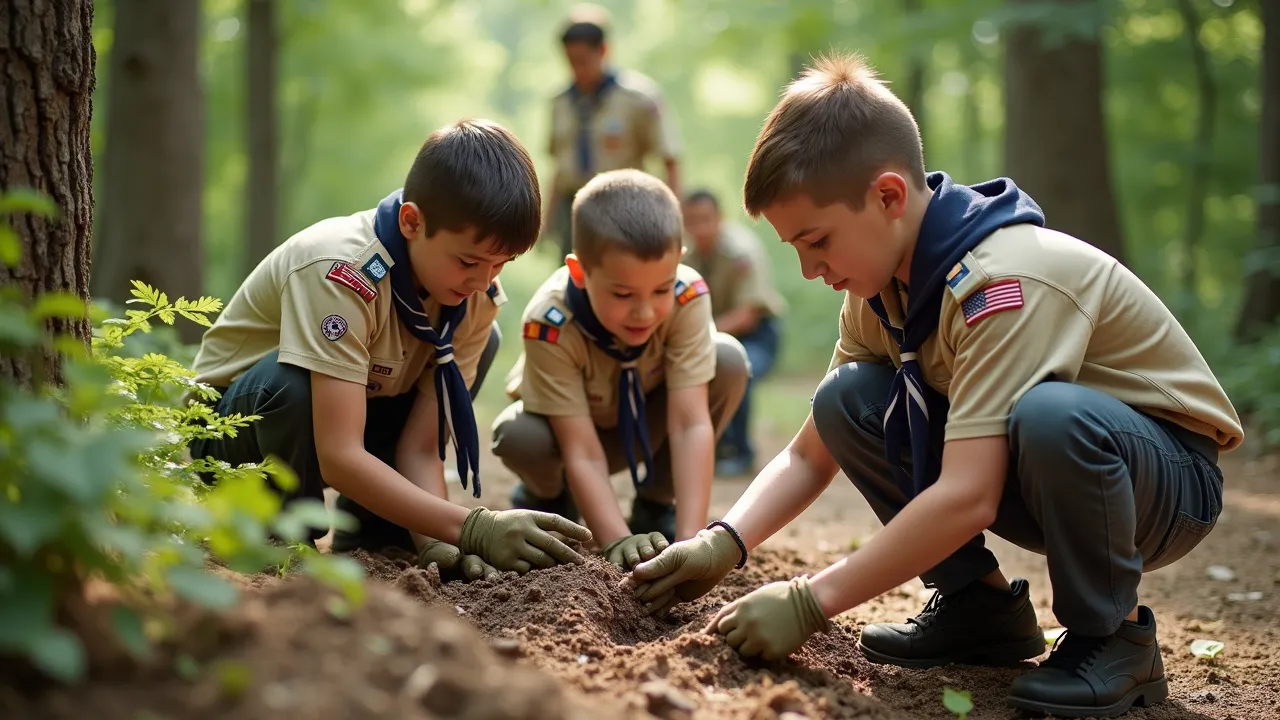
Boy Scouts Day, observed on February 8th, commemorates the founding of the Boy Scouts of America in 1910. It celebrates the values of leadership, outdoor skills, and community service that scouting instills in youth worldwide.
The Historical Origins & Evolutionary Journey
Boy Scouts Day, celebrated annually on February 8th, marks the founding of the Boy Scouts of America (BSA) in 1910. This day honors the scouting movement's enduring legacy of building character, fostering citizenship, and developing leadership skills in young people. The origins trace back to British Army officer Robert Baden-Powell, who founded the global scouting movement in 1907 with the first experimental camp on Brownsea Island. However, the American incarnation was sparked by a chance encounter in London.
The Foundational Catalyst
In 1909, Chicago publisher William D. Boyce became lost in a London fog. A young scout helped him find his way and refused a tip, explaining that he was a Scout and that helping others was his duty. Inspired, Boyce met with Baden-Powell and brought the scouting concept to America. On February 8, 1910, he incorporated the Boy Scouts of America, establishing a framework that would grow into one of the largest youth organizations in the United States.
The Legislative/Official Adoption
President William Howard Taft became the first honorary BSA president in 1912, and by 1916, the BSA received a federal charter from Congress. This charter solidified the organization's role in promoting citizenship and preparedness. Over the decades, Boy Scouts Day has been formally recognized by various presidential proclamations, encouraging communities to celebrate scouting's contributions.
Modern Global Legacy
Today, the scouting movement extends to over 170 countries, with the World Organization of the Scout Movement (WOSM) coordinating international efforts. Boy Scouts Day serves as a reminder of the importance of outdoor education, ethical decision-making, and service. While the BSA has evolved—including welcoming girls into its ranks in 2018—the core principles of the Scout Oath and Scout Law remain unchanged.
How to Celebrate Boy Scouts Day
Boy Scouts Day offers a perfect opportunity for scouts, alumni, and communities to honor the scouting spirit. Whether you're an active scout or simply want to support the movement, here are actionable ways to celebrate.
For Individual Scouts and Families
- Revisit the Scout Oath and Law: Recite them together and discuss their meaning in modern context.
- Complete a Good Turn: Perform a community service project, such as cleaning a local park or visiting a nursing home.
- Host a Campfire: Share stories, sing songs, and enjoy outdoor activities like hiking or knot-tying.
- Update Your Uniform: Wear your uniform proudly to school or work to spark conversations about scouting.
For Schools and Community Organizations
- Organize a Scouting Fair: Invite local troops to set up booths showcasing skills like first aid, orienteering, and cooking.
- Invite a Guest Speaker: Arrange for an Eagle Scout or scout leader to talk about leadership and service.
- Hold a Flag Ceremony: Teach proper flag etiquette and conduct a flag-raising event.
Corporate and Social Rituals
Businesses can celebrate by sponsoring scouting activities or offering discounts to scouts in uniform. Many communities host Scout Sunday on the nearest Sunday to February 8th, where scouts participate in church services in uniform. On February 8th, the BSA also encourages members to reflect on the founder's legacy through donation drives or volunteer hours.
Global Impact of Scouting
The scouting movement has profoundly influenced youth development worldwide. With over 57 million active scouts globally, the organization promotes peace, environmental stewardship, and cultural exchange.
International Programs and Initiatives
The World Scout Jamboree, held every four years, brings together tens of thousands of scouts from different countries to share experiences and foster global friendship. Additionally, the Messengers of Peace program encourages scouts to undertake community development projects addressing issues like hunger, literacy, and environmental protection.Regional Variations
While the core values remain similar, scouting adapts to local cultures. In Japan, scouting emphasizes disaster preparedness; in Brazil, it focuses on environmental conservation; and in Kenya, it includes education on health and agriculture. Boy Scouts Day is celebrated globally, often aligned with founding dates of national scouting organizations.Core Societal Themes and Values
Scouting instills timeless values that benefit individuals and communities. Key themes include:
- Leadership: Scouts learn to lead by example, managing teams and making ethical decisions.
- Outdoor Skills: From camping to navigation, scouting fosters a connection with nature and self-reliance.
- Citizenship: Service projects and flag ceremonies cultivate civic responsibility.
- Character Development: The Scout Law—trustworthy, loyal, helpful, friendly, courteous, kind, obedient, cheerful, thrifty, brave, clean, reverent—shapes moral fiber.
These values align with educational goals and community needs, making scouting a vital partner in youth development.
Industry Transformations and Scouting
Scouting has adapted to technological and societal changes. The STEM Scout program introduces science, technology, engineering, and math, preparing youth for modern careers. Merit badges like Robotics and Game Design reflect evolving interests. Additionally, scouting's emphasis on safety and first aid has influenced emergency response training protocols globally.
How to Get Involved Beyond Boy Scouts Day
To continue supporting scouting all year, consider volunteering as a troop leader, donating to local councils, or mentoring scouts working on Eagle projects. Many organizations offer family scouting options, allowing parents to participate alongside children. Virtual platforms, such as the BSA's Scoutbook, enable tracking achievements and connecting with other scouts.
Historical Timeline
Robert Baden-Powell holds the first experimental scout camp on Brownsea Island, England, marking the start of the scouting movement.
William D. Boyce meets a British scout in London, inspiring him to bring scouting to the United States.
The Boy Scouts of America is incorporated on February 8th in Washington, D.C.
President William Howard Taft becomes the first honorary president of the BSA.
The BSA receives a federal charter from the U.S. Congress, solidifying its national role.
The Cub Scout program is launched for younger boys.
The BSA's membership peaks at over 6 million participants.
The BSA celebrates its centennial with nationwide events and a jamboree at Fort AP Hill, Virginia.
The BSA begins admitting girls into all programs, rebranding as Scouts BSA for its older youth segment.
The BSA files for bankruptcy reorganization due to lawsuits over abuse claims, but continues operations.