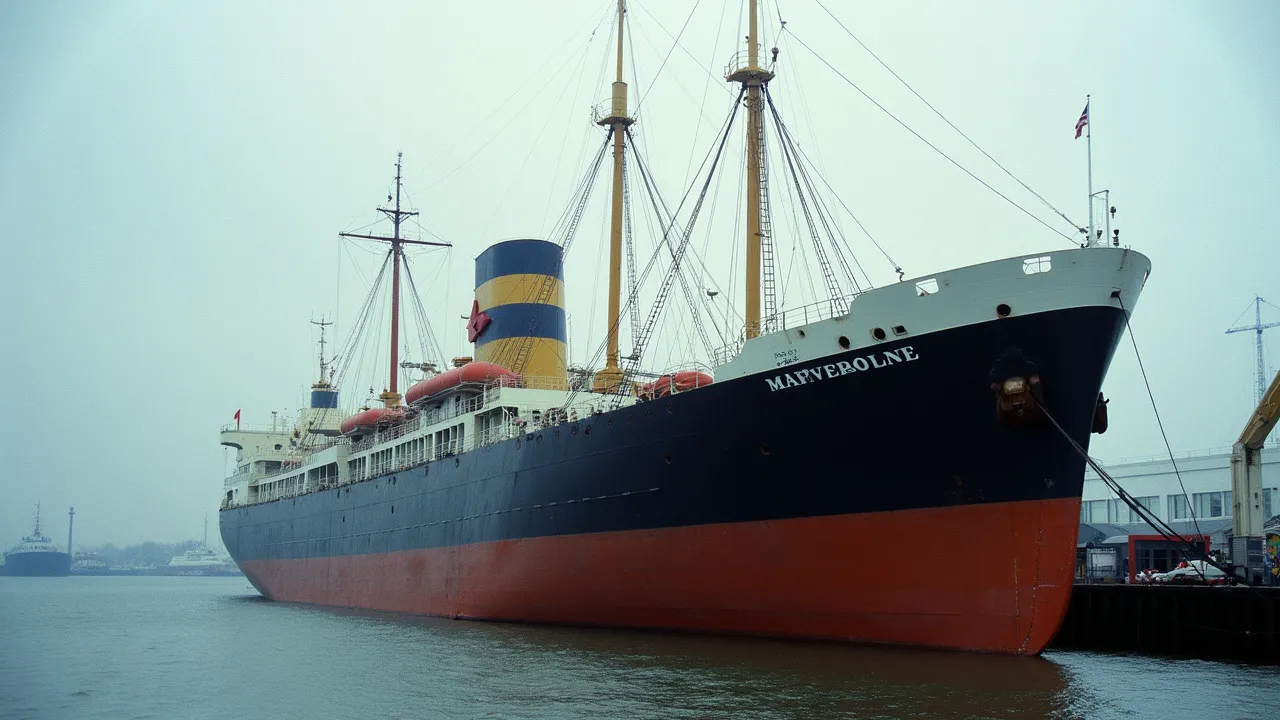
Plimsoll Day on February 10th honors Samuel Plimsoll, the British reformer who created the Plimsoll line, a safety mark on ships. It celebrates maritime safety and workers' rights.
The Historical Origins & Evolutionary Journey
Plimsoll Day commemorates the birth of Samuel Plimsoll (1824–1898), a British politician and social reformer whose tireless advocacy transformed maritime safety. His crowning achievement was the introduction of the Plimsoll line—a visible load line on a ship's hull that prevents overloading and capsizing. This day is observed on February 10th, Plimsoll's birthday, and serves as a reminder of the ongoing struggle for seafarers' rights and safety.
The Foundational Catalyst
In the mid-19th century, unseaworthy ships—dubbed 'coffin ships'—were a scandal in Britain. Shipowners often overloaded vessels and insured them beyond value, leading to thousands of needless deaths. Samuel Plimsoll, elected to Parliament in 1868, made this his cause célèbre. He authored 'Our Seamen: An Appeal' (1873) and campaigned relentlessly. In 1875, he published a list of unsafe ships, leading to public outrage and the eventual passage of the Merchant Shipping Act of 1876, which mandated a load line.
The Legislative/Official Adoption
The Plimsoll line became mandatory under British law after further amendments in the 1890s. The International Load Line Convention of 1930 globalized the requirement, and today the Plimsoll line is recognized worldwide under the International Convention on Load Lines (1966) enforced by the International Maritime Organization (IMO). Plimsoll Day gained formal recognition in the early 2000s, championed by maritime unions and safety organizations to honor his legacy.
Modern Global Legacy
Plimsoll's work continues to inspire safety campaigns beyond shipping—the concept of a 'Plimsoll line' has been applied metaphorically in fields like finance and healthcare to denote a safety threshold. His name remains synonymous with integrity and the fight against corporate greed.
How to Celebrate Plimsoll Day
Plimsoll Day offers opportunities for individuals, schools, and organizations to engage with maritime safety, history, and activism. Here are detailed ways to observe:
Individual Actions
- Learn and Share: Read about Samuel Plimsoll and the Plimsoll line. Share key facts on social media using #PlimsollDay.
- Visit a Maritime Museum: Many museums host Plimsoll Day exhibits. Alternatively, explore online archives.
- Support Seafarers' Charities: Donate to organizations like the Seafarers' International Relief Fund or the Mission to Seafarers.
School and Educational Activities
- Classroom Discussion: Teach students about maritime safety, the history of worker rights, and the importance of regulatory symbols.
- Art Project: Have children draw or model a ship with a visible Plimsoll line, explaining its function.
- Essay Contest: Host a short essay on 'Why safety regulations matter' for older students.
Corporate and Organizational Rituals
- Safety Audits: Shipping companies can perform special safety checks and renew their commitment to load line compliance.
- Plimsoll Lecture: Invite a maritime historian to speak at a company event or webinar.
- Press Release: Issue a statement highlighting the company's safety record and honoring Plimsoll's legacy.
Global Celebration Dynamics
In the United Kingdom, the day sees events at the Samuel Plimsoll statue in Bristol and at the Maritime Museum in Hull. In India, where the load line is critical for monsoon voyages, maritime institutes hold seminars. In Canada, the Canadian Coast Guard often shares safety tips. In Australia, maritime unions host barbecues and fundraisers for seafarers' welfare.
Global Impact on Maritime Safety
The Plimsoll line is one of the most universally recognized maritime symbols, representing a century-long safety legacy. Its impact extends beyond merchant shipping:
Reduction in Loss of Life
Before the load line, thousands of sailors died annually from overloading. After adoption, casualties dropped dramatically. The IMO estimates that compliance with load line regulations prevents hundreds of deaths per year worldwide.
Economic and Environmental Benefits
By ensuring vessels are not overloaded, the Plimsoll line reduces fuel consumption and emissions per ton of cargo, contributing to sustainable shipping. It also minimizes the risk of oil spills from overstrained hulls, protecting marine ecosystems.
Legal and Enforcement Frameworks
The Plimsoll line is enforced through port state control inspections and classification society surveys. Non-compliance can lead to detention and fines. The symbol has become a benchmark for ship condition, often serving as a quick visual check for surveyors.
Core Societal Themes: Reform and Workers' Rights
Plimsoll Day embodies themes of social justice, corporate accountability, and humanitarian reform. Samuel Plimsoll's fight was not just about ships but about valuing human life over profit. His story resonates with modern movements for consumer safety, labor rights, and environmental protection.
Parallels with Modern Reformers
Like Ralph Nader in auto safety or Erin Brockovich in environmental advocacy, Plimsoll used public outrage and data to push for systemic change. His method—publishing a list of dangerous ships—anticipated modern whistleblowing and consumer watchdog tactics.
Educational Value
Plimsoll Day teaches the power of individual persistence. It shows how one person can leverage democratic processes to protect the vulnerable. This theme is valuable for civics education and inspiring future activists.
Industry Transformations and Modern Relevance
Today, the maritime industry faces challenges that echo Plimsoll's era: flags of convenience, substandard shipping, and crew welfare crises. Plimsoll Day provides a touchstone for advocacy:
Flags of Convenience
Many ships register under flags with weak safety enforcement. Organizations like the Paris MoU use detention rates to target substandard ships, a direct continuation of Plimsoll's work.
Seafarer Rights During COVID-19
The pandemic left hundreds of thousands of seafarers stranded at sea. Plimsoll Day 2021 became a rallying point for unions demanding vaccinations and crew changes, linking his legacy to modern crises.
Digital Load Lines
New technologies like computer-based stability calculations complement the physical Plimsoll line, but the concept remains central. The IMO's International Code on Intact Stability (2008) updated load line principles for modern ship designs.
Plimsoll Day Observances Around the World
While February 10th is the primary global date, some regions incorporate related events on other dates:
- United States: The Coast Guard celebrates 'Maritime Safety Day' on a separate date, but many maritime academies hold Plimsoll events on February 10th.
- Europe: The European Maritime Safety Agency (EMSA) coordinates workshops near the date.
- Japan: The Japan Shipowners' Association uses the day to launch safety campaigns.
Despite regional variations, the core message of safety and reform unites all observances.
Historical Timeline
Samuel Plimsoll is born on February 10th in Bristol, England.
Plimsoll is elected to Parliament as a Liberal MP for Derby, committing to maritime reform.
Publication of 'Our Seamen: An Appeal', a pamphlet exposing the 'coffin ship' scandal.
Plimsoll publishes a list of unsafe ships, causing a public outcry. Prime Minister Disraeli agrees to legislation.
Merchant Shipping Act passed, requiring a load line. However, enforcement is weak initially.
Amended Merchant Shipping Act strengthens load line enforcement, making the Plimsoll line mandatory.
Samuel Plimsoll dies on June 3rd. His legacy is cemented as the 'sailors' friend'.
International Load Line Convention signed in London, globalizing the Plimsoll line standard.
International Convention on Load Lines adopted by the IMO, updating and harmonizing global regulations.
First official Plimsoll Day observed on February 10th, promoted by the Maritime Union of Australia and others.
Plimsoll Day 200th anniversary of his birth – major celebrations and academic conferences planned worldwide.