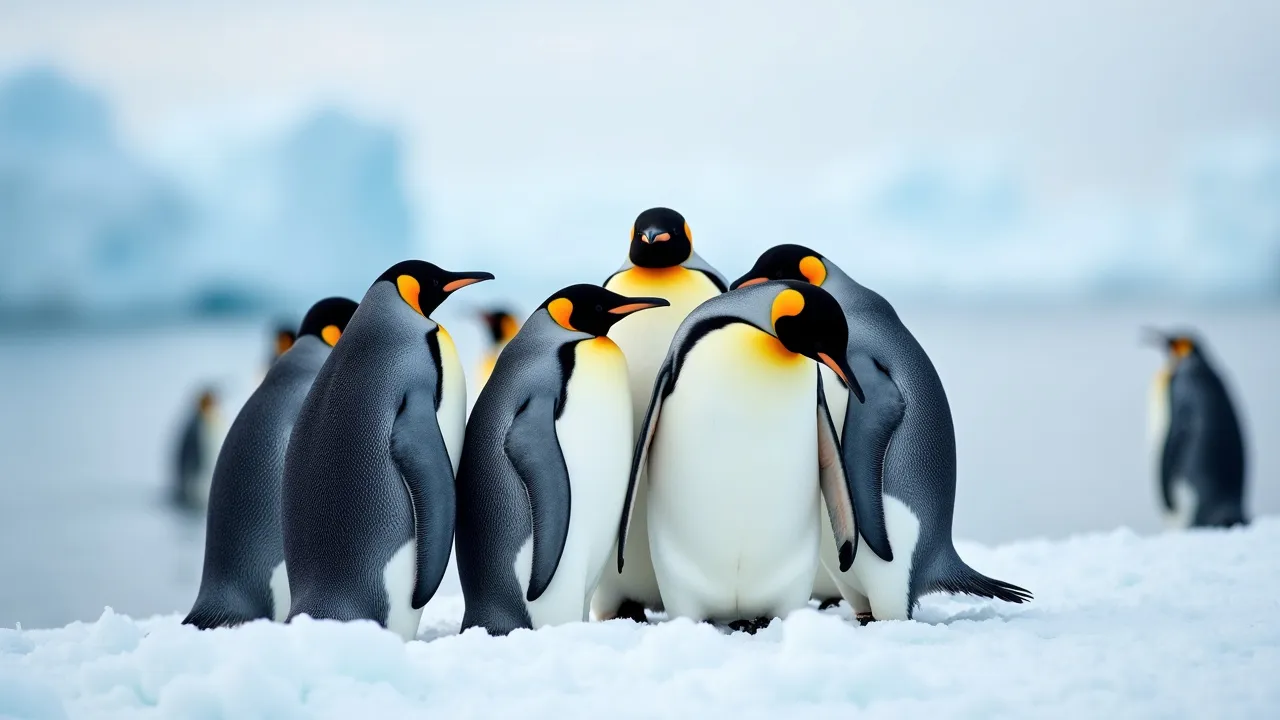
Penguin Awareness Day, observed on January 20th, is a global initiative to celebrate these charismatic seabirds and highlight conservation challenges they face, including climate change and habitat loss.
The Historical Origins & Evolutionary Journey
Penguin Awareness Day, observed annually on January 20th, was established by the Global Penguin Society (GPS) in 2001 to raise public awareness about penguin species, their habitats, and the pressing threats they face. The date was chosen to coincide with the peak of the Antarctic summer, when many penguin colonies are actively breeding and rearing chicks, making it an ideal time for researchers and the public to observe and learn about them.
The Foundational Catalyst
Penguins have captivated human imagination for centuries. Early explorers like Ferdinand Magellan in 1520 documented them, but it wasn't until the 20th century that scientific understanding grew. By the late 1990s, conservationists recognized that penguin populations were declining due to overfishing, pollution, and climate change. The GPS, founded by Dr. Pablo Garcia Borboroglu, spearheaded the creation of a dedicated awareness day to mobilize global action.
The Legislative/Official Adoption
The first official Penguin Awareness Day in 2001 featured educational programs in schools, documentary screenings, and fundraisers for penguin research. Over the years, it gained traction through social media campaigns and partnerships with zoos and aquariums worldwide. Unlike some holidays, it remains a grassroots observance rather than a legally recognized holiday, but its impact is profound.
Modern Global Legacy
Today, Penguin Awareness Day is marked by events on every continent. It has become a key date for launching conservation initiatives, such as the creation of marine protected areas in Antarctica and the implementation of sustainable fishing quotas. The day also serves as a reminder of the broader impact of climate change on polar ecosystems.
How to Celebrate Penguin Awareness Day
Celebrating Penguin Awareness Day can be both educational and fun. Below are actionable strategies for individuals, schools, and organizations.
For Individuals
- Learn About Penguins: Read books, watch documentaries like 'March of the Penguins', or visit reputable websites like the Global Penguin Society.
- Adopt a Penguin: Symbolically adopt a penguin through conservation organizations (e.g., World Wildlife Fund) to support habitat protection.
- Reduce Your Carbon Footprint: Penguins are threatened by climate change. Actions like using energy-efficient appliances, reducing plastic use, and supporting renewable energy help.
For Schools
- Organize a Penguin Day Event: Have students create penguin models, write reports, or present on different penguin species.
- Virtual Field Trips: Use online resources to explore Antarctic research stations or penguin cams.
- Fundraising Projects: Collect donations for penguin conservation charities.
For Organizations
- Host Educational Workshops: Invite experts to speak about penguin biology and conservation.
- Social Media Campaigns: Use hashtags like #PenguinAwarenessDay to spread facts and encourage engagement.
- Corporate Partnerships: Align with conservation groups for employee volunteering or matching gifts.
Globally, celebration styles vary. In Australia, schools focus on little penguins; in South Africa, African penguins are highlighted; and in the UK, zoos organize special talks. Antarctic research stations use the day for public outreach via live streams.
Penguin Species Diversity and Global Distribution
There are 18 distinct species of penguins, all found in the Southern Hemisphere. While Antarctica is home to emperor and Adélie penguins, other species inhabit temperate and even equatorial regions.
Antarctic Species
- Emperor Penguin: The largest, known for its extreme breeding cycle on sea ice.
- Adélie Penguin: One of the most widespread, with a distinctive white eye ring.
- Chinstrap and Gentoo Penguins: Also abundant around the Antarctic Peninsula.
Subantarctic and Temperate Species
- King Penguin: Second largest, found on subantarctic islands.
- Macaroni Penguin: Recognized by its yellow crests.
- Galápagos Penguin: The only species found north of the equator, adapted to tropical conditions.
Each species has unique adaptations, from the emperor's ability to withstand -60°C to the Galápagos penguin's cooling behaviors. Conservation efforts must account for these differences, as threats vary by region.
Threats to Penguin Populations
Penguins face multiple anthropogenic threats, many exacerbated by climate change. Understanding these challenges is crucial for effective conservation.
Climate Change
Rising temperatures reduce sea ice, which is essential for emperor penguins to breed and for krill, a primary food source. Changes in ocean currents alter prey availability, leading to malnutrition and lower chick survival rates.
Overfishing
Industrial fishing depletes fish stocks like anchovies and sardines, forcing penguins to travel farther for food, increasing energy expenditure and mortality.
Pollution
Oil spills, plastic ingestion, and chemical pollutants weaken immune systems and cause direct harm. Microplastics have been found in penguin guano, indicating widespread contamination.
Habitat Disturbance
Tourism and scientific research, if not managed responsibly, can disturb colonies. Introduced predators like rats and cats on islands have devastated some populations.
Conservation measures include Marine Protected Areas (MPAs), sustainable fishing certifications, and habitat restoration projects. The success of these interventions depends on global cooperation.
Conservation Success Stories and Ongoing Efforts
Despite challenges, several penguin species have seen recoveries thanks to targeted conservation actions.
African Penguin
Once declining rapidly due to egg collection and guano mining, protection of breeding sites and establishment of colonies under artificial shelters have stabilized some populations. The 'African Penguin Nest Project' provides simple ceramic nests that improve breeding success.
Yellow-eyed Penguin
Endemic to New Zealand, this species benefits from extensive predator control and habitat restoration. Community-led monitoring has been pivotal in reversing declines.
Magellanic Penguin
In Argentina, the Punta Tombo reserve protects a major colony. Eco-tourism revenue funds research and patrols against oil pollution.
Ongoing efforts include satellite tracking to identify important foraging areas, genetic studies to monitor diversity, and international agreements like the Antarctic Treaty System that regulate human activity. The Global Penguin Society's 'Penguin Conservation Action Plans' guide priority actions for each species.
Penguin Behavior and Biology: Fascinating Adaptations
Penguins are remarkably adapted to their environments, with unique behaviors that have evolved over millions of years.
Thermoregulation
To survive frigid temperatures, penguins have dense feathers, a layer of blubber, and specialized blood flow that reduces heat loss. They huddle together for warmth, taking turns on the outer edges.
Diving and Feeding
Emperor penguins can dive to depths of over 500 meters and hold their breath for up to 20 minutes. Their solid bones reduce buoyancy, and they have efficient oxygen storage in muscles.
Breeding and Parental Care
Many species form monogamous pairs during breeding seasons. Emperor penguins famously incubate a single egg on their feet under a brood pouch. Both parents share feeding duties, with one traveling long distances to bring food.
These adaptations make penguins subjects of scientific study for insights into physiology, evolution, and climate resilience. Their social structures also parallel some human behaviors, which fuels public fascination.
The Role of Zoos and Aquariums in Penguin Conservation
Zoos and aquariums play a critical role in penguin conservation through education, research, and breeding programs.
Education and Outreach
On Penguin Awareness Day, many institutions host special events, feedings, and talks. They provide up-close encounters that inspire visitors to care about wild penguins. Interactive exhibits teach about threats and solutions.
Research
Controlled environments allow scientists to study penguin behavior, health, and reproduction without logistical constraints of Antarctic fieldwork. Insights from captive populations inform wild conservation strategies.
Breeding Programs
Managed breeding helps maintain genetic diversity for vulnerable species like the African penguin. Offspring may be released into the wild to bolster populations, though such efforts are complex and require habitat preparation.
Accredited institutions adhere to ethical standards, prioritizing animal welfare. Critics argue that captivity cannot mimic natural conditions, but proponents highlight the conservation value. Overall, zoos and aquariums serve as ambassadors for penguins, connecting urban audiences to distant ecosystems.
Historical Timeline
Ferdinand Magellan's expedition records sighting penguins in South America, the first European documentation.
Scientific studies on penguin populations begin, leading to understanding of their life cycles and ecology.
The Antarctic Treaty is strengthened to protect marine living resources, including penguins.
Global Penguin Society (GPS) is founded by Dr. Pablo Garcia Borboroglu to coordinate penguin conservation worldwide.
First Penguin Awareness Day observed on January 20th, initiated by GPS and partner organizations.
The documentary 'March of the Penguins' wins an Academy Award, dramatically boosting public interest in emperor penguins.
The International Union for Conservation of Nature (IUCN) lists several penguin species as threatened, spurring new conservation actions.
Penguin Awareness Day gains global online traction with millions of social media engagements, highlighting climate change impacts.
New satellite technology enables real-time tracking of penguin colonies, improving conservation planning.