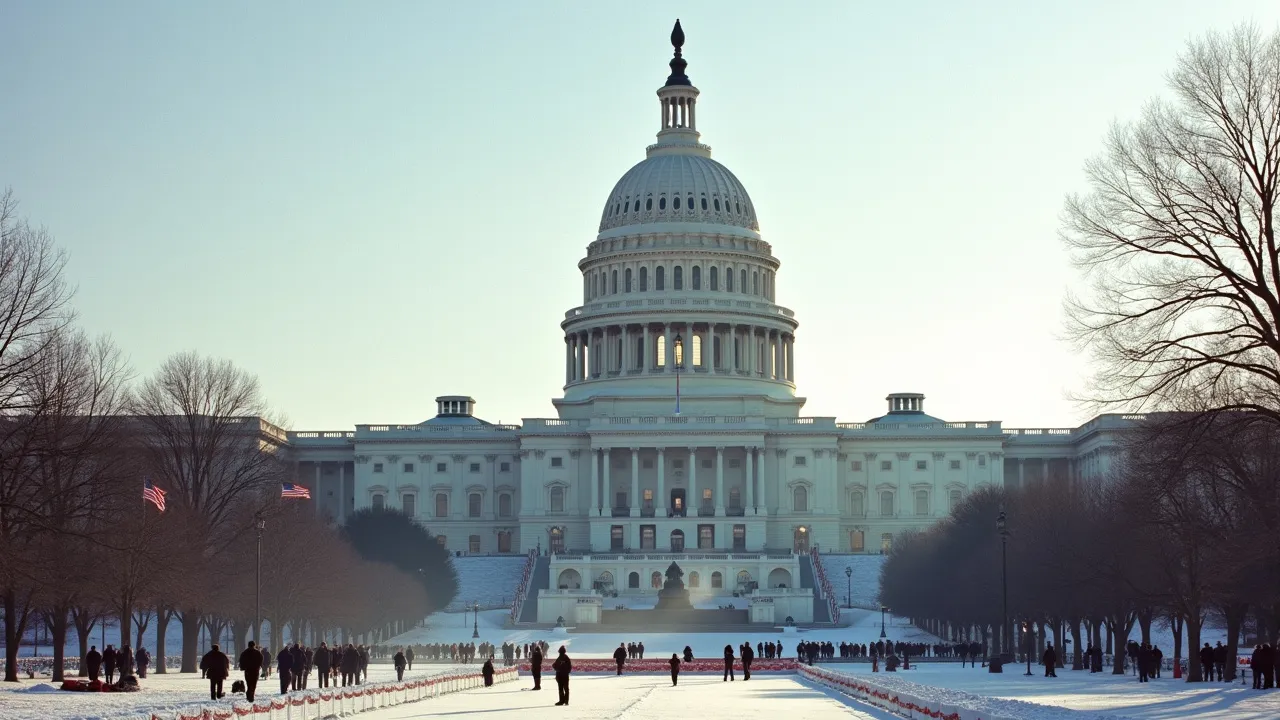
Inauguration Day, observed every four years on January 20th, marks the official start of a new U.S. presidential term. This day features the swearing-in ceremony, inaugural address, and peaceful transfer of power.
The Historical Origins & Evolutionary Journey
Inauguration Day is the cornerstone of American democracy, symbolizing the peaceful transfer of executive power. Its roots trace back to the founding of the republic.
The Foundational Catalyst
The U.S. Constitution, drafted in 1787, established the presidency but left the exact date of inauguration open. George Washington's first inauguration took place on April 30, 1789, in New York City. The ceremony was simple yet profound: Washington took the oath of office on a second-floor balcony of Federal Hall, witnessed by a crowd of dignitaries and citizens. This event set the precedent for all future inaugurations.
The Legislative/Official Adoption
For over a century, Inauguration Day varied, often falling on March 4. The long gap between the November election and March swearing-in became problematic, especially during crises like the Civil War and Great Depression. The Twentieth Amendment, ratified in 1933, moved the date to January 20, reducing the lame-duck period. Franklin D. Roosevelt's second inauguration on January 20, 1937, was the first under this new date. Since then, the date has remained fixed, except when January 20 falls on a Sunday, in which case a private ceremony is held on Sunday and the public celebration on Monday.
Modern Global Legacy
While Inauguration Day is distinctly American, its principles have influenced democratic transitions worldwide. Many countries have adopted similar rituals for their presidential or parliamentary inaugurations, emphasizing the peaceful handover of power as a hallmark of good governance. The event is now a major media spectacle, broadcast globally, and includes traditions like the inaugural address, parade, and inaugural balls.
How to Celebrate Inauguration Day
Inauguration Day is both a solemn ceremony and a public celebration. Here are ways to observe it:
For Individuals and Families
- Watch the Ceremony: Tune into live broadcasts of the swearing-in, inaugural address, and parade. Discuss the themes and promises made by the new president.
- Host an Inauguration Party: Invite friends to watch the events, serve American-themed food, and hold a friendly debate about the incoming administration's priorities.
- Volunteer: Many organizations host service projects on Inauguration Day, emphasizing the theme of national unity. Check local community centers for opportunities.
For Schools and Universities
- Teach the Process: Incorporate lessons on the Electoral College, the oath of office, and the constitutional significance of the day.
- Simulate a Debate: Have students role-play as presidents delivering an inaugural address, focusing on unifying rhetoric.
- Write a Letter to the President: Encourage students to express their hopes and concerns, practicing civic engagement.
For Organizations and Businesses
- Host a Viewing Event: Provide a space for employees to watch the ceremony together, fostering a sense of shared civic duty.
- Promote Civic Education: Distribute materials about the importance of peaceful transitions, highlighting the day's historical significance.
Regional Variations
While Inauguration Day is a federal holiday in the United States (observed by federal employees in the D.C. area), other countries have similar ceremonies. For example, Mexico holds its presidential inauguration on December 1 every six years; France inaugurates its president within ten days of the election; and South Africa holds a presidential inauguration after parliamentary elections. Each country adapts the celebration to its own cultural context, but the core idea of a peaceful transfer remains universal.
Constitutional and Legal Framework
The legal basis for Inauguration Day is enshrined in the U.S. Constitution. Article II, Section 1 requires the president-elect to take an oath or affirmation before assuming office. The exact wording is: "I do solemnly swear (or affirm) that I will faithfully execute the Office of President of the United States, and will to the best of my Ability, preserve, protect and defend the Constitution of the United States."
The Twentieth Amendment
Ratified in 1933, the Twentieth Amendment moved the start of the president's term from March 4 to January 20. This change aimed to reduce the "lame-duck" period and ensure quicker response to national needs. Section 1 of the amendment states: "The terms of the President and the Vice President shall end at noon on the 20th day of January." This exact timing – noon – is when the new president officially becomes commander-in-chief.
Succession and Contingencies
The Constitution also provides for scenarios where the president-elect is unable to take the oath. The Presidential Succession Act of 1947 outlines the order of succession. In the event of death or resignation, the Vice President becomes President. Inauguration Day proceeds regardless, with the Chief Justice of the Supreme Court traditionally administering the oath.
Symbolism and Traditions
Inauguration Day is rich with symbolic actions and cherished traditions that reinforce national identity.
The Oath of Office
The swearing-in ceremony, held at the U.S. Capitol, is the centerpiece. The president-elect places a hand on a Bible (often a historic family Bible or one used by a previous president) and repeats the oath. George Washington added "So help me God" after his oath, a phrase now customary though not mandatory.
The Inaugural Address
Following the oath, the new president delivers an inaugural address, outlining their vision for the nation. Iconic addresses include Abraham Lincoln's second inaugural ("With malice toward none") and John F. Kennedy's "Ask not what your country can do for you."
The Parade
The inaugural parade travels from the Capitol to the White House along Pennsylvania Avenue. It features military units, marching bands, floats, and community organizations, showcasing American diversity.
Inaugural Balls
Evening balls have been held since James Madison's inauguration in 1809. These galas are often themed and include performances by popular artists, offering a celebratory end to the day.
Other Traditions
National Prayer Service: Held the morning after, at the Washington National Cathedral, to pray for the new administration.
Luncheon: The Joint Congressional Committee on Inaugural Ceremonies hosts a luncheon for the president, Vice President, and guests inside the Capitol.
Outgoing President's Departure: A symbolic gesture of respect as the former president leaves the Capitol via helicopter.
Inauguration Day Around the World
While Inauguration Day is uniquely American, many countries hold similar ceremonies marking the start of a leader's term. Here are notable examples:
United Kingdom
The monarch's coronation is a form of inauguration, but the Prime Minister is not formally inaugurated. Instead, the new PM meets the monarch and forms a government immediately after election results.
France
The President-elect is inaugurated at the Élysée Palace. The ceremony includes a military salute, a private meeting with the outgoing president, and a public address.
India
The President of India takes office at a ceremony in the Central Hall of Parliament, administered by the Chief Justice. The event includes a 21-gun salute and a speech.
Russia
The inauguration of the President of Russia takes place in the Grand Kremlin Palace, with the president swearing on the Constitution. The ceremony includes a military parade and a blessing by the Patriarch.
South Africa
The President is inaugurated at the Union Buildings in Pretoria. The event features a 21-gun salute, flyover by the Air Force, and a public address.
These ceremonies, despite cultural differences, share core elements: an oath or pledge, a public speech, and military honors, underscoring the universal importance of peaceful transitions.
Impact on Governance and Public Life
Inauguration Day has a profound impact on the functioning of the U.S. government and society.
Peaceful Transfer of Power
The day serves as a powerful reaffirmation of democratic principles. Regardless of political differences, the transition is peaceful and orderly, a contrast to many other nations. This sets an example worldwide.
Economic and Security Preparations
Inauguration Day is a massive security operation, involving the Secret Service, FBI, DHS, and military. The National Special Security Event (NSSE) designation triggers extensive planning. Local businesses in D.C. see a surge in tourism, while federal offices close for the day.
Media Coverage and Public Engagement
Major networks and online platforms provide live coverage. Social media amplifies the event, with hashtags like #InaugurationDay trending globally. Public engagement spikes, with discussions on policy directions and national unity.
Long-Term Effects
The inaugural address often sets the tone for the presidency, influencing legislative agendas and public opinion. For example, Franklin D. Roosevelt's "only thing we have to fear is fear itself" rallied a nation during the Great Depression. Inauguration Day thus launches the president's tenure with a defining moment.
Historical Timeline
George Washington is inaugurated as the first President of the United States on April 30 in New York City, establishing the tradition of the oath of office and inaugural address.
Thomas Jefferson becomes the first president inaugurated in Washington, D.C., at the Capitol building. He sets a precedent by walking to the ceremony.
Abraham Lincoln delivers his second inaugural address, famously calling for 'malice toward none' and 'charity for all' just weeks before his assassination.
The Twentieth Amendment is ratified, moving Inauguration Day from March 4 to January 20. Franklin D. Roosevelt's second inauguration on January 20, 1937, is the first under the new date.
Franklin D. Roosevelt is inaugurated for his fourth term, but due to wartime austerity, the ceremony is simple and held at the White House rather than the Capitol.
Lyndon B. Johnson is sworn in aboard Air Force One hours after John F. Kennedy's assassination, marking the only time a president has taken the oath on an airplane.
Ronald Reagan's inauguration is moved indoors due to extreme cold, and he famously delivers his address from the Capitol's Rotunda.
Barack Obama is inaugurated as the first African American president, drawing a record crowd of an estimated 1.8 million people to the National Mall.
Due to security concerns after the January 6 Capitol attack, Joe Biden's inauguration takes place with heavy security and no public crowd on the Mall, but is widely viewed online.