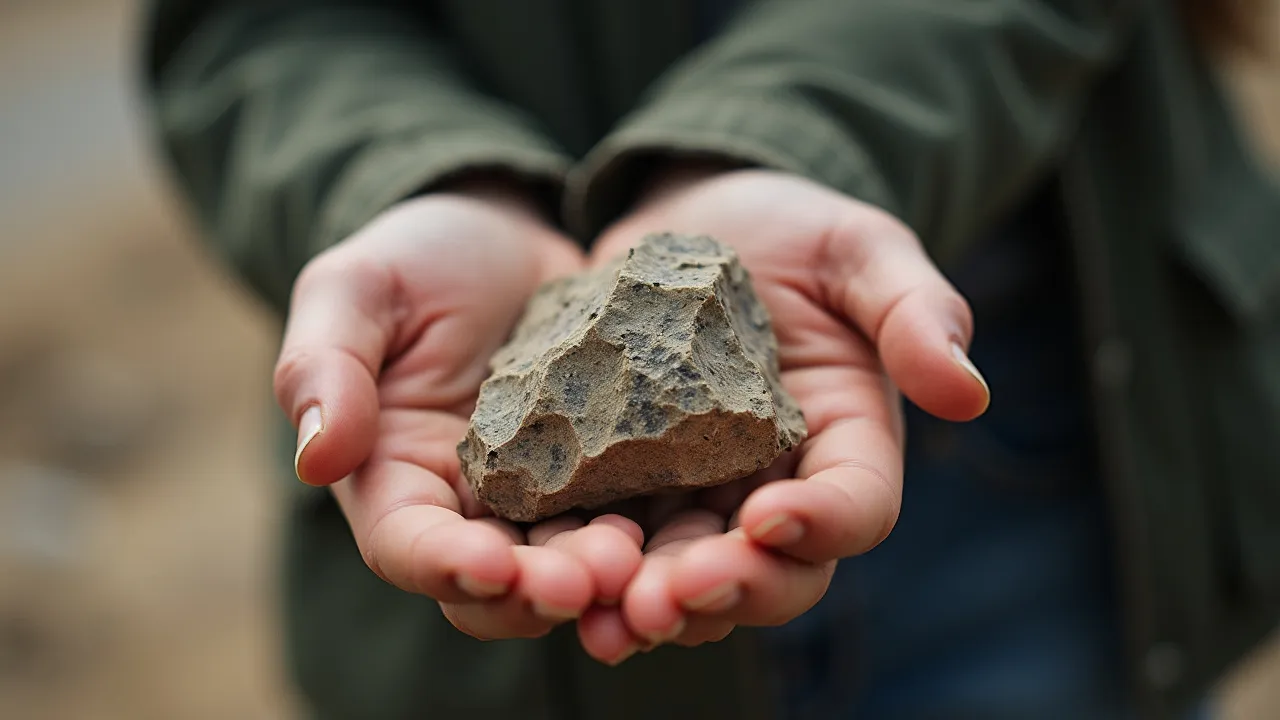
Old Rock Day, observed annually on January 7th, celebrates geology, rock collecting, and the natural history embedded in Earth's stones. It's a day to appreciate the beauty and scientific importance of rocks.
The Historical Origins & Evolutionary Journey of Old Rock Day
Old Rock Day began as a grassroots observance among amateur geologists and rock hounds in the early 2000s. Its exact origins are obscure, but the day quickly gained traction through internet forums and local rock clubs. The date January 7th was chosen arbitrarily, perhaps as a post-holiday celebration of nature's timeless artifacts.
The Foundational Catalyst
The rise of Earth science education in the late 20th century sparked public interest in fossils, minerals, and rocks. Initiatives like National Earth Science Week (started in 1998) helped popularize geology. Old Rock Day emerged as a fun, informal companion to these educational efforts.
The Official Adoption
In 2001, several rock-collecting clubs in the United States began promoting January 7 as "Old Rock Day" through newsletters and early websites. The observance was never officially proclaimed by any government, but museums and schools gradually adopted it. By 2010, it appeared in many online calendar listings.
Modern Global Legacy
Today, Old Rock Day is celebrated by geologists, hobbyists, and educators worldwide. While strongest in North America, the day has inspired rock swaps, museum exhibits, and social media campaigns like #OldRockDay. Its enduring appeal lies in the universal human fascination with stones—from ancient tools to glittering crystals.
How to Celebrate Old Rock Day
Observing Old Rock Day can be as simple or elaborate as you wish. Below are actionable ideas for individuals, families, and groups, organized by setting.
For Individuals
- Start a rock collection: Find a unique specimen in your yard or local park.
- Visit a geological site: National parks, state parks, or even a roadside outcrop offer hands-on learning.
- Read a geology book: Titles like 'Annals of the Former World' by John McPhee are classic.
For Schools & Families
- Rock painting: Decorate stones with positive messages or artistic patterns.
- Science experiments: Test hardness, streak, or acid reaction of different rocks.
- Fossil hunt: Join a local fossil club or use online guides to identify common fossils.
For Organizations & Clubs
- Rock swaps: Trade specimens with other collectors.
- Guest lectures: Invite a geologist to speak about local geology.
- Field trips: Organize excursions to quarries, mines, or natural formations.
In some regions, such as the UK and Australia, Old Rock Day is also an opportunity to promote geotourism and responsible collecting. Always follow ethical guidelines: obtain permission before collecting, avoid protected areas, and respect private property.
The Scientific Significance of Rocks
Rocks are Earth's history books. They contain clues about ancient environments, climates, and life forms. Old Rock Day underscores the importance of geology in understanding our planet.
Rock Types and Formation
- Igneous: Formed from cooled magma or lava (e.g., granite, basalt).
- Sedimentary: Layers of sediment compressed over time (e.g., limestone, sandstone).
- Metamorphic: Transformed by heat and pressure (e.g., marble, slate).
Rocks as Timestamps
Geologists use radiometric dating to determine rock ages. The oldest known rocks on Earth are about 4.4 billion years old, found in Canada and Australia. These ancient rocks helped scientists date the planet's formation.
Economic and Cultural Importance
Rocks provide essential minerals for technology, construction, and jewelry. From the flint used by early humans to the lithium in modern batteries, rocks drive civilization. Old Rock Day reminds us of this deep connection.
Rock Collecting as a Hobby: Tips and Etiquette
Rock collecting is one of the most accessible hobbies. Successful collectors follow these guidelines:
Getting Started
- Choose a focus: Fossils, minerals, or local rocks? Specialization adds depth.
- Essential tools: A rock hammer, safety goggles, field guide, and sturdy bag.
- Documentation: Label each specimen with location, date, and type.
Field Safety
- Always wear eye protection when chipping rocks.
- Check for falling rocks or unstable slopes.
- Carry water and inform someone of your plans.
Ethical Collecting
- Legal considerations: Obtain permits on public lands; never collect in national parks without permission.
- Leave no trace: Fill holes, don't vandalize outcrops.
- Share your finds: Donate interesting specimens to local museums or schools.
Old Rock Day is the perfect time to review these practices and introduce newcomers to the hobby.
Notable Rocks and Their Stories
Throughout history, certain rocks have captured human imagination. Here are a few famous examples:
- The Hope Diamond: A 45.52-carat blue diamond, believed to be cursed but scientifically fascinating.
- Stonehenge: Massive sarsen and bluestone monoliths in England, some sourced from over 200 kilometers away.
- Uluru (Ayers Rock): A sandstone monolith in Australia, sacred to Indigenous Anangu people.
- Lunar Rocks: Samples brought back by Apollo missions, revealing the Moon's volcanic history.
These rocks inspire awe and remind us that geology is interwoven with human culture.
Modern Digital Rock Hounding: Apps and Communities
Technology has transformed rock collecting. Today, enthusiasts can identify specimens instantly and connect globally.
Useful Apps
- Rock Identifier: AI-based identification from photos.
- Geology Toolkit: Includes hardness scale, streak test, and mineral database.
- Mindat.org: Crowdsourced mineral locality database.
Online Communities
Reddit's r/rockhounds, Facebook groups, and the International Gem Society forum allow collectors to share finds and ask for advice. Old Rock Day often sees a surge in online activity, with members posting their best specimens.
While digital tools are helpful, they should complement rather than replace hands-on learning. Use Old Rock Day to put down the phone and pick up a real rock.
Historical Timeline
Oldest known Earth rock formed (Acasta Gneiss, Canada).
Oldest sedimentary rocks preserved in Australia, containing stromatolite fossils.
Stonehenge construction begins using sarsen stones from Marlborough Downs, UK.
Christopher Columbus discovers the New World; native rocks including jade and obsidian are later studied.
James Hutton publishes 'Theory of the Earth', founding modern geology.
First known rock and mineral collection donated to a museum (British Museum).
Alfred Wegener proposes continental drift, supported by rock formations matching across continents.
Apollo 15 returns 'Genesis Rock' from the Moon, anorthosite dating to 4.1 billion years.
First known unofficial celebration of Old Rock Day on January 7th.
Old Rock Day trends on social media; rock clubs worldwide host virtual events due to pandemic.