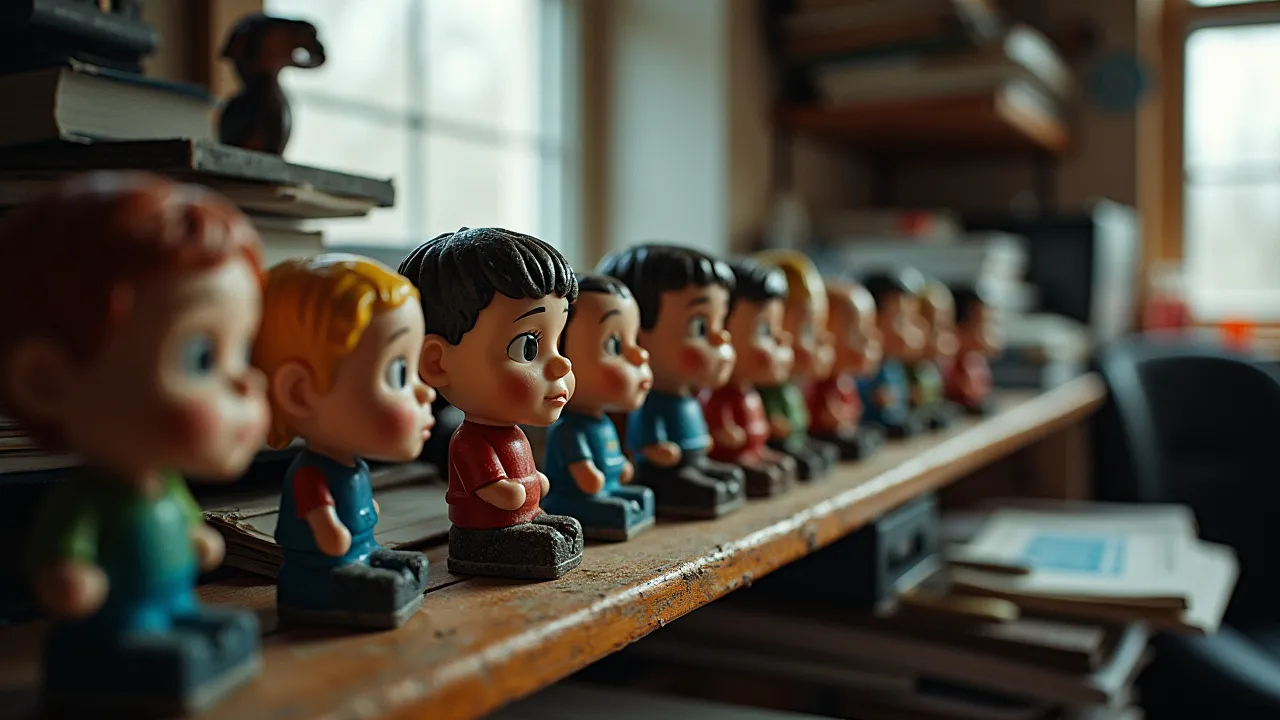
National Bobblehead Day, observed annually on January 7th, celebrates the iconic nodding figurines that have delighted collectors and sports fans since the 1960s. Join enthusiasts in honoring these whimsical collectibles.
The Historical Origins & Evolutionary Journey of Bobbleheads
National Bobblehead Day, observed every January 7th, is a tribute to the spring-headed figurines that have become a staple of sports memorabilia and pop culture. The bobblehead’s journey began long before the modern era, rooted in ancient nodding figures.
The Foundational Catalyst: Ancient and Early Precursors
Nodding figures have been found in ancient Chinese and Egyptian tombs, dating back thousands of years. However, the first mass-produced bobbleheads appeared in the 1960s. In 1960, a set of four papier-mâché bobbleheads of baseball players (Roberto Clemente, Mickey Mantle, Roger Maris, and Willie Mays) were produced, but they were not widely distributed. The real breakthrough came in the 1990s when the San Francisco Giants released a bobblehead of star player Will Clark, igniting the bobblehead giveaway craze.
The Legislative/Official Adoption: How National Bobblehead Day Came to Be
The National Bobblehead Hall of Fame and Museum, located in Milwaukee, Wisconsin, founded National Bobblehead Day in 2017. The date January 7th was chosen to mark the anniversary of the first known patent for a bobblehead-like doll, filed by an American inventor in 1914. The day quickly gained traction among collectors and teams, and now serves as an annual celebration of all things bobblehead.
Modern Global Legacy
Today, bobbleheads are given away at sporting events, sold as promotional items, and collected by enthusiasts worldwide. The National Bobblehead Hall of Fame houses over 10,000 unique bobbleheads, and the day is marked by special releases, museum exhibits, and social media celebrations.
How to Celebrate National Bobblehead Day
National Bobblehead Day offers myriad ways to participate, from personal collecting to community events. Below are actionable strategies for individuals, schools, and organizations.
For Individuals and Collectors
- Start or expand a collection: Visit local thrift stores, online marketplaces, or attend toy shows to find rare bobbleheads.
- Display your bobbleheads: Create a dedicated shelf or shadow box to showcase your favorites.
- Host a bobblehead photo contest: Share creative photos on social media using #NationalBobbleheadDay.
For Schools and Educational Institutions
- History lesson: Teach students about the origins of bobbleheads and their cultural impact.
- Art project: Have students create their own bobblehead designs using clay or paper mache.
- School giveaway: Partner with a local sports team to distribute bobbleheads as rewards.
For Organizations and Sports Teams
- Promotional giveaways: Plan a bobblehead night at a game or event.
- Charity auctions: Auction off signed or rare bobbleheads for a good cause.
- Social media campaigns: Encourage fans to post pictures of their bobblehead collections.
In Japan, bobbleheads (known as "nodding dolls") are often given as lucky charms. In the UK, they appear in football culture. Adapt these ideas to your local customs.
The Bobblehead as a Marketing and Promotional Powerhouse
Bobbleheads have become a cornerstone of sports marketing and corporate promotions. Their nodding heads and customizable designs make them irresistible to fans.
Why Bobbleheads Work
According to marketing studies, bobblehead giveaways increase game attendance by 20-30%. They are affordable to produce (costing as low as $2 per unit in bulk) and create lasting brand loyalty. Teams often release limited-edition bobbleheads of star players, turning them into valuable collectibles.
Corporate and Political Use
Beyond sports, companies use bobbleheads for trade shows and product launches. Political campaigns have also leveraged them—Barack Obama and Donald Trump bobbleheads were popular during election cycles. The bobblehead’s humorous, exaggerated features make it a memorable giveaway.
Collecting Bobbleheads: Investing in Pop Culture History
Bobblehead collecting is a serious hobby with a thriving secondary market. Rare pieces can fetch thousands of dollars.
Most Valuable Bobbleheads
- 1960s papier-mâché bobbleheads: Only a handful exist, valued at over $10,000.
- Michael Jordan Chicago Bulls bobblehead (1990s): Worth up to $5,000.
- President Donald Trump bobblehead (2016): Some limited editions sold for $1,000+.
How to Start Collecting
- Choose a theme: Focus on a specific sport, team, or era.
- Check authenticity: Look for official licensing logos.
- Network with other collectors: Join online forums and attend collector shows.
The National Bobblehead Hall of Fame offers a free app for cataloging collections.
The Art and Science Behind Bobblehead Design
Creating a bobblehead involves sculpting, molding, and engineering the spring mechanism that gives the head its signature bobble.
Design Process
Artists first sculpt a 3D model in clay or digitally. A mold is made, and the figure is cast in resin or plastic. The head is attached to a spring anchored in the body, allowing it to wobble when tapped.
Materials
- Ceramic: Heavy and fragile, used for premium editions.
- Plastic/Resin: Lightweight and durable, ideal for giveaways.
- Papier-mâché: Historical material, rarely used today.
Innovations
Modern bobbleheads include LED lights, sound chips, and even bobbling heads that are interactive via smartphone apps. The National Bobblehead Hall of Fame features a "Talking Bobblehead" exhibit.
Global Variations and Cultural Significance
While National Bobblehead Day is primarily observed in the United States on January 7th, bobbleheads have unique traditions worldwide.
Japan: Nodding Daruma
Japan has a long tradition of "nodding Daruma" dolls, which are believed to bring good luck. These are not exactly bobbleheads but share the nodding feature. Japanese collectors often seek American sports bobbleheads as exotic imports.
Europe: Football Culture
In the UK and Germany, bobbleheads of football (soccer) players are popular. Clubs like Manchester United and Bayern Munich have released limited-edition bobbleheads. Bobblehead Day in Europe is often celebrated by attending matches with bobblehead giveaways.
Other Regions
In Latin America, luchador bobbleheads are collectibles. In Africa, bobbleheads of political figures and musicians are emerging. The global appeal lies in the bobblehead’s universal ability to caricature and celebrate icons.
Historical Timeline
First known patent for a bobblehead-like doll filed by an American inventor, marking the conceptual origin.
First mass-produced bobbleheads of baseball players created from papier-mâché, though only a few sets survive.
San Francisco Giants hold a bobblehead giveaway for Will Clark, sparking the modern craze among sports teams.
Major League Baseball teams start regular bobblehead promotions, with the New York Yankees and others following.
National Bobblehead Hall of Fame and Museum establishes National Bobblehead Day on January 7th.
Bobblehead industry reaches $1 billion in annual sales, with over 100 million bobbleheads sold worldwide.