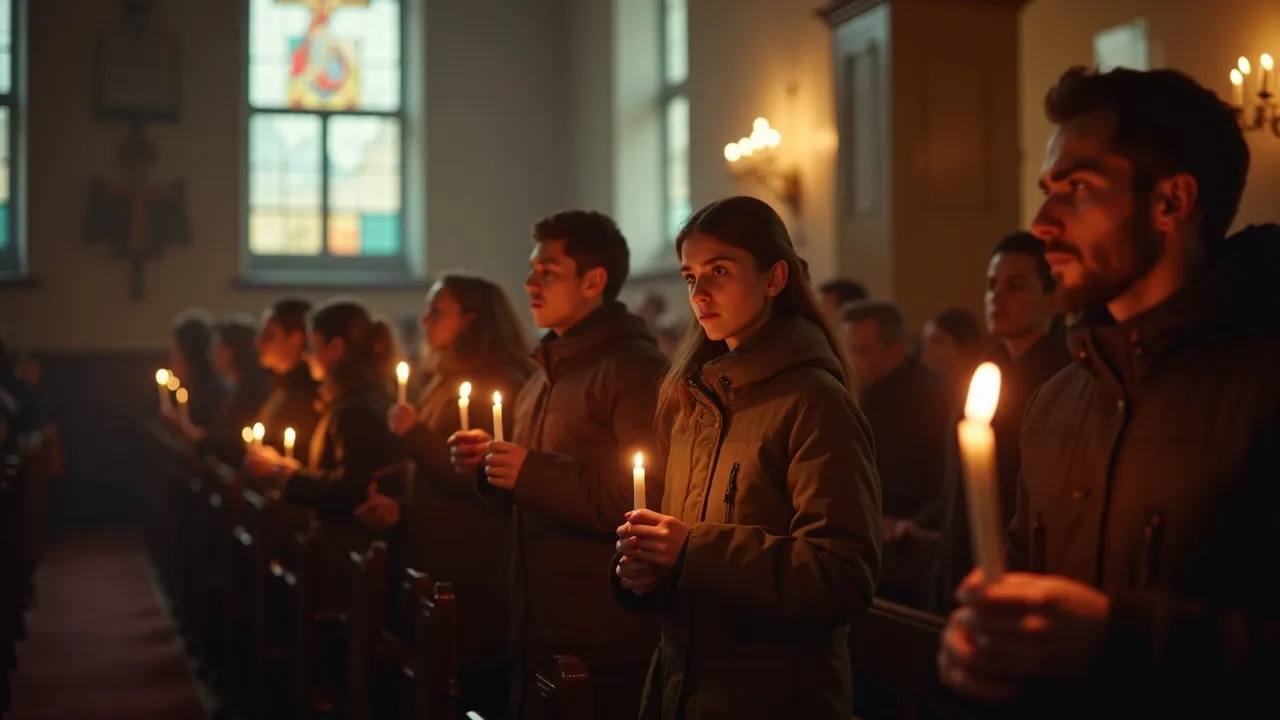
Orthodox Christmas Day, celebrated on January 7th, honors the birth of Jesus Christ according to the Julian calendar. It is a major religious and cultural holiday for Eastern Orthodox Christians worldwide.
The Historical Origins & Evolutionary Journey
Orthodox Christmas Day, observed on January 7th, traces its roots to the earliest centuries of Christianity. The celebration of the birth of Jesus Christ, known as the Nativity, was established as a major feast by the 4th century. However, the date of January 7th emerged due to the adoption of the Julian calendar by the Eastern Orthodox Church, while Western churches later shifted to the Gregorian calendar.
The Foundational Catalyst
The early Christian church initially celebrated the Nativity on January 6th in conjunction with Epiphany, commemorating both Christ's birth and baptism. By the late 4th century, the Western church moved the Nativity to December 25th to counter pagan festivals. The Eastern church gradually adopted December 25th as well, but the Julian calendar remained in use, resulting in a delay of 13 days relative to the Gregorian calendar. Thus, December 25th on the Julian calendar corresponds to January 7th on the Gregorian calendar.
The Calendar Divide
The introduction of the Gregorian calendar by Pope Gregory XIII in 1582 aimed to correct the drift of the equinox. While most Roman Catholic and Protestant countries adopted it, the Eastern Orthodox churches largely retained the Julian calendar for liturgical purposes. This created a permanent divergence: Orthodox Christmas falls on January 7th for churches that follow the Julian calendar, such as the Russian, Georgian, and Serbian Orthodox churches. Some Orthodox churches, like the Greek and Romanian, have adopted the Revised Julian calendar, which places Christmas on December 25th alongside the Western date.
Modern Global Legacy
Today, Orthodox Christmas Day is a profound expression of faith and cultural identity for millions. In countries like Russia, Ukraine, and Ethiopia, it is a public holiday marked by solemn church services, family gatherings, and rich traditions. Diaspora communities worldwide maintain these customs, often blending local influences. The persistence of the Julian calendar has preserved a unique heritage, making Orthodox Christmas a distinct and sacred observance.
How to Celebrate Orthodox Christmas Day
Celebrating Orthodox Christmas Day involves a blend of religious devotion, family traditions, and cultural customs. Here is a comprehensive guide for individuals, families, and communities.
Preparations and Fasting
Advent Fast: Many Orthodox Christians observe a 40-day Nativity Fast (Advent) from November 28th to January 6th, abstaining from meat, dairy, and sometimes fish. The fast ends after the Christmas Eve service.
Christmas Eve (January 6th)
Attend the Divine Liturgy: The All-Night Vigil or Vespers is held on the evening of January 6th. Many churches also hold a festive Liturgy at midnight or early morning.
Set the Table: Prepare a Holy Supper (Sochelnik) with 12 Lenten dishes representing the 12 Apostles. Common dishes include kutia (wheat berry pudding), borscht, and fish.
Light the Yule Log: In some traditions, a yule log is burned to symbolize the light of Christ entering the world.
Exchange Gifts: While gift-giving varies, some families exchange presents on Christmas Eve or morning.
Christmas Day (January 7th)
Attend the Nativity Liturgy: The main Christmas service is celebrated with great joy. Incense, icons, and hymns like “Christ is Born! Glorify Him!” fill the church.
Festive Meal: After the service, families gather for a feast. Traditional foods vary by region: in Russia, roast goose and pies; in Greece, lamb and baklava; in Ethiopia, doro wat (spicy chicken stew) with injera.
Carol Singing and House Blessings: Children and adults may go door-to-door singing carols (kolyadky) while priests visit homes to bless them with holy water.
Celebration Ideas for Communities
Church Events: Organize a nativity play or community dinner.
Educational Programs: Host workshops on iconography or cookie decorating.
Interfaith Outreach: Invite neighbors to learn about Orthodox traditions.
Global Observances and Regional Variations
Orthodox Christmas Day is celebrated with diverse customs around the world. While the religious core remains consistent, local cultures have shaped unique expressions.
Russia
In Russia, Christmas is a major public holiday. After decades of suppression during the Soviet era, traditions have revived. The Christmas Eve meal includes 12 dishes, with kutia as the centerpiece. Many attend the liturgy at St. Basil's Cathedral in Moscow. Additionally, the Russian tradition of "Sviatki" (Christmastide) lasts from January 7th to 19th, involving caroling and fortune-telling.
Greece and Cyprus
Greek Orthodox Christmas, though celebrated on December 25th for some, retains deep roots. For those using the Julian calendar (e.g., some monasteries), January 7th is observed. Traditions include the "Christopsomo" (Christ bread) decorated with a cross, and the singing of "Kalanda" (carols) by children on Christmas Eve.
Serbia
Serbian Orthodox Christmas includes the custom of the "badnjak" (Yule log) brought into the home on Christmas Eve. Servian families feast on roast pig and česnica (Christmas bread) that contains a coin for good luck. The liturgy is followed by a joyous celebration with music and dance.
Ethiopia
Ethiopian Orthodox Christmas, known as "Ganna," falls on January 7th according to the Ethiopian calendar. Celebrations involve attending church in white traditional garments, followed by a feast of doro wat and tej (honey wine). A unique tradition is the game of „yefikir guaded" (field hockey) played after church.
Middle Eastern Communities
In Syria, Lebanon, and Palestine, Orthodox Christians gather for liturgy and then share a meal of lamb and rice desserts. In Egypt, Coptic Orthodox Christians celebrate on January 7th with a Lenten fast ending after the liturgy, often featuring kahk (sweet biscuits).
Religious Significance and Liturgical Traditions
Theological Meaning
Orthodox Christmas commemorates the Incarnation of God the Son, Jesus Christ, who took on human flesh for the salvation of humanity. The feast emphasizes the paradox of the divine becoming a humble infant. It is preceded by the Nativity Fast, a period of spiritual preparation, and is followed by the Christmas season until the Feast of the Baptism of Christ (Theophany) on January 19th.
Liturgical Services
The Christmas liturgy is rich with hymnography and iconography. The troparion of the Nativity is sung: "Your Birth, O Christ our God, has shone upon the world the light of knowledge." The service includes readings from the Gospels (Matthew 1:18-25) and a special prayer for peace. In many churches, the clergy blesses bread (artos) and distributes it to the congregation.
Special Rites
- Great Compline: A long service on Christmas Eve with the singing of "God is with us."
- Royal Hours: A series of psalms and readings related to the Nativity.
- Blessing of the Waters: In some traditions, water is blessed on Christmas Eve to represent Christ's baptism.
Icons of the Nativity depict the cave, the Virgin Mary, Joseph, the Magi, and the star, encapsulating the event's mystery.
Cultural Impact and Modern Relevance
Orthodox Christmas has profoundly influenced art, literature, and social customs in Eastern Europe and beyond. From Russian literature like Gogol's "The Night Before Christmas" to the iconic icon of the Nativity by Andrei Rublev, the feast has inspired centuries of creativity. In modern times, Orthodox Christmas serves as a symbol of cultural identity for diaspora communities. It is a time for charity, with many churches organizing food drives and visits to the sick. The holiday also brings economic activity, as families purchase gifts and traditional foods. However, the religious significance remains central, offering a peaceful counterpoint to commercialized Western Christmas. In recent years, efforts to unite Christians have led to interfaith dialogues, though the calendar difference persists as a cherished heritage.
Culinary Traditions Around the World
Food is an integral part of Orthodox Christmas, with each region boasting signature dishes that combine Lenten restrictions with festive exuberance.
Eastern Europe
- Poland: Wigilia (Christmas Eve) features 12 meatless dishes, including pierogi, borscht with uszka (dumplings), and kutia made from wheat, poppy seeds, and honey.
- Ukraine: Kutia, varenyky (dumplings), and uzvar (dried fruit compote) are staples. A preserved honey cake called medivnyk is also common.
- Russia: Sochivo (kutia) is served on Christmas Eve, followed by meat pies, stuffed goose, and a sweet bread called kulich for the day itself.
Mediterranean Region
- Greece: Christopsomo (bread with orange and nuts), roasted lamb, and pastitsio (layered pasta). Desserts include melomakarona (honey cookies) and kourabiedes (almond shortbread).
- Serbia: Cesnica (bread with a coin), roast pig, and sarma (cabbage rolls). Slava (family saint's day) often coincides with Christmas.
Ethiopia
- Doro Wat: Spicy chicken stew served with injera (flatbread). The dish is prepared with berbere spice and often accompanied by hard-boiled eggs.
- Tej: Homemade honey wine enjoyed during the feast.
These culinary traditions reflect local ingredients and centuries-old customs, making Orthodox Christmas a rich sensory experience.
Historical Timeline
The Nativity of Jesus Christ in Bethlehem, marking the foundational event celebrated at Orthodox Christmas.
The Feast of the Nativity is established on December 25th in the Western Church, while Eastern churches begin to adopt the date, but using the Julian calendar.
The Julian calendar is introduced by Julius Caesar, becoming the basis for liturgical dates in the Eastern Orthodox Church.
Pope Gregory XIII introduces the Gregorian calendar to correct seasonal drift. Most Catholic and Protestant countries adopt it, but Orthodox churches retain the Julian calendar.
A Pan-Orthodox Congress in Constantinople proposes the Revised Julian calendar, adopted by some churches (e.g., Greece, Romania) placing Christmas on December 25th, but others keep January 7th.
Orthodox Christmas on January 7th continues as a major feast for the Russian, Serbian, Georgian, and other Orthodox churches, with growing global recognition.