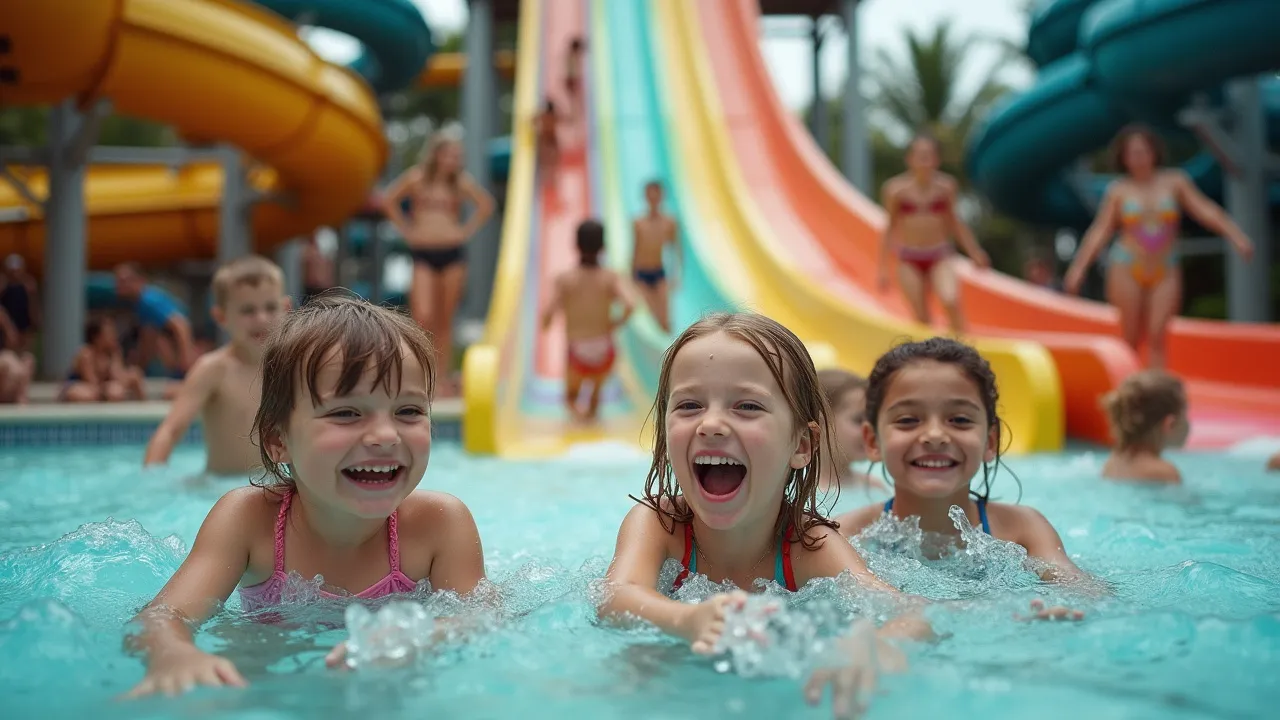
National Waterpark Day on July 28th celebrates the thrill and joy of waterparks worldwide. From history and safety to global traditions and future trends, dive into the ultimate guide to this splashing holiday.
The Historical Origins & Evolutionary Journey
Foundational Catalyst: From Natural Springs to Man-Made Slides
The concept of water-based recreation is ancient, but the modern waterpark as a distinct attraction emerged in the mid-20th century. The earliest forerunners were natural swimming holes and municipal pools with simple slides. In 1940, the first known water slide, "The Water Chute," debuted at the 1939 New York World's Fair, but it wasn't until 1977 that the first true waterpark, Wet 'n Wild in Orlando, Florida, opened its doors. Founded by George Millay, the park introduced wave pools, multi-lane slides, and lazy rivers, setting the template for the industry.
Legislative/Official Adoption: The Birth of National Waterpark Day
By the early 2000s, waterparks had become a global phenomenon. In 2013, the Waterpark & Attractions Association (WWA) officially declared July 28th as National Waterpark Day to promote water safety, family fun, and the economic impact of the industry. The date was chosen to align with the peak of summer vacation season in the Northern Hemisphere, ensuring maximum participation. Since then, the day has been recognized by numerous state governments and tourism boards.
Modern Global Legacy
Today, waterparks are a multi-billion-dollar industry with over 1,000 major parks worldwide. National Waterpark Day has evolved from a marketing promotion into a cultural event, with themed parties, charity fundraisers, and social media campaigns. The day also emphasizes water safety education, encouraging families to learn swimming and responsible behavior around water. The evolution continues with innovations like water coasters, surf simulators, and virtual reality experiences.
How to Celebrate National Waterpark Day
For Individuals and Families: Make a Splash
- Visit a local waterpark: Many parks offer discounts or special events on July 28th. Check websites for "National Waterpark Day" promotions.
- Host a backyard water party: Set up inflatable slides, sprinklers, and slip 'n slides. Incorporate water safety games for kids.
- Learn water safety: Take a CPR or swimming lesson with your family. The day is also about preparedness.
For Schools and Community Groups: Educational Fun
- Organize a field trip to a waterpark with a focus on physics (buoyancy, velocity on slides).
- Hold a water-themed science fair: experiments with water pressure, filtration, and surface tension.
- Partner with local pools to offer free swim safety workshops.
Corporate and Organizational Rituals
Companies often celebrate by hosting employee appreciation days at waterparks. Some brands launch limited-edition products (e.g., waterproof phones, swimwear). Nonprofits use the day to raise funds for drowning prevention programs. In countries like Japan, onsen or hot spring waterparks offer traditional bathing experiences mixed with modern slides. In Brazil, waterparks often feature samba music and elaborate float parties.
Global Traditions: Around the World
- United States: Largest celebrations with park-wide events, live music, and fireworks.
- Germany: Therme parks (thermal waterparks) combine relaxation and slides; many offer extended hours.
- Australia: Since July is winter, celebrations shift to indoor parks or tropical resorts in the north.
- Middle East: Indoor waterparks in Dubai, like Aquaventure, host exclusive VIP nights.
Global Impact: Economic and Social Contributions
Waterparks are major economic engines. According to the WWA, the global waterpark industry generates over $20 billion annually and employs hundreds of thousands of people. National Waterpark Day boosts tourism, especially in coastal and desert regions where water is a luxury. Socially, waterparks provide accessible recreation for all ages and abilities. Many parks have pioneered inclusive design, such as wheelchair-accessible pools and sensory-friendly hours for visitors with autism. The day also raises awareness for water conservation, with many parks adopting eco-friendly practices like rainwater harvesting and solar heating.
Safety First: Essential Guidelines for Waterpark Visitors
Before You Go: Preparation
- Check the weather forecast and park policies for closures.
- Apply waterproof sunscreen (SPF 30+) and reapply every two hours.
- Wear proper footwear to prevent slipping on wet surfaces.
At the Park: Rules and Etiquette
- Follow height and weight restrictions for rides.
- Never run on pool decks.
- Stay hydrated: drink water regularly, even if not thirsty.
- Use life jackets for weak swimmers; parks provide them free.
Post-Visit: Health and Hygiene
Rinse off after swimming to remove chlorine or salt. Dry ears thoroughly to prevent swimmer’s ear. Check for any skin irritations. If you feel ill after visiting, consult a doctor promptly. National Waterpark Day emphasizes that safety and fun go hand in hand.
Innovations Shaping the Future of Waterparks
Technological Advancements
Waterparks are embracing tech: RFID wristbands for cashless payments, app-based wait times, and virtual queuing. The latest trend is water coasters – roller coasters that use water jets for propulsion. Parks are also installing augmented reality (AR) elements on slides, allowing riders to interact with digital creatures. Surf simulators that produce endless waves are becoming mainstream.
Sustainability Initiatives
To combat water and energy use, new parks are built with recirculation systems that filter and reuse 95% of water. Solar panels power many operations. Some parks are experimenting with biodegradable swimwear and eliminating single-use plastics. National Waterpark Day often promotes these green innovations.
Year-Round Operations
Indoor waterparks are thriving, especially in colder climates. Resorts like the Kalahari in the US and Tropical Islands in Germany offer tropical environments under domes. The future may see more hybrid parks combining water attractions with roller coasters and live shows.
Notable Waterparks Around the World
Top Destinations by Region
- North America: Schlitterbahn (Texas), Universal’s Volcano Bay (Orlando), Disney’s Typhoon Lagoon (Florida).
- Europe: Aqualand (Costa Adeje, Spain), Siam Park (Tenerife, Spain), World Waterpark (West Edmonton Mall, Canada).
- Asia: Aquaventure (Dubai), Chimelong Water Park (China), Ocean World (South Korea).
- Australia: Wet’n’Wild Gold Coast, Jamberoo Action Park.
- South America: Hot Park (Brazil), Acqua Lokos (Chile).
Each park offers unique rides: the world’s tallest water slide (Poseidon at Beach Park, Brazil) and fastest water coaster (Divertical at Mirabilandia, Italy).
Historical Timeline
The first commercial water slide, 'The Water Chute,' debuts at the 1939 New York World's Fair, sparking public interest in water-based amusement.
George Millay opens Wet 'n Wild in Orlando, Florida, considered the first modern waterpark with wave pools, lazy rivers, and multi-lane slides.
Rapid expansion of waterparks across the United States, including Schlitterbahn (1979) and Water World (1982). The industry sees a boom in themed attractions.
The Waterpark & Attractions Association (WWA) is founded to promote safety, professional development, and industry standards.
Waterpark industry revenues surpass $10 billion globally, with major growth in Asia and the Middle East.
The WWA establishes July 28th as National Waterpark Day to encourage family fun and water safety awareness.
The world's tallest water slide, 'Poseidon' at Beach Park in Brazil, opens, reaching 135 feet in height.
Amid the COVID-19 pandemic, waterparks adopt enhanced sanitation protocols, contactless payments, and capacity limits, leading to a strong recovery.
National Waterpark Day sees record participation with over 1,000 parks worldwide offering special events and discounts.