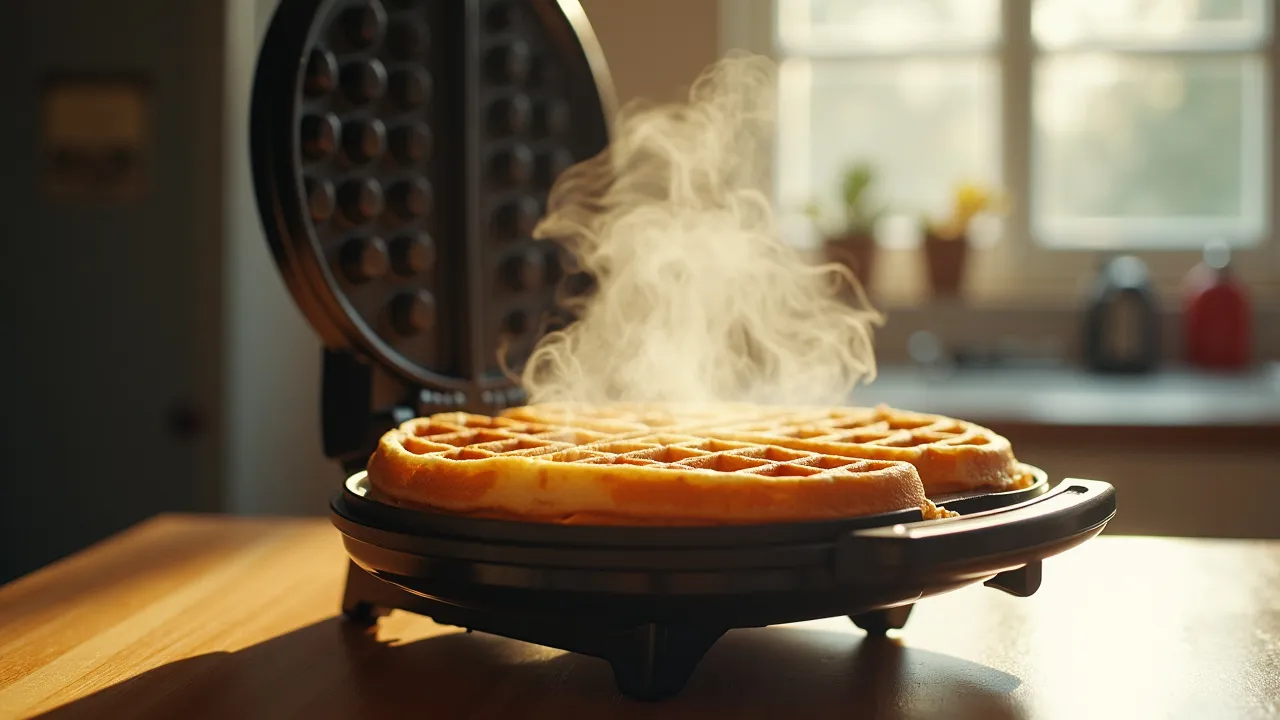
National Waffle Iron Day is celebrated annually on June 29th, honoring the kitchen appliance that creates crisp, golden waffles. This day encourages making waffles from scratch and appreciating waffle iron innovations.
The Historical Origins & Evolutionary Journey
National Waffle Iron Day, observed each June 29th, celebrates the invention and cultural significance of the waffle iron. Though the exact founder of this observance remains unclear, the day has been embraced by waffle enthusiasts and culinary historians worldwide.
The Foundational Catalyst
The roots of the waffle iron trace back to the Middle Ages, where early versions were simple metal plates held over a fire. The modern waffle iron as we know it was patented by Cornelius Swarthout of Troy, New York, in 1869. His design featured a stovetop mold with a hinged lid, allowing for even cooking and the classic grid pattern. This invention laid the groundwork for the waffle iron's domestic popularity.
The Legislative/Official Adoption
While no government proclamation established National Waffle Iron Day, it gained traction through food magazines and appliance manufacturers in the early 20th century. The day aligns with summer breakfast traditions and the rise of electric waffle irons in the 1910s. Companies like General Electric and Toastmaster began marketing electric models, cementing the waffle iron as a kitchen staple.
Modern Global Legacy
Today, the waffle iron inspires creativity beyond breakfast—from waffle tacos to waffle fries. National Waffle Iron Day encourages home cooks and chefs to experiment with batters and toppings, celebrating a device that bridges history and innovation.
How to Celebrate National Waffle Iron Day
This day is best observed by using your waffle iron to its fullest potential. Here are actionable strategies for individuals, schools, and organizations worldwide.
Individual Celebrations
- Host a waffle bar: Set up a buffet with toppings like fresh fruit, whipped cream, syrups, and nut butters.
- Try a new recipe: Experiment with savory waffles (cheese, herbs) or gluten-free batters.
- Clean your iron: A deep clean restores performance; use a paste of baking soda and water.
School & Community Events
- Waffle breakfast fundraiser: Sell waffles to raise money for a cause.
- Cooking classes: Teach kids batter science and iron safety.
- Competitions: Hold a waffle-stacking contest or best topping design.
Corporate & Social Rituals
- Office waffle day: Provide waffle irons in break rooms for employees to make fresh waffles.
- Social media challenges: Share creative waffle creations using #NationalWaffleIronDay.
- Partner with local cafes: Offer special waffle deals for the day.
In Belgium and France, waffle irons are used for traditional gaufres; in Scandinavia, heart-shaped waffles are common. Embrace these global variations by trying regional recipes.
The Waffle Iron's Impact on Global Cuisine
Beyond breakfast, the waffle iron has inspired dishes worldwide. In the United States, chicken and waffles is a soul food classic. Hong Kong egg waffles are cooked in specialized irons. Scandinavian griddle waffles are often served with jam or ice cream. The device has even been used to cook brownies, hash browns, and grilled cheese sandwiches.
Culinary Innovations
- Waffle iron pizza: Press pizza dough with toppings into a crispy disc.
- Waffle cookies: Make cookie dough and press into waffle shapes.
- Savory waffles: Add cornmeal and cheese for a Southern side dish.
The versatility of the waffle iron makes it a tool for both sweet and savory creativity.
Technological Milestones in Waffle Iron Design
From cast iron stovetop models to modern non-stick electric irons, the waffle iron has evolved significantly.
Key Innovations
- 1869: Cornelius Swarthout's stovetop design.
- 1911: General Electric releases the first electric waffle iron.
- 1950s: Introduction of thermostat controls for consistent temperature.
- 1980s: Non-stick coatings and indicator lights become standard.
- 2000s: Belgian waffle irons with deeper grids gain popularity.
Today, smart waffle irons with Bluetooth connectivity and adjustable browning settings are emerging.
Health Considerations & Waffle Nutrition
While waffles are often indulgent, they can be part of a balanced diet. Use whole wheat flour, reduce sugar, and incorporate protein powder. Toppings like fresh fruit and yogurt add nutrients. For dietary restrictions, gluten-free and vegan waffle recipes abound.
Calorie-Friendly Tips
- Use non-stick spray instead of butter.
- Serve with unsweetened applesauce instead of syrup.
- Add spices (cinnamon, vanilla) for flavor without extra sugar.
Many waffle irons now feature adjustable temperature controls to achieve even browning with less oil.
Environmental and Cultural Significance
The waffle iron represents more than a cooking tool; it's a symbol of communal breakfasts and family traditions. In many cultures, waffle irons are heirloom pieces passed down generations. The day also highlights energy-efficient cooking: electric waffle irons use less energy than ovens for small batches. Some manufacturers now produce irons with recycled materials and energy-saving modes.
Historical Timeline
Early waffle irons appear in Europe, consisting of two metal plates hinged together, used over open fires to cook thin wafers.
Cornelius Swarthout patents the first U.S. waffle iron, a stovetop device with a cast iron grid pattern.
General Electric introduces the first electric waffle iron, making waffle-making faster and more consistent.
The 'Belgian waffle' is introduced at the Brussels World's Fair, later popularized in America.
Thermostat-controlled waffle irons become common, allowing precise temperature settings for even browning.
Non-stick coatings and ready-to-cook waffle mixes simplify home waffle preparation.
Belgian waffle irons with deep pockets capture the market, leading to thick, fluffy waffles.
Waffle iron innovation includes reversible plates for different grid sizes, and even miniature irons for individual waffles.