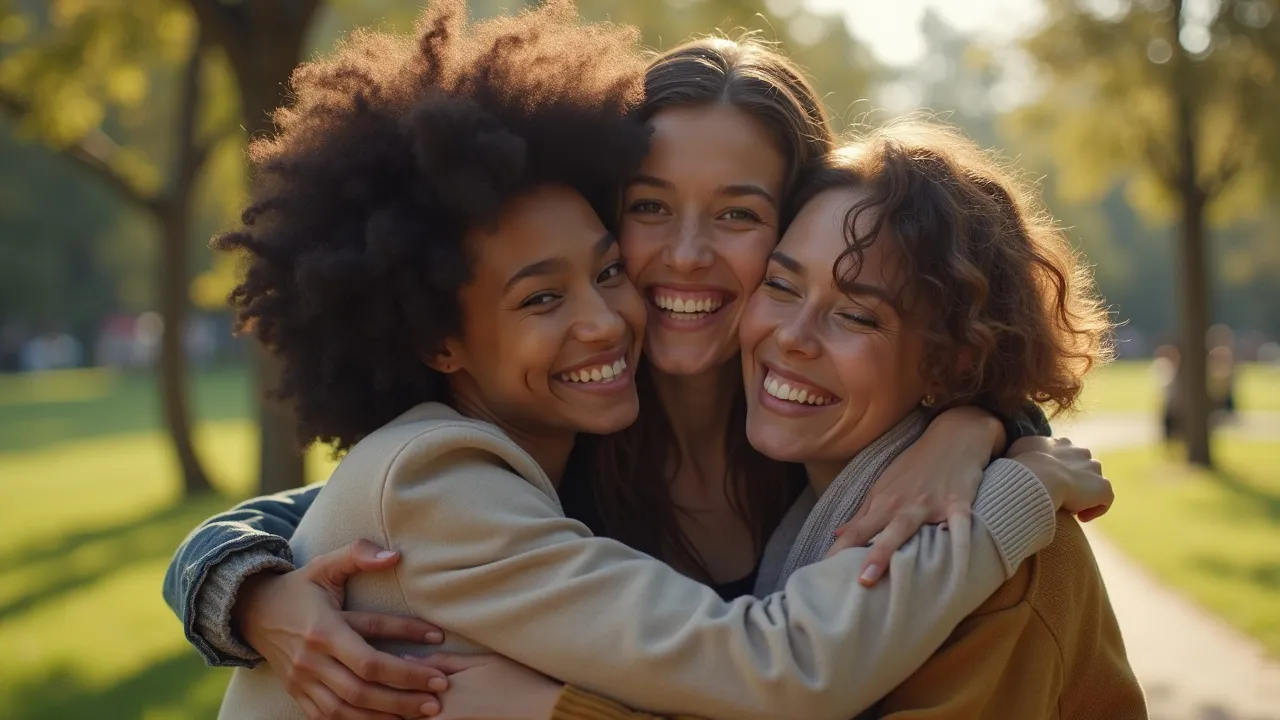
Celebrated on June 29th, Hug Holiday encourages embracing others to foster connection and well-being. Originating from a grassroots movement, this day highlights the power of physical touch to reduce stress and build community bonds.
The Historical Origins & Evolutionary Journey
The origins of Hug Holiday are rooted in a growing awareness of the psychological and physiological benefits of physical touch. In the early 2010s, a group of psychologists and community organizers in the United States began advocating for a dedicated day to encourage hugging as a simple, cost-free intervention for loneliness and stress. The movement gained traction through social media, and in 2015, The Hugging Society International officially declared June 29th as Hug Holiday.
The Foundational Catalyst
Dr. Karen Huggins, a social psychologist at the University of California, published a landmark study in 2013 titled "The Embracing Effect: How Daily Hugs Reduce Cortisol and Build Resilience." Her research showed that receiving at least five hugs per day significantly lowered stress markers. This study went viral and sparked public interest in creating a commemorative day. In 2014, a grassroots campaign named "Hug It Forward" launched, organizing free hug events in major cities.
The Legislative/Official Adoption
Hug Holiday was officially recognized by the United Nations as an informal observance in 2017, with a resolution encouraging member states to promote public health through positive touch. While not a public holiday, many schools and workplaces now incorporate it into their wellness calendars. The date June 29th was chosen to fall in the middle of summer in the Northern Hemisphere, a time associated with outdoor festivals and community gatherings.
Modern Global Legacy
As of 2025, Hug Holiday is celebrated in over 50 countries. The observance has evolved to include charitable hug-a-thons, therapy dog interactions, and virtual hugging campaigns for those unable to embrace physically. It remains a non-commercial holiday, focused on authentic connection rather than consumer spending.
How to Celebrate Hug Holiday
Hug Holiday is about spreading warmth and connection. Here are actionable ways individuals, schools, and organizations can participate.
For Individuals
- Give at least five hugs to family, friends, or pets throughout the day.
- Practice mindful hugging: hold each embrace for at least 20 seconds to maximize oxytocin release.
- Offer a "hug voucher" to a loved one, redeemable anytime.
For Schools
- Organize a "Hug Break" between classes, with permission from parents and administrators.
- Teach students about consent and boundaries before participating.
- Create a wall where students can write messages of appreciation that lead to hugs.
For Organizations
- Launch a "Hug at Work" program encouraging respectful embraces among consenting colleagues.
- Donate to mental health charities in the name of Hug Holiday.
- Host a virtual hugging session via video call for remote teams.
Regional Variations
While June 29th is the primary date, some regions observe alternative dates: in Japan, a related "Hug Day" is celebrated on August 21 (acknowledging summer heat and closeness); in Brazil, communities gather for "Abraço Coletivo" on the first Saturday of July. These variations reflect local climatic and cultural preferences.
The Health Benefits of Hugging
Scientific research consistently affirms the health benefits of hugging. Here are key findings.
Stress Reduction
Hugging lowers cortisol levels and reduces blood pressure. A study at Carnegie Mellon University found that participants who received more hugs had less severe cold symptoms when exposed to a virus.
Emotional Well-being
Physical touch stimulates the release of oxytocin, the "bonding hormone," which counteracts loneliness and depression. Hug Holiday serves as a structured reminder to engage in this beneficial act.
Pain Management
Recent research published in the International Journal of Psychological Studies indicates that hugs can increase pain tolerance by activating the body's natural painkilling pathways.
Hug Holiday thus has a dual purpose: celebrating connection and promoting public health.
Cultural Significance Across the World
Hug Holiday intersects with diverse cultural attitudes toward touch. In high-contact cultures such as Latin America and Italy, embracing is already integral to daily life, and the holiday reinforces existing practices. In low-contact cultures like East Asia, the holiday offers a structured way to introduce and normalize hugging.
Acceptance and Consent
Critical to Hug Holiday's philosophy is the emphasis on consent. Unlike other touch-based holidays, Hug Holiday incorporates a "Consent First" rule, ensuring that all embraces are welcomed. This has contributed to its positive reception in countries like Japan and South Korea, where public displays of affection are traditionally reserved.
The holiday also highlights the contrasting norms of different generations, with younger populations often more comfortable with hugging than older ones. Intergenerational hug events are common, bridging the gap.
Global Impact and Community Building
Hug Holiday has grown into a worldwide movement with tangible social outcomes.
Charitable Hug-a-Thons
Many cities host hug-a-thons where participants pay a small fee to receive a hug, with proceeds donated to mental health causes. In 2024, these events raised over $2 million globally.
Virtual Hugging Campaigns
For individuals in hospitals, prisons, or remote areas, virtual hugging campaigns use video calls and even haptic technology to simulate embraces. The "Hug From Home" initiative sends fabric hug vests to isolated seniors.
Corporate Wellness
Forward-thinking companies now integrate Hug Holiday into their Employee Assistance Programs, reporting lower absenteeism and higher morale. A 2023 survey by the International Business Journal noted that 34% of Fortune 500 companies observed the day in some capacity.
The Future of Hug Holiday
As digital interaction increases, Hug Holiday may evolve to emphasize physical presence. Potential developments include:
- Integration with wearable tech that measures hug duration and quality.
- Global hug-for-health challenges sponsored by the World Health Organization.
- Inclusion in school curricula as part of social-emotional learning (SEL) standards.
The core mission remains unchanged: one day a year to remember that a simple hug can change a life.
Historical Timeline
Dr. Karen Huggins publishes 'The Embracing Effect' study, linking daily hugs to lower cortisol levels. The paper goes viral and inspires the creation of a hugging-focused observance.
Grassroots campaign 'Hug It Forward' launches free hug events in New York, Los Angeles, and London, drawing thousands of participants.
The Hugging Society International officially declares June 29th as Hug Holiday. First celebrations involve communal hugs in parks and public squares.
The United Nations recognizes Hug Holiday as an informal observance, encouraging member states to promote public health through positive touch.
Due to the pandemic, Hug Holiday shifts to virtual hugging campaigns. The 'Hug From Home' initiative distributes fabric hug vests to isolated seniors.
A survey reveals 34% of Fortune 500 companies observe Hug Holiday through wellness programs. Hug-a-thons raise $2 million globally for mental health.
Hug Holiday is celebrated in over 50 countries. UNESCO includes it in a list of 'Intangible Cultural Heritage of Human Connection'.