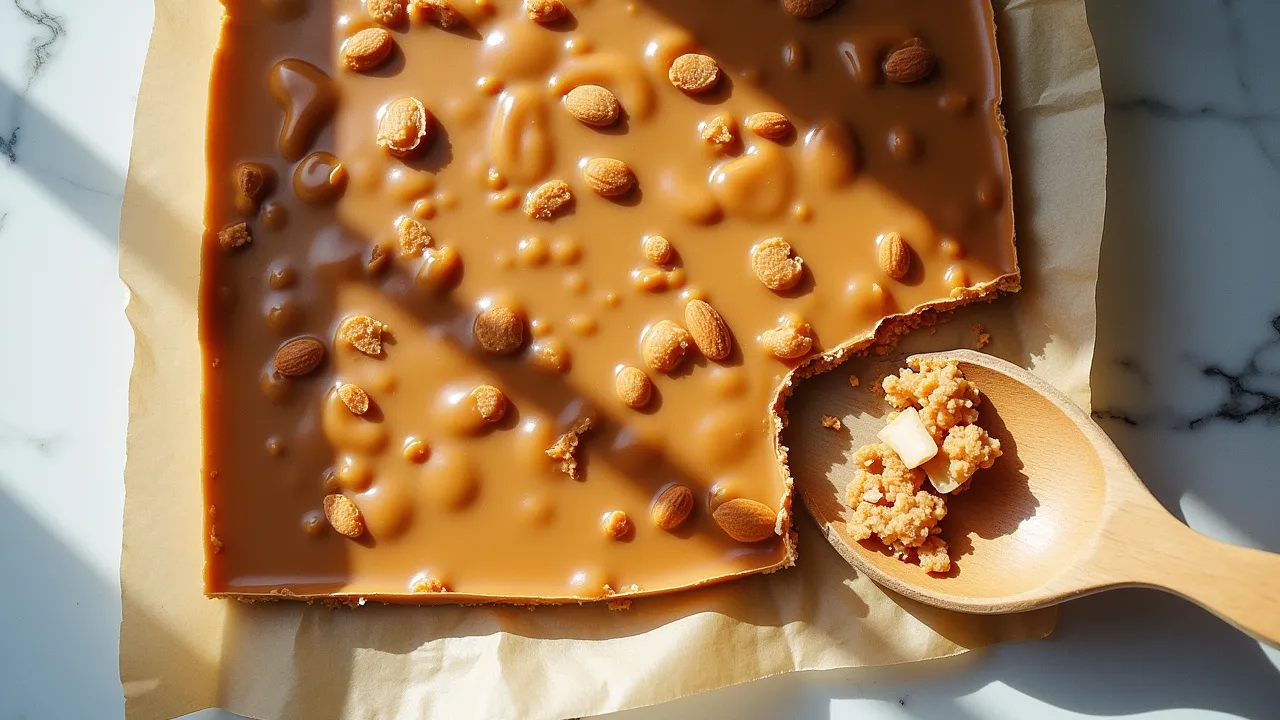
Celebrated every June 29th, National Almond Buttercrunch Day honors the crispy, buttery toffee confection studded with almonds. Discover its history, homemade recipes, and global variations of this beloved crunchy sweet.
The Historical Origins & Evolutionary Journey of Almond Buttercrunch
The Foundational Catalyst
Almond buttercrunch is a classic American confection that combines the rich, buttery crunch of toffee with the nutty flavor of toasted almonds. Its roots trace back to traditional toffee recipes brought by European immigrants, particularly from Scotland and Ireland, where hard candy brittles were common. In the early 20th century, American confectioners began incorporating almonds—a staple crop in California—into toffee, creating a distinct sweet that balanced buttery richness with nutty texture.
The first recorded recipe for "almond buttercrunch" appeared in a 1930s community cookbook from the Pacific Northwest, though similar candies were sold at county fairs and candy shops under names like "almond toffee" and "almond crunch." Following World War II, the US experienced a boom in packaged confections, and almond buttercrunch became a popular homemade treat featured in holiday gift boxes and bake sales.
The Legislative/Official Adoption
Unlike many food holidays with clear founders, National Almond Buttercrunch Day emerged organically from social media and food calendar aggregators. In 2004, the National Confectioners Association (NCA) listed June 29th as a day to celebrate this unique confection, aiming to promote almond-based candy products. The date was chosen to coincide with the peak of summer—a prime time for crispy, non-melting treats—and to encourage home bakers to experiment with buttercrunch recipes. Over the years, the day gained traction through press releases and food blogs, and by 2010 it was firmly established on major food holiday databases.
Modern Global Legacy
Today, almond buttercrunch enjoys international adaptations. In the United Kingdom, it is often called "almond toffee" and features in Christmas crackers. Australian confectioners add macadamia nuts to create a tropical twist. In Japan, buttercrunch is sometimes coated in matcha-flavored white chocolate. The day now serves as a platform for artisanal candy makers to showcase small-batch creations, and for families to revive vintage recipes that have been passed down through generations.
How to Celebrate National Almond Buttercrunch Day
As the ultimate guide for this delicious observance, here are actionable strategies for individuals, schools, and organizations to partake in the crunch.
For Home Bakers & Families
- Make Classic Almond Buttercrunch: Combine butter, sugar, corn syrup, and water in a saucepan; cook to 290°F (hard crack stage). Spread on a baking sheet, top with toasted almonds, and finish with melted chocolate. Let set and break into pieces.
- Experiment with Variations: Try adding sea salt, cayenne pepper, or drizzle with dark chocolate and pistachios.
- Host a Tasting Party: Invite friends to sample store-bought vs. homemade buttercrunch, or blind-test different almond varieties (Marcona, roasted, smoked).
For Schools & Community Groups
- Organize a "Candy Science" event explaining the chemistry of sugar crystallization and the Maillard reaction in toasting almonds.
- Hold a bake sale with proceeds donated to local food banks—label clear jars of buttercrunch with the holiday theme.
For Businesses & Retailers
- Candy shops can offer limited-edition flavors (e.g., espresso almond buttercrunch, white chocolate-cranberry).
- Use social media campaigns with the hashtag #AlmondButtercrunchDay and share behind-the-scenes videos of large-scale production.
- Partner with local bakeries for cross-promotions—coffee shops can serve a "Buttercrunch Latte" topped with crumbled toffee.
Internationally, celebrations vary. In Australia, June 29 is midwinter, so many enjoy buttercrunch with hot chocolate. In India, the day is used by sweet shops (mithai) to introduce innovative fusion treats, like almond buttercrunch barfi. No matter where you are, the key is to share the crunch with loved ones.
The Art & Science of Perfect Almond Buttercrunch
Making almond buttercrunch requires precision and understanding of candy chemistry.
Sugar Stages
The toffee must reach the hard crack stage (295°F–310°F) to achieve a brittle, crunchy texture. Below that, the candy will be chewy; above, it may burn. A candy thermometer is essential.
Ingredient Roles
- Butter provides flavor and prevents the sugar from crystallizing too quickly.
- Corn syrup inhibits granulation, ensuring a smooth glass-like finish.
- Almonds add nutty depth and structural contrast—they must be toasted beforehand to release oils and deepen flavor.
- Baking soda (optional) creates fine air bubbles for a slightly softer bite.
Common Pitfalls
Stirring too vigorously after adding baking soda causes the candy to collapse. Final pieces should be stored in an airtight container to prevent moisture absorption, which ruins the crunch.
Health Benefits of Almonds & Confectionery Balance
While almond buttercrunch is a treat, using high-quality ingredients offers some nutritional upsides.
Almond Power
Almonds are rich in vitamin E, magnesium, and healthy monounsaturated fats. Studies show they can lower LDL cholesterol and reduce inflammation. A serving of almonds (about 23 nuts) provides 6g of plant protein and 3.5g of fiber.
Butter & Sugar Realities
Buttercrunch does contain saturated fat and sugar, but when enjoyed in moderation on a designated day, it can fit into a balanced diet. Dark chocolate coatings add antioxidants. For a healthier twist, use coconut sugar and grass-fed butter.
Portion Suggestions
One ounce (28g) of almond buttercrunch (about 2–3 small pieces) offers 140 calories. Pair with fresh fruit or herbal tea to keep satiety high.
Global Variations & Similar Confectionaries
Across the world, cultures have invented their own versions of crunchy nut toffee.
United Kingdom
Almond toffee is a classic Christmas sweet, often made with a pinch of salt and sold in decorative tins. The British also enjoy "buttercrunch" as a less common term.
Mexico
Almond brittle (dulce de almendra) uses piloncillo (unrefined cane sugar) and lime zest, offering a tangy-sweet profile.
India
Badam chikki is a close cousin—a hard jaggery-nut brittle popular in Maharashtra and Gujarat. It is often made with peanuts, but almond versions exist.
France
Prâlines aux amandes are caramel-coated almonds that can be crushed and used in patisserie, but they lack the buttery toffee base.
These international relatives highlight the universal appeal of crunchy, nutty sweets.
Economic & Cultural Impact of Almond Buttercrunch
Almond buttercrunch contributes significantly to the confectionery industry and agricultural economy.
Almond Industry
California produces over 80% of the world's almonds. Food holidays like National Almond Buttercrunch Day help drive demand, especially for premium almond varieties. According to the Almond Board of California, confectionery uses account for approximately 12% of total almond shipments.
Small-Batch Artisans
For craft candy makers, this day offers a niche marketing opportunity. Many produce limited batches with unique flavor twists (smoked paprika, lavender honey) and sell via Etsy or farmers' markets, boosting local economies.
Cultural Traditions
In many Midwestern US families, buttercrunch is a staple holiday treat passed down in recipe boxes. The day revitalizes these traditions and encourages intergenerational cooking.
Fun Trivia & Lesser-Known Facts
- First known recipe: Published in the 1937 cookbook Favorite Recipes from Western Washington under the name "Crunchy Almond Candy".
- Celebrity fans: Renowned chef Julia Child included an almond buttercrunch recipe in her Mastering the Art of French Cooking, Vol. 2 (1970).
- Space connection: In 1985, NASA astronauts on the Space Shuttle Discovery requested almond buttercrunch as a morale-boosting snack—it was modified to reduce crumbliness in microgravity.
- World record: The largest almond buttercrunch candy weighed 2,534 pounds, created in 2018 at the Wisconsin State Fair.
- Synonym confusion: "Buttercrunch" is sometimes used to describe a variety of lettuce, but the confection vastly predates that usage.
Historical Timeline
First known published recipe for 'Crunchy Almond Candy' appears in a Pacific Northwest community cookbook, featuring butter, sugar, and toasted almonds.
Almond buttercrunch becomes a popular homemade wartime treat due to its long shelf life and minimal ingredients.
Julia Child includes an almond buttercrunch recipe in 'Mastering the Art of French Cooking, Vol. 2', boosting its gourmet profile.
NASA supplies a modified, less-crumbly almond buttercrunch to astronauts on Space Shuttle Discovery mission STS-51-I.
National Confectioners Association officially lists June 29th as National Almond Buttercrunch Day, promoting almond-based confections.
The day gains widespread recognition after being featured on major food holiday websites and in candy trade publications.
World's largest almond buttercrunch (2,534 lbs) created at the Wisconsin State Fair, using over 1,200 lbs of butter and 800 lbs of almonds.